Your First 90 Minutes of Sleep, Explained
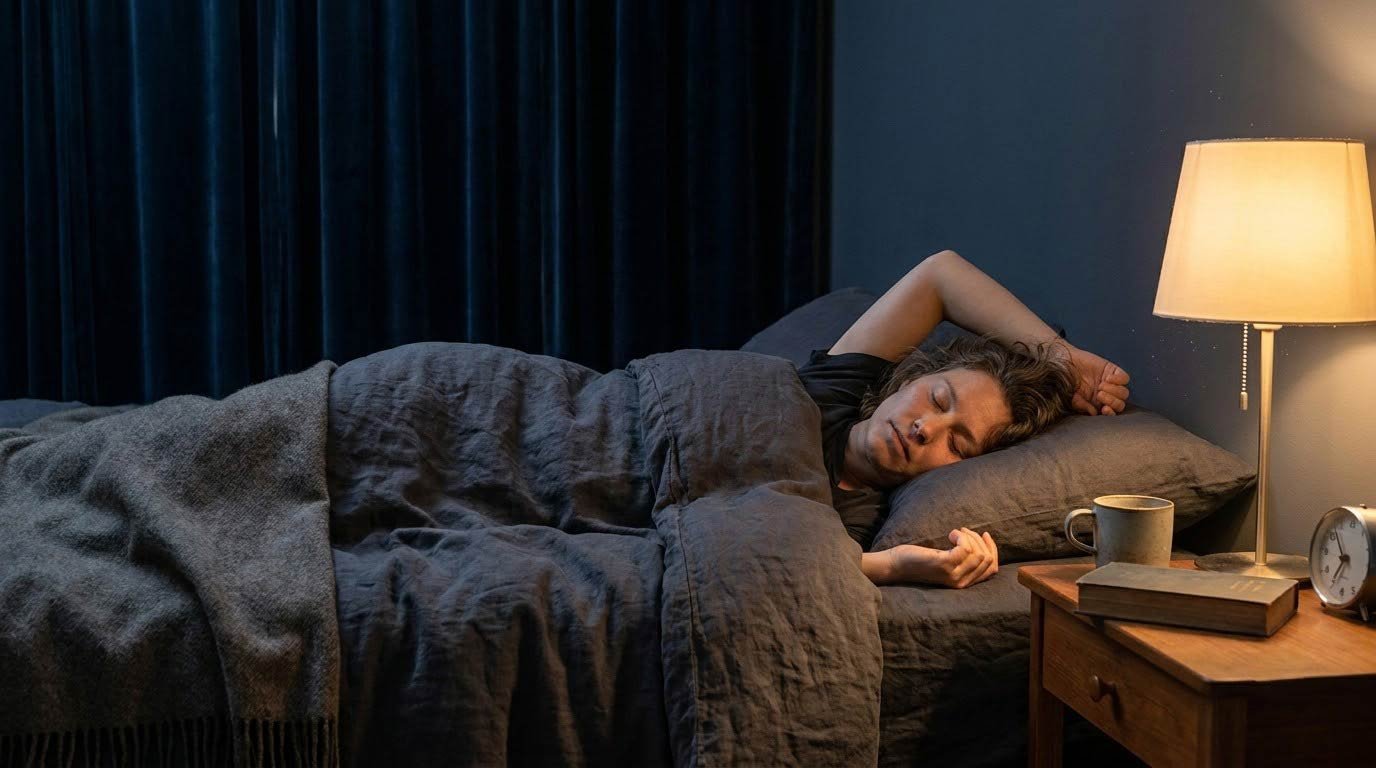
Sleep isn't a uniform state — it's a structured sequence repeating roughly every 90 minutes. Understanding the architecture explains why timing matters so much: why cutting sleep short hits REM hardest, why the first half of the night feels deepest, and why a consistent schedule protects everything.
Your brain triages the night: physical repair first (deep sleep), memory and mood second (REM). Both halves need room — and the architecture is anchored by one input more than any other: a consistent wake time.
The 90-minute architecture
Each sleep cycle moves through three broad stages, in sequence, taking roughly 90 minutes to complete. A full 8-hour night contains 4–5 complete cycles. But the proportions shift dramatically across the night — and this is the detail that matters most:
- Light sleep (N1 and N2) — the transition stages between waking and deeper states. Roughly 50% of the night. Still restorative, but the lightest layer.
- Deep sleep (N3 / slow-wave sleep) — dominates the first half of the night. The hardest to wake from, and the most physically restorative phase.
- REM sleep — concentrates in the final hours before waking. Each successive REM period gets longer; the last one before your alarm may run 45–60 minutes.

This architecture explains the most common sleep complaint — waking up groggy despite adequate hours. If your alarm catches you mid-cycle (especially during deep sleep), you get sleep inertia: a boot-up lag that can last 30 minutes or more. Waking between cycles feels effortless by comparison. This is why a consistent schedule matters — it trains your cycles to align with your alarm.
Deep sleep: the physical repair shift
During slow-wave sleep, your body does its heaviest maintenance work. Growth hormone releases in pulses — rebuilding muscle tissue from the day's wear. The immune system recalibrates, adjusting its defenses based on the antigens it encountered. Blood pressure drops. Heart rate slows to its lowest point of the 24-hour cycle.
The brain works too — but in a different mode. During deep sleep, the glymphatic system (the brain's waste-clearance network) becomes dramatically more active, flushing metabolic byproducts that accumulate during waking hours. This overnight flush is one of the most compelling reasons sleep is non-negotiable: the brain literally cleans itself while you're unconscious.
Body temperature needs to drop. A cool room (65–68°F), a warm shower 90 minutes before bed (the post-shower cooling accelerates the drop), and no alcohol before sleep — it fragments exactly the back half you're trying to protect.
REM: the mind's filing system
REM sleep is when your brain does its mental housekeeping. Memories move from short-term storage to long-term integration. Emotional experiences are processed — the theory of 'overnight therapy' — with the emotional charge separated from the content. New learning is consolidated with existing knowledge, creating the connections that show up as insight.
Your brain is almost as active during REM as during waking — but your body is paralyzed (to prevent acting out dreams). It's a paradoxical state: mental fireworks on a locked-down body.

Your brain triages the night: survival repair first, memory and mood second. Both halves need room.— The sleep architecture principle
Why cutting sleep short hits REM hardest
If you cut a night from 8 hours to 6, you don't lose sleep uniformly — you lose REM disproportionately. The first half's deep sleep is largely preserved; the REM-rich final cycles are simply skipped. The brain pays the heavier price: memory consolidation suffers, emotional processing is disrupted, and the cognitive effects accumulate across consecutive short nights.
This is also why 'catching up' on weekends feels so restorative — the extended morning sleep allows the REM debt to partially resolve. But the better solution is protecting the architecture nightly, not deferring it to Saturday.
How aging changes the architecture
Deep sleep thins measurably with age — older adults spend less time in N3, and the amplitude of slow waves decreases. The clock drifts earlier. Sleep fragmentation increases (more awakenings, lighter transitions). But the need for REM and the overnight repair processes don't disappear — they just require more deliberate habits to protect.
Loud snoring with breathing pauses, waking gasping, or severe daytime sleepiness despite adequate hours — together, these are sleep apnea flags. Apnea fragments the architecture at its deepest levels, preventing the repair shifts from completing. A sleep study is the only way to diagnose it.
Protecting your architecture
- A consistent wake time — anchors the entire cycle structure to your alarm. The single highest-leverage habit.
- 7–9 hours of opportunity — give the full 4–5 cycles room to complete. Cutting to 6 skips the REM-heavy end.
- Morning light — sets the clock that determines when the night's first cycle begins.
- A caffeine curfew — caffeine taxes deep sleep even when you fall asleep fine. The half-life runs 5–6 hours.
- No alcohol as a sleep aid — it sedates the front, shreds the back. The 3am waking is architecture disruption, not coincidence.
- A cool, dark bedroom — the temperature drop is the trigger for deep sleep arrival.
This week: pick one consistent wake time (7 days). Give yourself 7.5–8 hours in bed. Stop caffeine 8+ hours before bedtime. These three habits protect the full architecture — deep repair and REM filing — better than any supplement or tracker.
Melatonin: The Timing Signal
The hormone that tells your body when sleep starts — the full journey: how it works with your sleep architecture, when it helps (jet lag, shift work, delayed sleep phase), and honest grades for ordinary insomnia.
Explore the melatonin journey →Where this information comes from
- sleep architecture (N1/N2/N3/REM stages)
- 90-minute sleep cycle structure
- sleep and cardiovascular health
- how sleep architecture changes with age
- deep sleep thinning in older adults
- circadian rhythm shifts
- recommended sleep duration for adults
- effects of sleep deprivation on health
- sleep hygiene basics
- brain waste-clearance during sleep
- the overnight maintenance concept
- deep sleep and glymphatic activity
Our evidence principles
How we evaluated the claims on this page
- Prefer government health agencies, major medical organizations, clinical guidelines, systematic reviews, and well-designed human studies.
- Distinguish established evidence from promising but uncertain research.
- Avoid presenting any single sleep habit or timing as universally optimal.
- Use numbers only when the population, context, and evidence are clear.
- Encourage clinician involvement when sleep problems are persistent, severe, or accompanied by concerning symptoms.
Educational information — not medical advice
This article is for educational purposes and does not diagnose or treat any sleep disorder. Sleep problems can signal underlying medical conditions that require professional evaluation. If you have persistent insomnia, symptoms of sleep apnea, or excessive daytime sleepiness, consult a qualified healthcare provider or sleep specialist. BodyFinds should display its medical disclaimer and source methodology alongside this article.