Inside the lungs.
What do the lungs do, and how do they function?
The lungs are the primary organs of the respiratory system. They facilitate gas exchange, oxygenate the blood, and remove carbon dioxide, keeping every cell in your body functioning. This remarkable pair of organs processes approximately 11,000 liters of air every single day, making their health vital to overall survival.
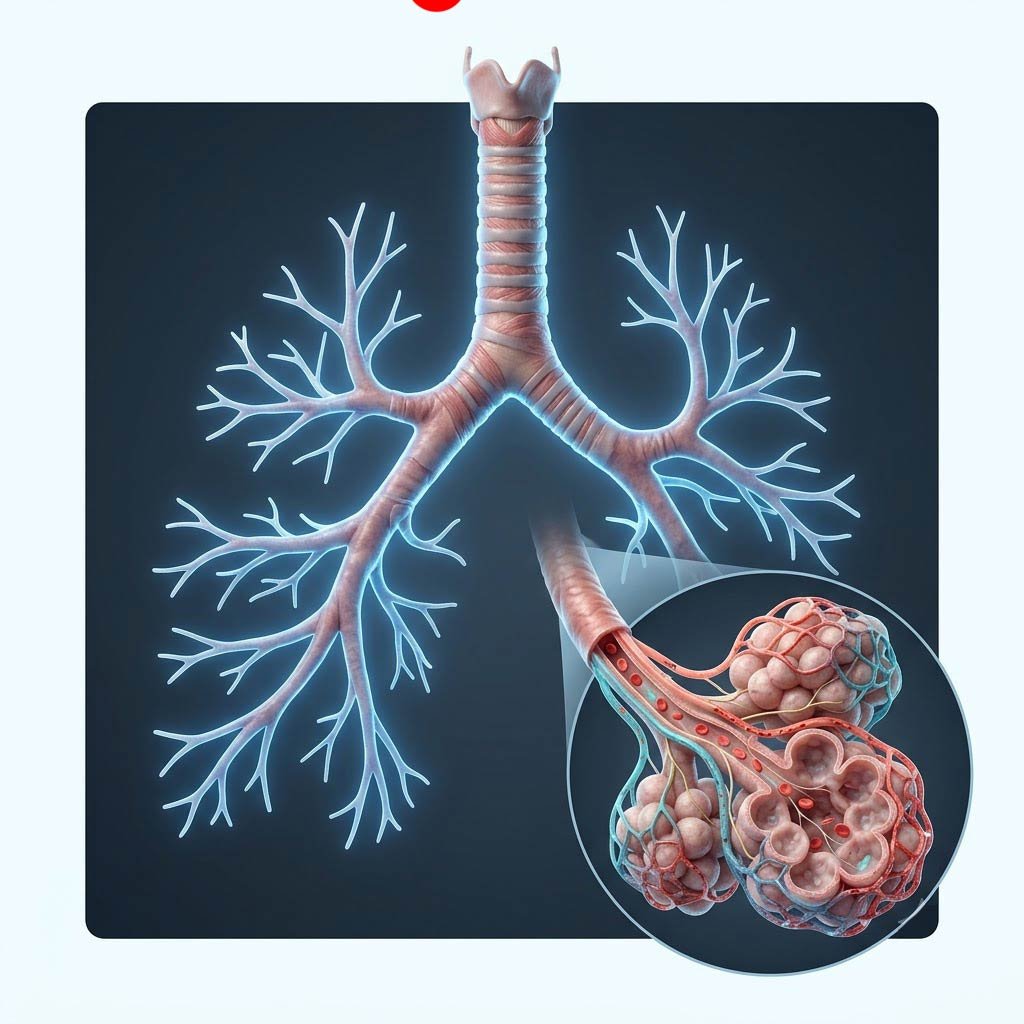
Air enters through the trachea, branching into left and right bronchi. These tubes branch repeatedly into smaller bronchioles, finally ending in tiny air sacs called alveoli where oxygen enters the blood.
The Anatomy of Gas Exchange
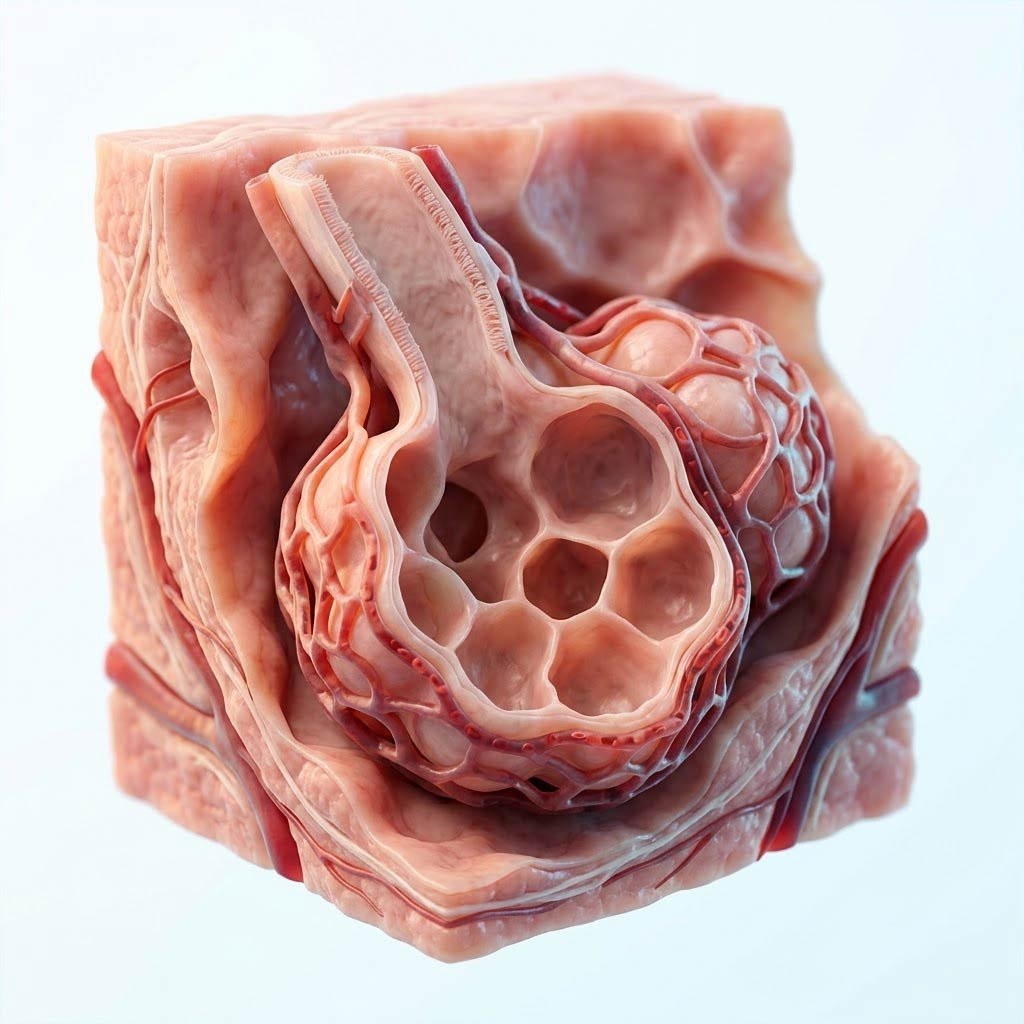
Your lungs are extraordinary organs that work tirelessly from your first breath to your last. Together, they contain approximately 300 million alveoli — tiny air sacs where gas exchange occurs. If you were to spread out all the alveolar surface area, it would cover roughly 70 square meters, about the size of a tennis court.
The right lung is slightly larger than the left and has three lobes (compared to the left's two), making room for the heart. Despite their vital function, the lungs are surprisingly delicate — the blood-air barrier in the alveoli is only about 50 times thicker than a single cell membrane, allowing for incredibly rapid oxygen diffusion but also making them susceptible to environmental damage.
Lungs
Exchange O₂ and CO₂
Bronchi
Main air passages
Alveoli
Microscopic air sacs
Diaphragm
Primary breathing muscle
The Role of Mucus and Cilia
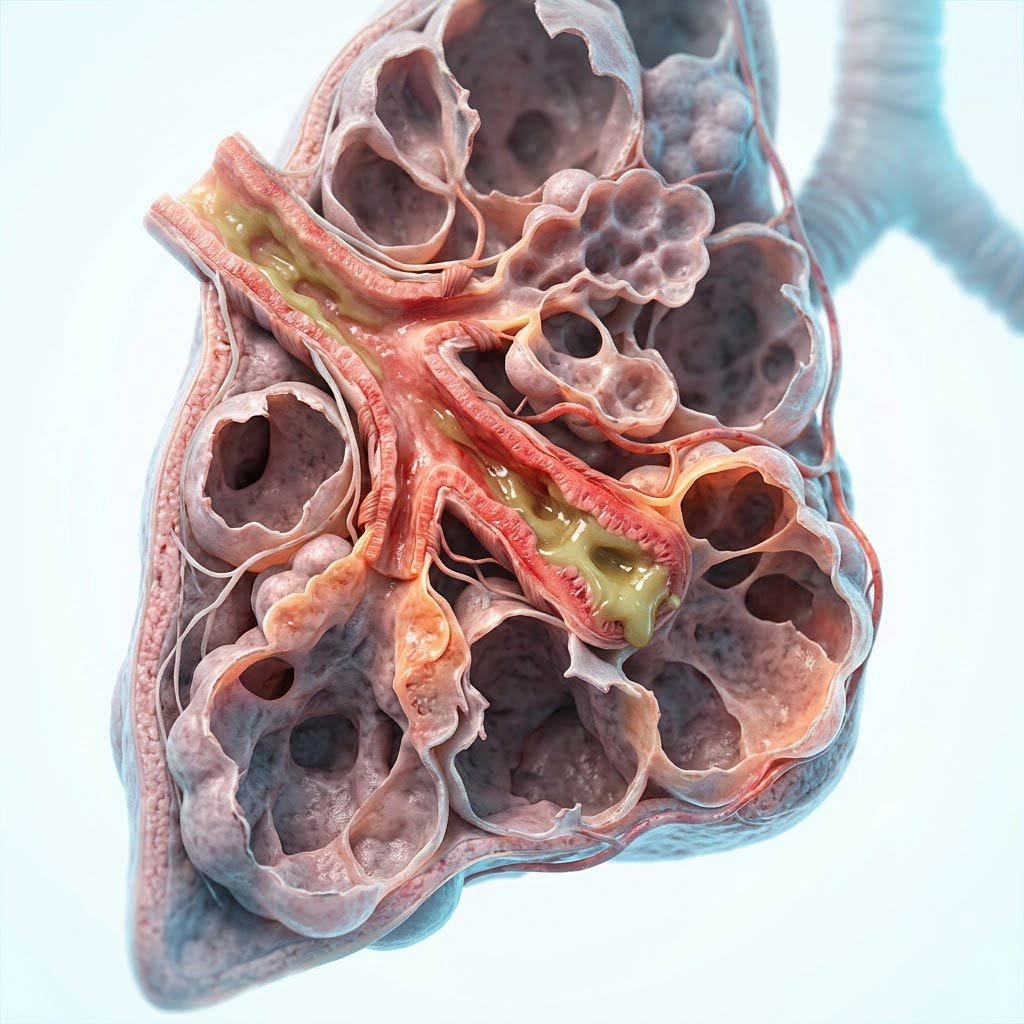
The respiratory system is equipped with a highly effective defense mechanism: the mucociliary escalator. Goblet cells produce mucus that traps dust, pollen, and bacteria, while tiny hair-like structures called cilia constantly sweep this contaminated mucus upward and out of the airways.
When this system fails—due to smoking, dehydration, or infection—mucus pools in the airways, creating an environment where bacteria thrive and gas exchange is severely impaired. This is why maintaining hydration and avoiding first- and secondhand smoke are critical medical recommendations for lung health.
Your lungs contain over 300 million alveoli. Together they provide enough surface area to cover an entire tennis court.