NAD+ & Cellular Aging
Every cell in your body runs on a molecule called NAD+ — nicotinamide adenine dinucleotide — shuttling energy through mitochondria and being spent, moment to moment, by the signaling enzymes that regulate repair, inflammation, and aging itself. Levels decline with age: that part is measured. The industry built on that fact sells precursors with timelines the trials haven't earned. This page covers the real biology — and grades the bottle, the hype, and the free lever exactly as their evidence reads.
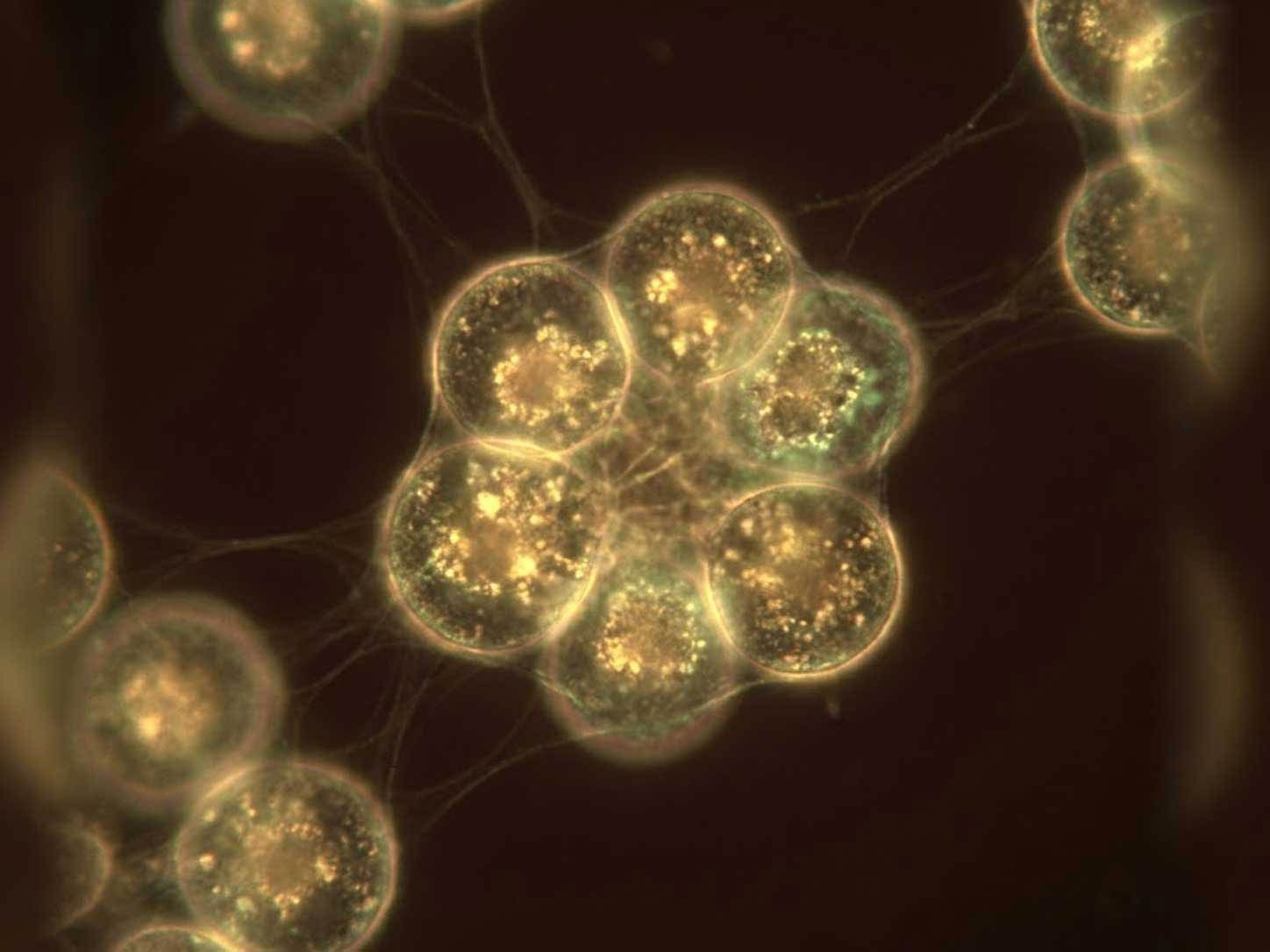
The molecule, the fame, the fine print
The molecule, and its two jobs: NAD+ works in two modes at once. In its redox role it ferries electrons through the mitochondrial engines that make cellular energy — the original, ancient job, present in every living cell. In its signaling role it is consumed as fuel by enzyme families that regulate aging-relevant processes — sirtuins (the seven-gene family tied to DNA repair and metabolic regulation) and PARPs (DNA-strand-break repair), which spend NAD+ as they work. The age-related decline is real and measured in human tissue; its magnitude varies by tissue and study, and the popularized '~50% by middle age' figure carries real uncertainty — the direction is solid, the decimal points are not.
The fame arc: NAD+'s celebrity traces a specific research path — sirtuin genes extending lifespan in yeast, the resveratrol moment (the red-wine molecule that was supposed to activate sirtuins and didn't cleanly survive its own replication era), and the modern precursor boom that followed. The science underneath is genuinely interesting: NAD+-dependent enzymes really do connect energy status to repair and aging biology. What the arc added was a timeline — 'the aging pill is five years away' — that the trials have never supported. The molecule is real; the schedule was marketing.
The precursors, and the fine print: because the NAD+ molecule itself is too large to usefully supplement, the industry sells its building blocks — NR (nicotinamide riboside), with the most published human trials, and NMN (nicotinamide mononucleotide), the more famous sibling. What's proven: both reliably raise blood NAD+ levels in human trials — the biomarker effect is solid. What's not: any demonstrated change in aging outcomes, because no trial has run the decades that would take. The small human signals to date — modest blood-pressure and arterial-stiffness improvements with NR in some studies, nulls elsewhere — are exactly the size 'early' means. And the regulatory wrinkle the shelf skips: the FDA stated in 2022 that NMN is under investigation as a drug, excluding it from the dietary-supplement definition — leaving NMN products in a gray zone buyers should know they're in.
The free lever, and the honest close: exercise raises NAD+ — the adaptation your body already owns, free, with decades of outcome evidence behind the practice even where the NAD+ mechanism is still being mapped. Time-restricted eating shows mild, debated effects; the de-novo synthesis path from tryptophan runs quietly regardless. The category summary this page owes you: biomarker-proven, outcome-unproven, long-term high-dose safety uncharacterized — and the fear-marketing pattern ('your NAD is collapsing') sells the problem before the evidence sells the fix. The frontier is worth following. The bottle is worth waiting on.
- NAD+ has two jobs: mitochondrial energy shuttling, and fuel for aging-relevant signaling enzymes.
- Levels decline with age — direction solid, magnitudes tissue-specific and debated.
- NR and NMN reliably raise blood NAD+ in human trials — the proven part.
- No human trial has tested whether raising NAD+ changes aging outcomes — the open part.
- NMN sits in an FDA gray zone: under drug investigation, excluded from the supplement definition.
- Exercise raises NAD+ — the free lever with the outcome record the bottles lack.
“NAD+ is real biology moving at the speed of marketing. The trials are catching up — slowly, the way trials do.”
— The frontier principleThe factor families
The decline
Measured in human tissue, debated in magnitude — the aging fact the industry was built on.
The sirtuin story
The seven-gene family spending NAD+ on repair and regulation — the science beneath the hype.
The precursors
NMN and NR: proven to raise the number, unproven to change the outcome, sold as if both were settled.
The free lever
Exercise raises NAD+ — the adaptation with decades of outcome evidence, no bottle required.
Explore Muscle & Recovery →The story, frame by frame
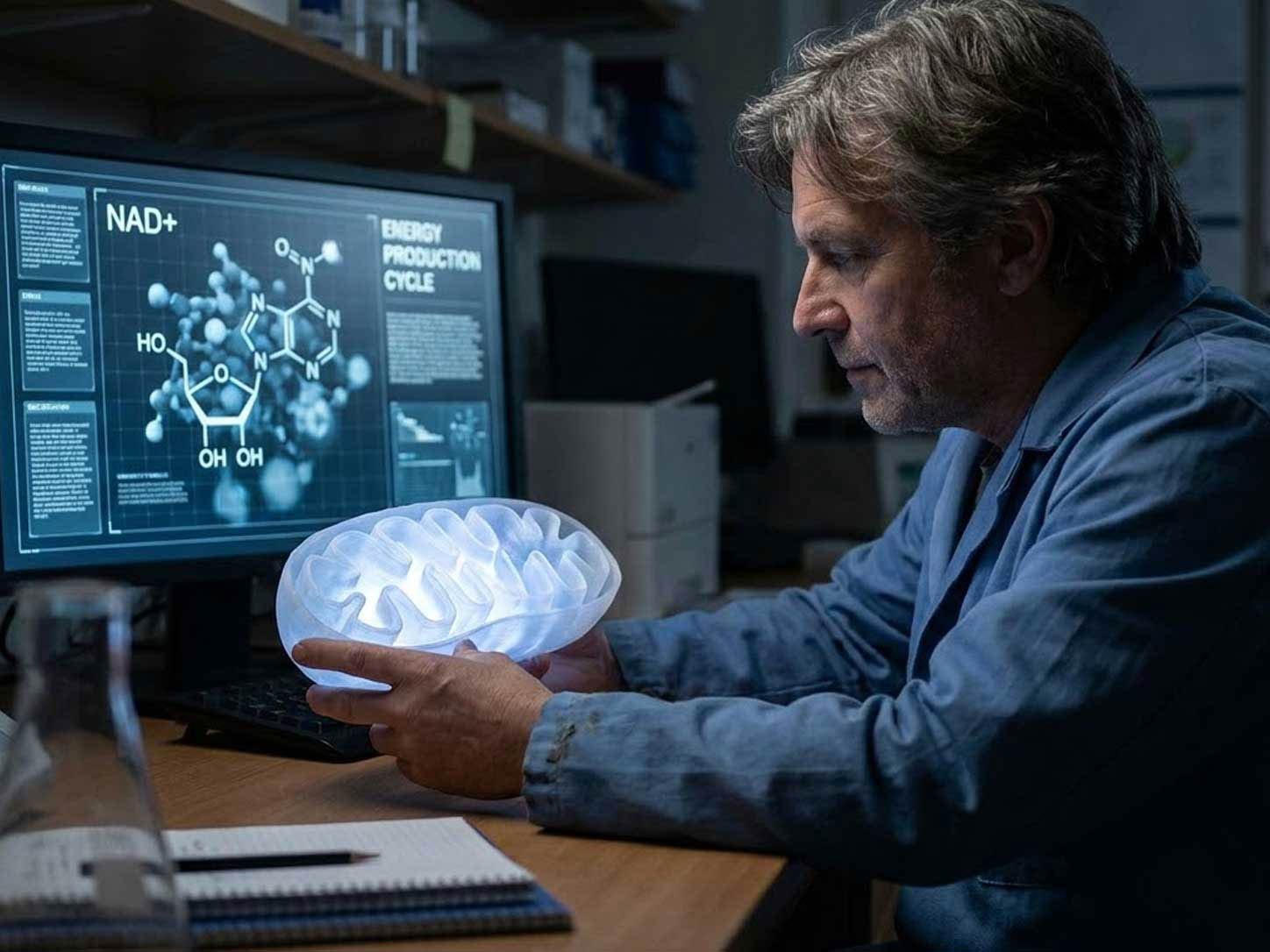
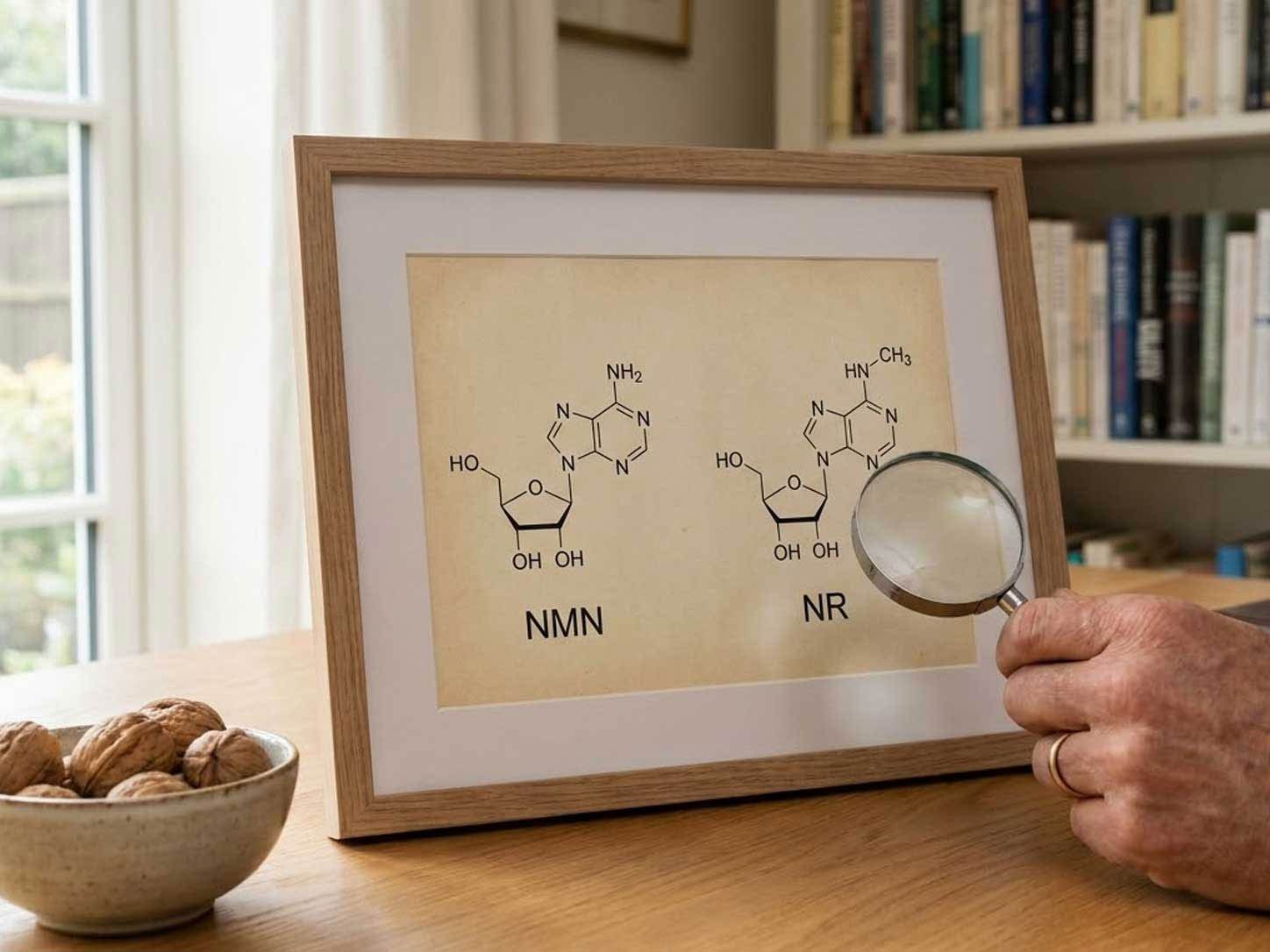

The NAD+ story's players — evidence-graded
Every card links to a full BodyFinds journey, graded by evidence strength. The frontier pages carry the honest grades the field has earned so far.
The sibling frontier — zombie-cell research, graded with the same mouse-to-human honesty.
research-topicThe healthspan frame — the proven pillars this research aspires to supplement.
research-topicThe hub — the measured predictors and the frontier's place among them.
research-topicThe mitochondrial engine room — where NAD+'s energy job runs and exercise's lever pulls.
research-topicThe neurological thread — early research, honestly graded as early.
research-topicWhy is healthy aging more than just living longer?
The complete BodyFinds healthspan journey — the lifespan-healthspan gap, the metrics that predict independence, and the pillars that compress decline.
Where this information comes from
- PubMed — NAD+ Precursors: Human Trials Database
- PubMed — NAD+ Metabolism and Aging Reviews Database
- FDA — Dietary Supplements (NMN policy) Government
- National Institute on Aging — Aging Biology Research Government
- MedlinePlus — Dietary Supplements Government