Blue Zones & Longevity Diets
The name was literal: a demographer circling a cluster of long-lived Sardinian villages on a map in blue ink. From that 2004 expedition grew the Blue Zones framework — five regions (Okinawa, Sardinia, Nicoya, Ikaria, Loma Linda) where people reportedly live longest, and the shared practices distilled from them: plant-forward eating, movement that never calls itself exercise, a reason to wake up, and each other. This page holds two truths the marketing rarely does: the practices are backed by real independent evidence — a genuine longitudinal cohort in Loma Linda, a 148-study meta-analysis on connection — and the zone identifications themselves are contested, with 2024–2025 analyses suggesting some of the famous clusters were partly artifacts of missing paperwork. Both facts, at their actual strength.

The origin, the practices, and the asterisk
The origin and the framework: working with National Geographic and demographer Michel Poulain, Dan Buettner's expeditions identified five regions with reportedly exceptional concentrations of long-lived people: Okinawa (Japan), Sardinia (Italy), Nicoya (Costa Rica), Ikaria (Greece), and Loma Linda (California — a Seventh-day Adventist community). From interviews and observation, the teams distilled nine shared behaviors — the 'Power 9': move naturally, know your purpose, downshift stress, stop at 80% full, lean plant-forward, drink moderately (the Adventists excepted), belong to community, put loved ones first, and keep the right tribe around you. It is important to say plainly what that method is: a journalist's synthesis of observational expeditions — evocative, hypothesis-generating, and nothing like a controlled study. The denominator behaviors were extracted after the fact, from small populations, by people looking for commonalities. That is the honest frame for everything below.
The practices, and which evidence actually backs them: the reason the Blue Zones outlived the documentary is that its load-bearing pillars each found independent support in stronger research. Plant-forward eating is the best-evidenced behavior in all of nutrition — Mediterranean-style patterns carried a randomized trial (PREDIMED), and the bean-centric plates of Nicoya and Okinawa fit the fiber literature exactly. The Adventist Health Study is the framework's crown jewel: a genuine longitudinal cohort of a whole community practicing most of the Power 9 by religious conviction, with published mortality data — Adventist men lived roughly seven years longer than average Californians, women about four, with vegetarian men showing the lowest mortality of all. Hara hachi bu — the Okinawan practice of eating until 80% full — is sensible practice wisdom, though deliberate calorie restriction in humans is a genuinely complicated literature; the habit deserves its reputation more than the mechanism has been proven. And movement that never announced itself — walking hills, gardening, kneading dough — maps onto the activity research showing that incidental daily movement predicts outcomes at least as well as gym membership.
The connection pillar — the strongest of them all: it deserves separation from the food talk, because the evidence is of a different grade. The meta-analysis by Holt-Lunstad and colleagues (148 studies, over 300,000 participants) found that stronger social relationships carried a 50% increase in survival likelihood — an effect size in the territory of the famous mortality risk factors, which is why researchers increasingly frame isolation as a clinical-scale risk. Okinawa's moais — lifelong social circles formed in childhood — and Nicoya's plan de vida (the 'reason to wake up,' Ikaria's ikigai by another name) are the framework's version of this pillar, and the purpose-mortality research, while observational, points the same direction: having a reason is associated with living longer, and retiring from purpose is not neutral. If this page had to rank the pillars by evidence, connection would sit at the top — above any food.
The asterisk — and why the lessons survive it anyway: in 2024–2025, analyses by Newman, Spitzer, and colleagues delivered the field's most important correction: the world's documented oldest-old clusters concentrate in regions with short average lifespans, worse poverty, and — critically — the worst record-keeping. Okinawa's birth records largely burned in World War II; Sardinia's recorded ages swelled suspiciously after a pension system arrived in 1939; several famous 'supercentenarian' hotspots correlate with documentation gaps more than with diet. The honest conclusion is not that the framework is fraud — it is that the geography was always shakier than the behaviors. Loma Linda stands apart here precisely because it is the one zone resting on real cohort data rather than centenarian certificates. And the commercial layer deserves its own honesty: Blue Zones® is a trademarked brand — books, a Netflix documentary, and a company that licenses community programs — and this page is editorially independent of all of it. The synthesis that survives every critique: the practices (plants, movement, purpose, people) are each supported by literatures that never needed the five zones to be real. The zones were the story. The behaviors were the evidence.
- The framework began with a blue pen circling Sardinia, 2004 — five zones, nine distilled behaviors, all observational.
- The strongest anchor is the Adventist Health Study: a real cohort, +7 years (men) and +4 (women) versus average Californians.
- Connection is the best-evidenced pillar: +50% survival likelihood with strong social ties, per a 148-study meta-analysis.
- Hara hachi bu (eat to 80% full) is sound practice; deliberate calorie restriction in humans is a genuinely mixed literature.
- 2024–2025 record-quality analyses found oldest-old clusters where records are worst — Okinawa's burned, Sardinia's pension-inflated.
- The synthesis: the zones may be partly paperwork — the practices are backed by literatures that never needed the zones at all.
“The zones may be shakier than the lessons — and the lessons were never really about geography anyway.”
— The blue zones principleThe factor families
The plant slant
Beans, whole grains, and vegetables at the center of every long-lived table — the pillar with randomized-trial backing.
Explore Nutrition Fundamentals →Movement without gyms
Hills, gardens, and kneading dough — incidental daily activity that predicts outcomes at least as well as exercise.
Explore Muscle & Aging →The reason to wake up
Ikigai, plan de vida — purpose by any name is associated with longer life in observational research across cultures.
Explore Healthy Aging →The 80% rule
Hara hachi bu — moderation as inherited practice rather than tracked calorie deficit.
Explore Appetite & Metabolism →The story, frame by frame

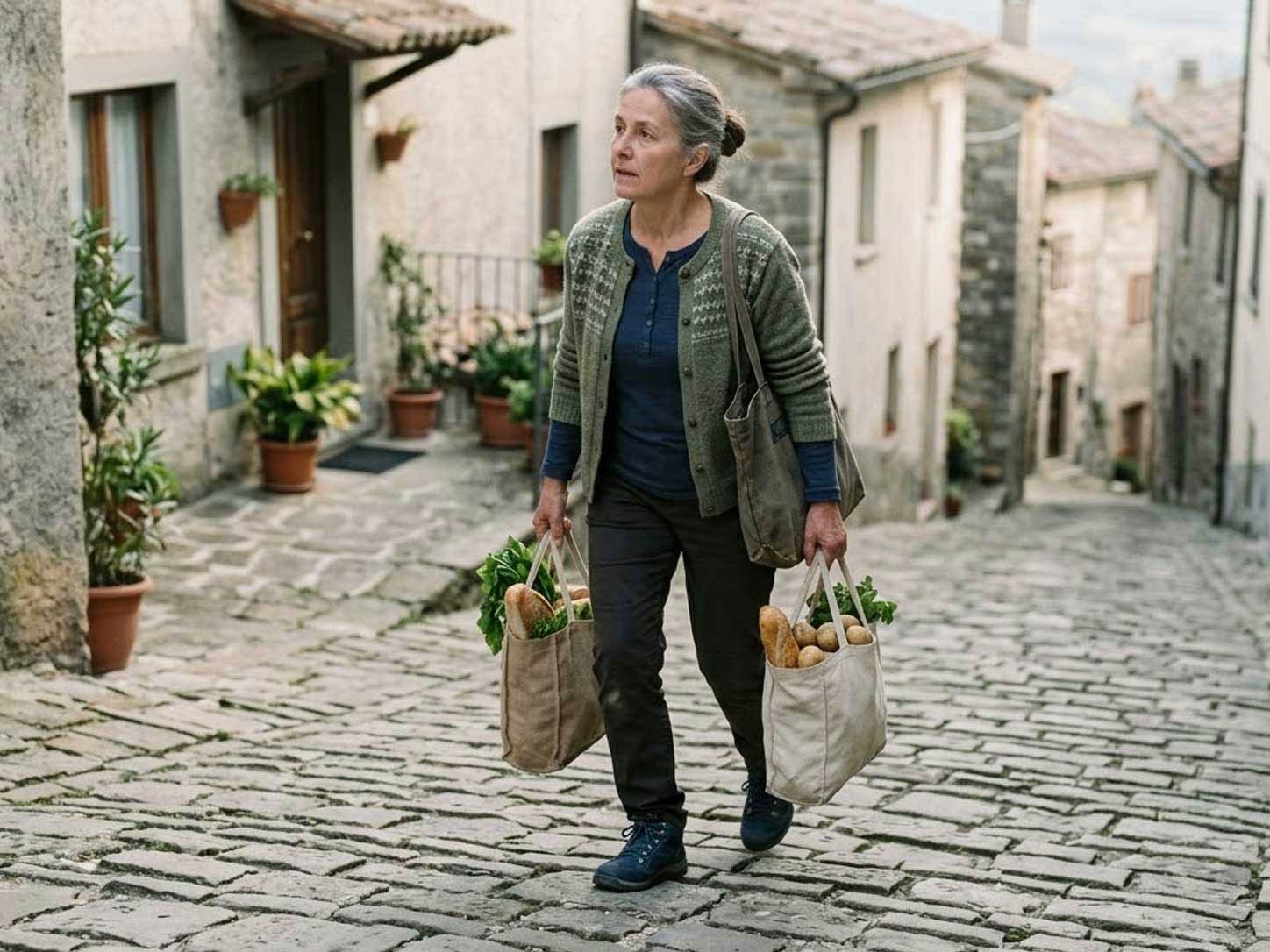

The blue zones story's players — evidence-graded
Every card links to a full BodyFinds journey, graded by evidence strength. On this page the grades carry the thesis: the practices are established in their own literatures; the places were never the evidence.
The plant slant — the pillar with randomized-trial backing (PREDIMED) independent of any zone.
research-topicThe movement pillar — muscle kept through daily loading predicts survival in its own vast literature.
research-topicThe 80% rule — sound practice, honest about the complicated deliberate-restriction evidence in humans.
research-topicThe healthspan frame — the reason the whole framework exists, and its most defensible claim.
research-topicThe downshift and purpose pillars — observational but directionally consistent across cultures.
research-topicThe fitness contrast — the strongest single predictor, and the reminder that the pillars stack rather than compete.
research-topicWhy is healthy aging more than just living longer?
The complete BodyFinds healthspan journey — the lifespan-healthspan gap, the metrics that predict independence, and the pillars that compress decline.
Where this information comes from
- Adventist Health Study — cohort research, Loma Linda University Institution
- PLoS Medicine — Social Relationships and Mortality Risk: A Meta-analytic Review (Holt-Lunstad, Smith & Layton, 2010) journal
- Lancet Healthy Longevity / medRxiv — oldest-old record-quality analyses (Newman, Spitzer et al., 2024–2025) journal
- Okinawa Centenarian Study — original cohort research Institution
- WHO — Ageing and Health Government
- Blue Zones — Dan Buettner's original framework and expeditions (identified as source; editorially independent) Institution