Coffee and Health: What 200 Studies Eventually Agreed On

For decades, coffee sat on nutrition's suspect list. Then enormous umbrella reviews — compiling hundreds of individual studies and millions of participants — flipped the verdict. Moderate coffee drinking is associated with lower risks of type 2 diabetes, liver disease, Parkinson's disease, and several cancers. The rehabilitation is one of the most interesting stories in modern nutrition science — and it comes with important caveats that the headlines skip.
The evidence has moved from 'coffee is probably bad for you' to 'coffee is probably fine, possibly beneficial, at moderate intakes — with real individual variation that matters.' The genetics of caffeine metabolism may explain why your experience differs from your friend's.
The umbrella review that changed everything
In 2017, researchers published an umbrella review in the BMJ that compiled 201 studies and 67 meta-analyses covering millions of participants. Their conclusion was striking: moderate coffee consumption (3–4 cups per day) was consistently associated with lower risk across multiple health outcomes — type 2 diabetes, liver disease, Parkinson's disease, endometrial cancer, melanoma, and depression — compared to non-drinkers.
The key word is 'associated'. These are observational studies — enormous, replicated, dose-responsive, and consistent — but not randomized controlled trials. It's possible that coffee drinkers differ from non-drinkers in other ways (they're more likely to be employed, social, physically active — all health-protective factors). The associations are strong enough to be taken seriously, but the causation debate is honest and ongoing.
What's actually in your cup
Coffee isn't just caffeine — it's a complex mixture of over 1,000 bioactive compounds. The ones researchers think matter most:
- Polyphenols and chlorogenic acids. Powerful antioxidants that may explain many of coffee's observed benefits — they reduce inflammation markers and support blood vessel function.
- Caffeine. The stimulant — blocks adenosine (the sleepy chemical), releases adrenaline, and enhances cognitive performance. Effects last 4–6 hours.
- Trigonelline. A compound with neuroprotective properties studied for cognitive health.
- Diterpenes (cafestol, kahweol). Found in unfiltered coffee — these raise LDL cholesterol modestly. Paper filters remove them almost entirely.
- Melanoidins. Antioxidant compounds formed during roasting — browned, complex, and beneficial.

Your genes matter more than you think
The most important individual variable is something you can't taste or feel: how fast you metabolize caffeine. A single gene variant (CYP1A2) divides people into fast and slow metabolizers — roughly half of the population carries each version.
This matters because slow metabolizers clear caffeine differently — it stays in their system longer, at higher levels. Some studies suggest that heavy coffee consumption in slow metabolizers may be associated with worse cardiovascular outcomes, while the same consumption in fast metabolizers is neutral or beneficial. The research isn't settled, but it raises a real question about one-size-fits-all coffee advice.
You don't need a genetic test to figure out which group you're in. If one morning cup leaves you wired past mid-afternoon, or if coffee disrupts your sleep even when you stop by noon — your body is telling you something. Your subjective response is a reasonable proxy for your metabolism.
No lab needed: if a 9am coffee still feels active at 5pm, or if skipping coffee by noon still disrupts your sleep, you're likely a slow metabolizer. Fast metabolizers typically feel coffee for 2–4 hours and sleep fine after a morning cup.
The timing problem: caffeine and sleep
Caffeine's half-life is 5–6 hours in most people. A 3pm coffee still has half its dose active at 9pm, quietly taxing deep sleep even if you fall asleep fine. The compound doesn't prevent sleep onset — it reduces deep sleep quality, which you may not notice but your body does.
The practical curfew: stop caffeine 8+ hours before your intended bedtime. For a 11pm sleep target, that means no caffeine after 3pm. For a 10pm target, stop by 2pm. This single change improves sleep for many people within a week — without giving up coffee entirely.
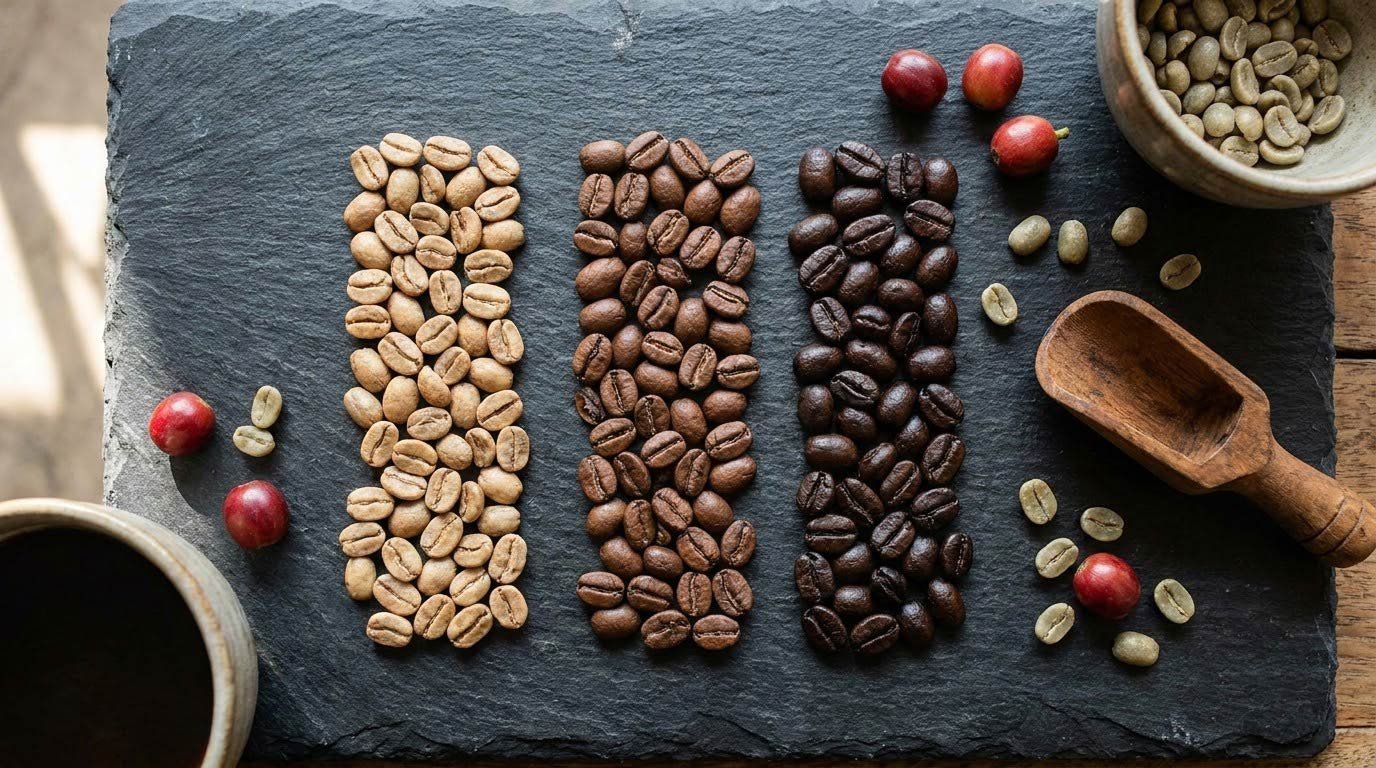
If you enjoy coffee and sleep well, the evidence is on your side. If it costs you sleep, no antioxidant profile compensates.— The honest calculus
The preparation detail most people miss
How you brew your coffee affects its health profile more than most people realize — specifically, whether the diterpenes (cafestol and kahweol) end up in your cup or get filtered out.
- Filtered (drip, pour-over): Paper filters remove cafestol almost entirely. This is the preparation associated with the best health outcomes in studies — and the version cardiologists recommend.
- French press (metal mesh): No paper filter — diterpenes pass through. Regular consumption raises LDL cholesterol by a modest but measurable amount.
- Espresso: Moderate diterpene content — less than French press per serving, but multiple shots add up.
- Instant: Low diterpenes, but also lower in beneficial polyphenols. The net effect is roughly neutral.
- What you add: The 400-calorie caramel macchiato is a different beverage from a black coffee. The sugar and cream often matter more than the coffee itself.

If you drink French press daily and have elevated LDL cholesterol, switching to paper-filtered coffee is a free intervention that removes the cholesterol-raising compounds without reducing the beneficial polyphenols. Same beans, better outcome.
The honest caveats
The rehabilitation of coffee is real, but so are these limitations — worth knowing before you triple your intake:
- Association is not causation. Coffee drinkers differ from non-drinkers in many ways. The research is strong enough to take seriously but not randomized.
- Pregnancy changes the calculus. Current guidance recommends limiting caffeine during pregnancy (commonly to under 200mg/day). This is not the population where 'more coffee is better' applies.
- Anxiety and heart conditions. Caffeine can worsen anxiety symptoms, trigger palpitations in sensitive individuals, and interact with certain medications. If you have an arrhythmia or anxiety disorder, your clinician's guidance supersedes any observational study.
- Sleep is the foundation. If coffee costs you sleep — even indirectly through reduced deep sleep quality — the net effect may be negative regardless of the antioxidant content.
- Not all coffee drinks are equal. The evidence is for coffee, not for 500-calorie sugary coffee beverages.
The liver connection — the strongest signal
If there's one outcome where coffee's evidence is most compelling, it's liver health. Multiple large studies and meta-analyses have found that coffee consumption is associated with lower risk of liver cirrhosis, liver cancer, and non-alcoholic fatty liver disease — with some of the largest effect sizes of any dietary factor studied.
The mechanism is plausible, not just statistical: coffee's compounds reduce liver inflammation, improve insulin sensitivity, and may shift fat metabolism in ways that protect liver cells. For people at high risk of liver disease, this is the population where moderate coffee has the most meaningful signal.
The diterpenes that raise LDL cholesterol are the same compounds showing liver-protective effects. This means French press may be better for your liver but worse for your LDL — a genuine tradeoff that depends on your individual cardiovascular risk profile.
The practical framework
Bringing it together — here's the evidence-based guide to drinking coffee as if the research mattered:
- 3–4 cups daily is the range with the most consistent health associations. More than that shows diminishing or unclear returns.
- Stop by early afternoon (8+ hours before bedtime) to protect sleep quality — the foundation everything else sits on.
- Use paper filters if cardiovascular health is your priority. Use French press if liver health is your priority and your LDL is already good.
- Keep it black or close to it. The sugar, syrups, and cream in café drinks often exceed the coffee's contribution to your health.
- Listen to your body. If coffee makes you anxious, disrupts your sleep, or gives you palpitations, your individual response overrides any population-level study.
The evidence isn't 'coffee is a superfood.' It's 'coffee is fine, possibly good for you at moderate doses — with honest individual variation.'— The calibrated version of the rehabilitation
If you drink coffee: enjoy 2–4 cups, stop by early afternoon, and use paper filters. If you don't: the evidence doesn't suggest you should start for health reasons alone. Either way, don't let a beverage replace the fundamentals — sleep, movement, and a whole-food dietary pattern still carry more evidence than anything in your mug.
When this article is not enough
If you have a heart condition, anxiety disorder, are pregnant, or take medications that interact with caffeine, the coffee conversation belongs with your clinician — not the internet. Caffeine interacts with certain medications, can trigger arrhythmias in sensitive people, and the pregnancy guidance is genuinely different from the general population advice.
Green Tea Extract: The Other Antioxidant Powerhouse
The caffeinated antioxidant alternative — the full journey: EGCG, L-theanine's calm-alert state, metabolism effects, and honest grades for heart and brain.
Explore the green tea journey →Where this information comes from
- meta-analysis compiling 201 studies and 67 meta-analyses
- 3–4 cups/day associated with largest benefit across multiple outcomes
- association vs causation framing
- 400mg/day safe daily limit for healthy adults
- caffeine content of common beverages
- FDA caffeine guidance
- fast vs slow caffeine metabolizer genetics
- cardiovascular outcomes differing by genotype
- why individual responses vary
- caffeine half-life and sleep disruption
- timing recommendations for better sleep
Our evidence principles
How we evaluated the claims on this page
- Prefer government health agencies, major medical organizations, clinical guidelines, systematic reviews, and well-designed human studies.
- Distinguish established evidence from promising but uncertain research.
- Avoid presenting coffee or caffeine as universally beneficial or universally harmful — individual variation is real.
- Use numbers only when the population, context, and evidence are clear.
- Encourage clinician involvement when caffeine interacts with medications, pregnancy, anxiety, or heart conditions.
Educational information — not medical advice
This article is for educational purposes and does not provide medical advice. Caffeine interacts with certain medications, may affect pregnancy outcomes, and can worsen anxiety or heart rhythm conditions in sensitive individuals. If you have a heart condition, anxiety disorder, are pregnant, or take medications that interact with caffeine, consult your healthcare provider about appropriate intake. BodyFinds should display its medical disclaimer and source methodology alongside this article.