Vitamin C and Immunity: Separating Science from Supplement Aisles
Vitamin C may be the most famous nutrient in the world — and the most misunderstood. Nobel prizes were chased with megadoses, cold sufferers still reach for orange juice, and yet the actual evidence tells a more nuanced story than either the skeptics or the supplement aisle admit. Eight decades of research have produced genuine answers — and they're not what most people expect.
Vitamin C supports immune function — that part is real biochemistry. But supplementing normal levels doesn't prevent colds in the general population. The consistent effects are modest: regular supplementation slightly shortens colds (8% in adults, 14% in children). The 500mg and 1000mg products are, for most people, creating expensive urine.
What the trials actually show
The Cochrane Collaboration — the gold standard for medical evidence synthesis — has reviewed the vitamin C and common cold literature multiple times, most recently covering 29+ randomized controlled trials. The findings are remarkably consistent:
- Prevention in the general population: Regular vitamin C supplementation does not prevent colds. The incidence in supplement users and placebo groups is the same.
- Prevention in specific populations: In people under extreme physical stress (marathon runners, skiers, soldiers in subarctic conditions), regular supplementation cut cold incidence roughly in half. This is real but applies to a narrow population.
- Duration: Regular supplementation modestly shortened colds — by about 8% in adults and 14% in children. For a 7-day cold, that's about half a day.
- Taken after symptoms start: No consistent effect. Taking vitamin C once you're already sick doesn't measurably shorten the cold.
Vitamin C doesn't prevent your cold. Used consistently, it might shorten it by a day — which may still be worth a dollar a month.— The honest summary
The saturation ceiling
Here's the biochemistry that explains why megadoses don't work: blood levels of vitamin C saturate around 200mg daily for most adults. Beyond that, absorption drops sharply and excess exits in urine. The 1000mg and 2000mg products deliver diminishing returns — your body literally can't use what it can't absorb.
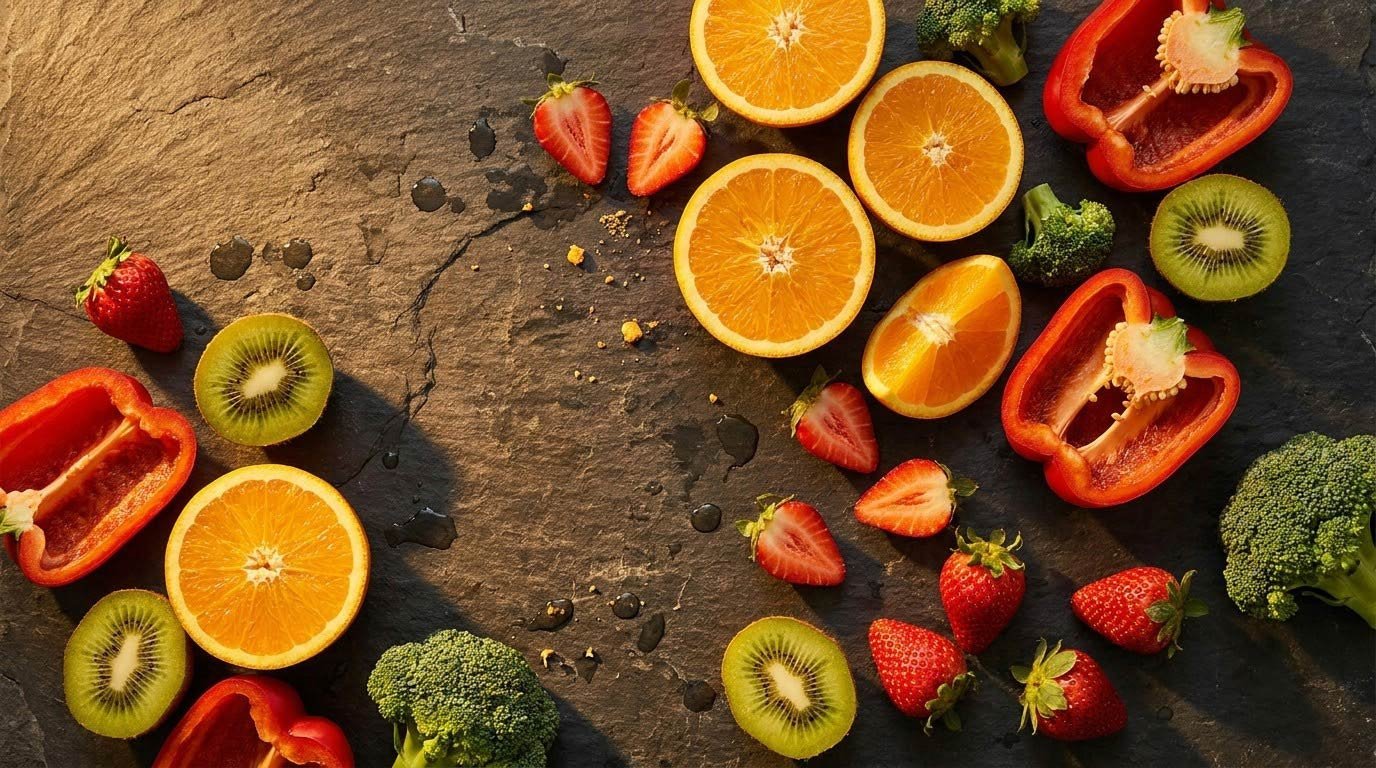
This is why the RDA (75–90mg for adults) is far below what supplement labels imply you need. One bell pepper or one cup of strawberries exceeds the RDA many times over. Five servings of varied produce daily makes vitamin C deficiency nearly impossible without supplements.
What about immune function?
The mechanistic story is real and worth understanding — even though it doesn't translate to 'megadose C prevents infections.' Here's what vitamin C actually does in the immune system:
- Neutrophils concentrate vitamin C at 100× plasma levels. These are your first-response immune cells, and they accumulate vitamin C aggressively — it supports their oxidative burst (the chemical weapon they use to kill pathogens) and protects them from their own oxidative damage.
- T-cell and phagocyte function. Vitamin C supports the proliferation and activity of T-cells and phagocytes — the cells that identify and engulf invaders.
- Epithelial barrier support. Vitamin C is required for collagen synthesis, which maintains the physical barriers (skin, mucous membranes) that keep pathogens out in the first place.
- Deficiency impairs, correction restores. This is the key framing: vitamin C deficiency genuinely impairs immune function. Correcting deficiency restores it. Supplementing already-sufficient levels adds little.
Vitamin C is essential for immune function. Deficiency breaks the system. But correcting deficiency is different from megadosing a sufficient system — the trials consistently show that adding more C to an already-adequate baseline doesn't supercharge immunity.

The food-first approach
The RDA for vitamin C (75–90mg) is easy to exceed with real food. Here are the richest sources, ranked:
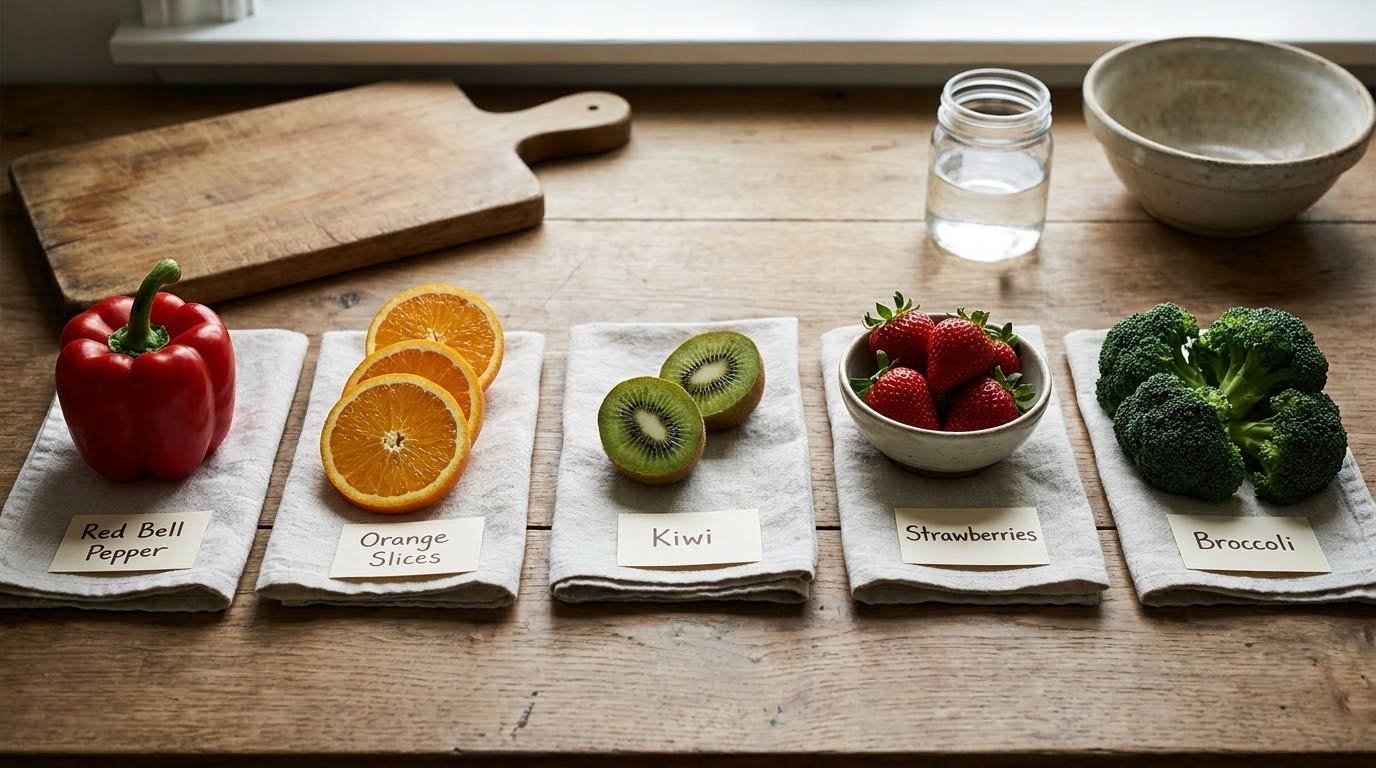
- Red bell pepper — ~152mg per cup (raw). The single best common source.
- Kiwi — ~93mg per fruit. More than an orange, per serving.
- Orange — ~70mg per medium fruit. Familiar but not the top source.
- Strawberries — ~85mg per cup.
- Broccoli — ~81mg per cup (raw), ~50mg cooked.
- Papaya — ~88mg per cup.
- Tomatoes — ~20mg per medium — modest but frequently consumed.
The edge cases worth knowing
A few specific situations where vitamin C supplementation has stronger evidence than the general 'immunity' framing:
- Smokers and passive smokers. Smoking increases oxidative stress and lowers vitamin C levels. The RDA is 35mg higher for smokers — one of the few nutrient recommendations that varies by this habit.
- People with limited fruit/vegetable intake. If your diet is genuinely low in produce, a modest supplement (100–250mg) is a reasonable gap-filler.
- Extreme physical stress. The marathon-runner finding is real — if you're training at that intensity, regular supplementation genuinely halves cold incidence.
- Certain medical conditions. Malabsorption, kidney disease (a specific concern with vitamin C and oxalate), and some medications affect vitamin C needs — a clinician conversation, not an internet decision.
High-dose vitamin C supplementation (above 1000mg daily) is associated with increased risk of kidney stones in men — likely because vitamin C is metabolized to oxalate. If you have a history of kidney stones, this is a genuine caution that your clinician should weigh in on.
The practical protocol
Bringing the evidence together — the realistic approach to vitamin C and immune health:
- Food first. One bell pepper, one kiwi, or one cup of strawberries exceeds the RDA. Five servings of varied produce makes deficiency nearly impossible.
- If supplementing, stay modest. 100–250mg daily is what the absorption evidence supports. Above ~200mg, you're past saturation.
- Don't megadose at cold onset. The trials show no consistent effect from taking C after symptoms begin. You're better served by rest and fluids.
- Consistency beats intensity. If you choose to supplement, daily use (which shortens colds by 8%) beats emergency megadoses (which don't).
- Know your risk group. Smokers, low-produce eaters, and extreme athletes have genuinely higher needs — and a different risk-benefit calculation.
- Don't skip the fundamentals. Sleep, exercise, and a varied diet carry more immune evidence than any single nutrient.
This week: eat one vitamin C-rich food with breakfast (bell pepper, kiwi, or strawberries). If you want a supplement, 100–200mg daily is the evidence-backed dose — not the 1000mg the shelf pushes at you.
When this article is not enough
If you experience frequent infections, slow wound healing, bleeding gums, or unexplained fatigue, seek medical evaluation. These can signal vitamin C deficiency or other conditions that require diagnosis — not self-treatment with megadoses.
Vitamin C: The Antioxidant Essential
The full journey: forms, doses, the immune evidence, the saturation ceiling, and honest grades for colds, skin, and antioxidant claims.
Explore the vitamin C journey →Where this information comes from
- meta-analysis of 29+ trials
- 8% reduction in cold duration in adults
- 14% reduction in children
- no preventive effect in general population
- preventive effect in marathon runners and extreme stress
- recommended daily intake (75–90mg)
- upper tolerable limit (2000mg)
- plasma saturation at ~200mg daily
- food sources with vitamin C content
- neutrophil vitamin C accumulation at 100× plasma levels
- T-cell and phagocyte function studies
- epithelial barrier support
- population-level vitamin C intake data
- percentage meeting recommendations
Our evidence principles
How we evaluated the claims on this page
- Prefer government health agencies, major medical organizations, clinical guidelines, systematic reviews, and well-designed human studies.
- Distinguish established evidence from marketing claims.
- Avoid presenting vitamin C as a cure, prevention, or universal immunity booster.
- Use numbers only when the population, context, and evidence are clear.
- Encourage clinician involvement when immune concerns relate to diagnosed conditions.
Educational information — not medical advice
This article is for educational purposes and does not diagnose, treat, or prevent any medical condition. If you have frequent infections, slow wound healing, or symptoms of vitamin C deficiency, seek professional evaluation. If you have a history of kidney stones, consult your healthcare provider about high-dose vitamin C. BodyFinds should display its medical disclaimer and source methodology alongside this article.