The Case for Protein at Breakfast

Most people eat the majority of their protein at dinner — a pattern that leaves morning muscle protein synthesis under-stimulated and afternoon cravings exaggerated. Studies on protein distribution show that spreading intake evenly — roughly 25–30g per meal — supports muscle maintenance better than the same total crammed into one evening meal.
A protein-rich breakfast (~25–30g) does three things a refined-carb breakfast doesn't: triggers muscle-building at a time when the body hasn't received protein for 10+ hours, steadies glucose for the morning, and reduces the cravings that drive the 4pm snack spiral.
The case for front-loading
The research on protein timing is consistent on one point: muscle protein synthesis responds to per-meal doses, not daily totals. The per-meal threshold is roughly 25–30g of high-quality protein — below that, the muscle-building switch doesn't fully press. Above it, the response saturates and the excess is used for energy.
For most people eating a standard Western pattern — cereal or toast for breakfast, salad for lunch, chicken at dinner — that means two of three meals fail to reach the threshold. The dinner alone can't compensate, because the synthesis signal doesn't carry forward.
What the research suggests
- Better muscle maintenance. Studies on protein distribution show that 25–30g per meal supports muscle protein synthesis more effectively than the same total concentrated in one meal — especially in older adults whose per-meal threshold is higher.
- Reduced appetite swings. Protein triggers GLP-1 and PYY (the satiety hormones) and suppresses ghrelin (the hunger hormone). A protein-forward breakfast keeps these signals steady through the morning and into the afternoon.
- Steadier glucose. Protein slows gastric emptying and blunts the glucose spike from any carbohydrates eaten alongside it. The same toast with eggs produces a flatter curve than toast alone.
- Lower total intake. By reducing cravings and increasing fullness, a protein-rich breakfast often reduces total calories consumed across the day — without requiring willpower.
The 30g target — what it looks like
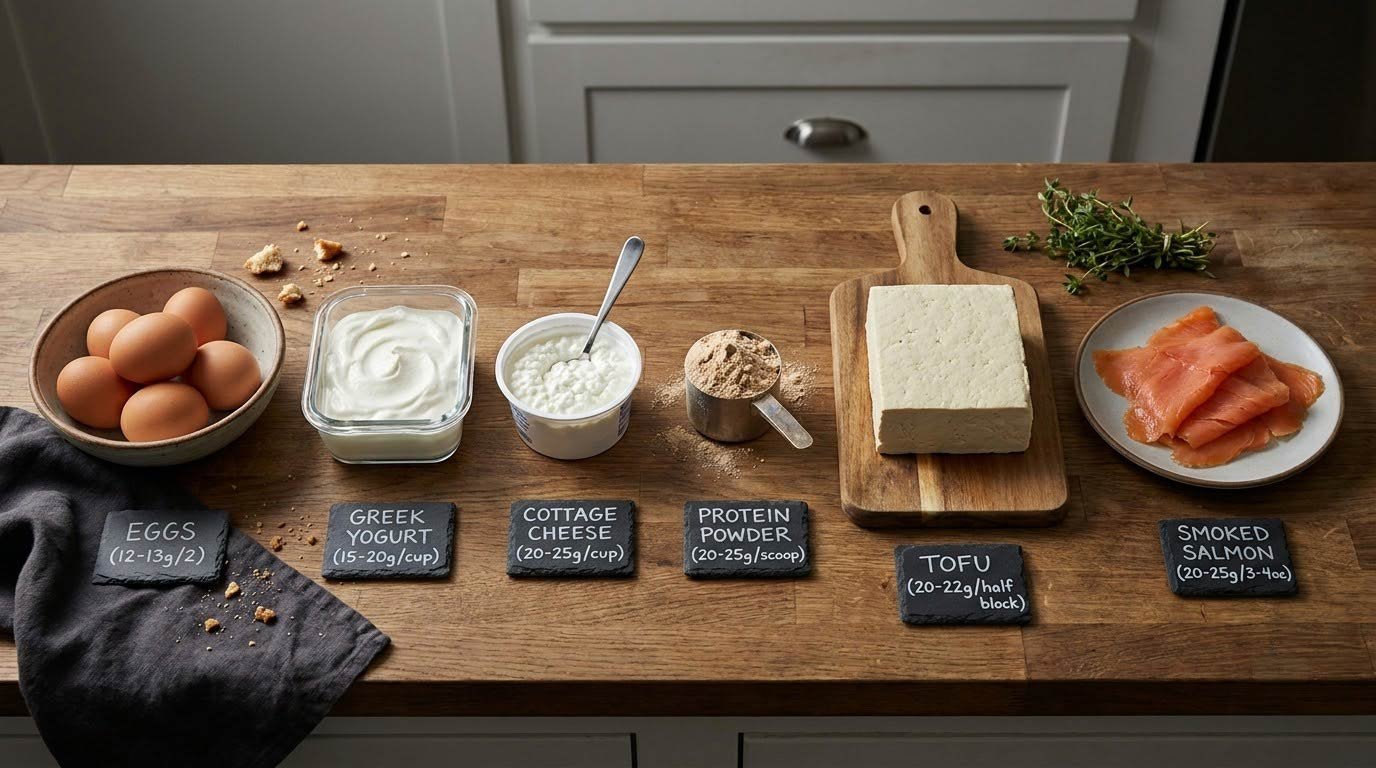
Hitting 25–30g at breakfast is easier than most people think. Here's what gets you there:
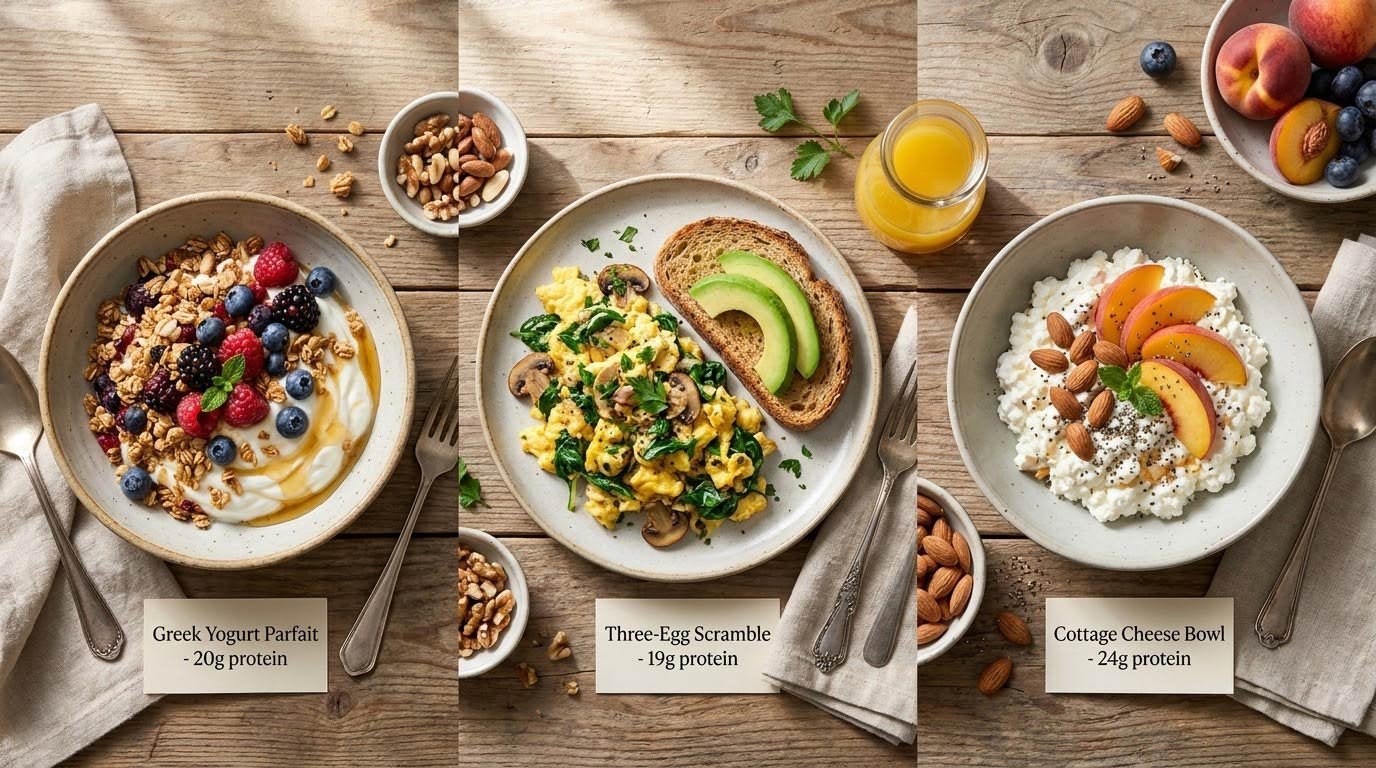
- Greek yogurt with nuts and berries — ~20g protein (1 cup yogurt + 1 oz almonds)
- Three eggs with spinach and feta — ~21g protein
- Cottage cheese bowl with fruit — ~24g protein (1 cup)
- Protein smoothie (whey or plant + milk + banana) — ~25g+ depending on scoop
- Overnight oats with protein powder and chia — ~25–30g
- Smoked salmon on whole grain toast — ~20g
- Tofu scramble with vegetables — ~18–22g
- Leftovers from last night's dinner — no rule says breakfast must be 'breakfast food'
For one week, build a ~30g protein breakfast. Notice: how full you feel at 10:30am, whether the 4pm snack attack arrives, and how steady your energy is through the morning. Most people report the difference within three days.
The anabolic window myth, retired
The famous '30-minute post-workout window' — the idea that you must consume protein within minutes of training or waste the session — is far wider than advertised. Total daily protein and its distribution across meals outperforms sprinting to a shaker. The window is real; it's just measured in hours, not minutes.
For breakfast specifically: the 'window' that matters is the overnight fast. Your body hasn't received dietary protein for 10+ hours. Muscle protein synthesis is at its lowest. The first protein-rich meal of the day resets the clock — which is why breakfast protein has a disproportionate effect relative to its gram count.
The best protein distribution is the one you can maintain — but front-loading beats back-loading for almost everything except dinner enjoyment.— The practical summary

The bottom line
Front-loading protein at breakfast is one of the simplest, cheapest interventions with consistent research support behind it. It doesn't require a supplement, a diet overhaul, or counting every gram — just a deliberate choice to put protein on the first plate of the day.
Tomorrow morning: swap the toast-only breakfast for eggs, or the cereal for Greek yogurt with nuts. Aim for roughly 25–30g. Notice how the morning feels different — fullness, energy, and the absence of the pre-lunch crash. That's the experiment. If it works, you've found a free lever.
Protein: The Building Block
The macronutrient you're structurally made of — the full evidence journey: daily targets, the per-meal threshold, food-first sources, and why needs rise with age.
Explore the protein journey →Where this information comes from
- per-meal protein threshold studies
- spreading vs cramming protein intake
- effect on 24-hour muscle protein synthesis
- protein as most satiating macronutrient
- effect on ghrelin and GLP-1
- breakfast protein and day-long cravings
- protein-forward breakfast and glucose stability
- comparison with refined-carb breakfasts
- recommended dietary allowance
- protein needs by age and activity
- deficiency considerations
Our evidence principles
How we evaluated the claims on this page
- Prefer government health agencies, major medical organizations, clinical guidelines, systematic reviews, and well-designed human studies.
- Distinguish established evidence from promising but uncertain research.
- Avoid presenting a single meal timing or protein amount as universally optimal.
- Use numbers only when the population, context, and evidence are clear.
- Encourage clinician involvement when protein needs relate to kidney disease or specific medical conditions.
Educational information — not medical advice
This article is for educational purposes and does not diagnose, treat, or prevent any medical condition. Protein needs vary by age, activity, medical conditions, and individual circumstances. People with kidney disease should consult their healthcare provider about appropriate protein intake. BodyFinds should display its medical disclaimer and source methodology alongside this article.