Golden Milk, Examined: Turmeric's Real Benefits
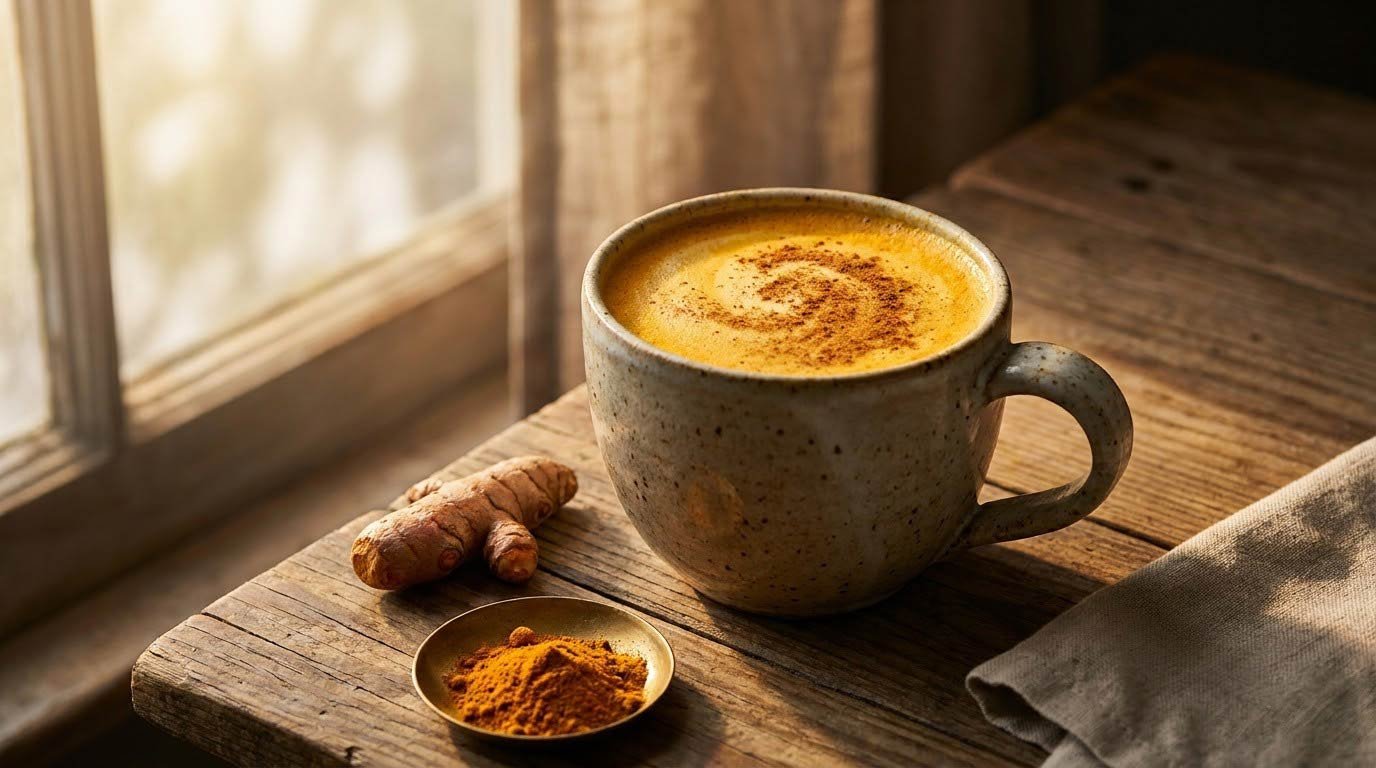
Golden milk went from Ayurvedic tradition to every café menu in a decade. Behind the trend sits genuinely interesting chemistry — curcumin is one of the most-studied anti-inflammatory compounds in food — and a delivery problem that the wellness industry rarely mentions. Your grandmother's recipe was smarter than the marketing.
Turmeric contains real anti-inflammatory compounds — but in culinary doses, the amount is modest and the absorption is poor. The traditional pairings (black pepper + fat) solve the absorption problem remarkably well. Think of turmeric as a daily micro-dose of a real bioactive compound, not a treatment.
What curcumin actually is
Turmeric — the golden-orange root from the ginger family — contains a group of compounds called curcuminoids, of which curcumin is the most abundant and most-studied. Curcumin genuinely shows anti-inflammatory activity in laboratory studies: it inhibits several inflammatory signaling pathways, acts as an antioxidant, and modulates enzymes involved in joint inflammation.
The problem: curcumin is poorly absorbed on its own. It's fat-soluble, rapidly metabolized by the liver and intestinal wall, and virtually insoluble in water. Even eating turmeric by the spoonful delivers only a trickle of usable curcumin to your bloodstream. This is where the delivery science becomes the story.
The absorption catch — and the traditional fix
This is where the story gets genuinely interesting. Traditional curry recipes and Ayurvedic golden milk preparations solved curcumin's absorption problem centuries before pharmacology studied it — through three specific pairings:
- Black pepper (piperine). Piperine, the compound that makes pepper spicy, inhibits the liver and intestinal enzymes that rapidly metabolize curcumin. Studies show it can increase curcumin bioavailability by up to 2,000% — a genuinely dramatic enhancement that turns a poorly absorbed compound into a meaningfully bioavailable one.
- Fat (oil, milk, coconut). Curcumin is fat-soluble. Consuming it with dietary fat increases its dissolution and uptake through the intestinal wall. This is why golden milk is made with milk (or coconut/almond milk) rather than water, and why curry starts with oil.
- Heat. Gentle heating increases curcumin's solubility and may slightly improve its release from the plant matrix. Traditional simmered preparations — stewed curries, slow golden milk — take advantage of this.
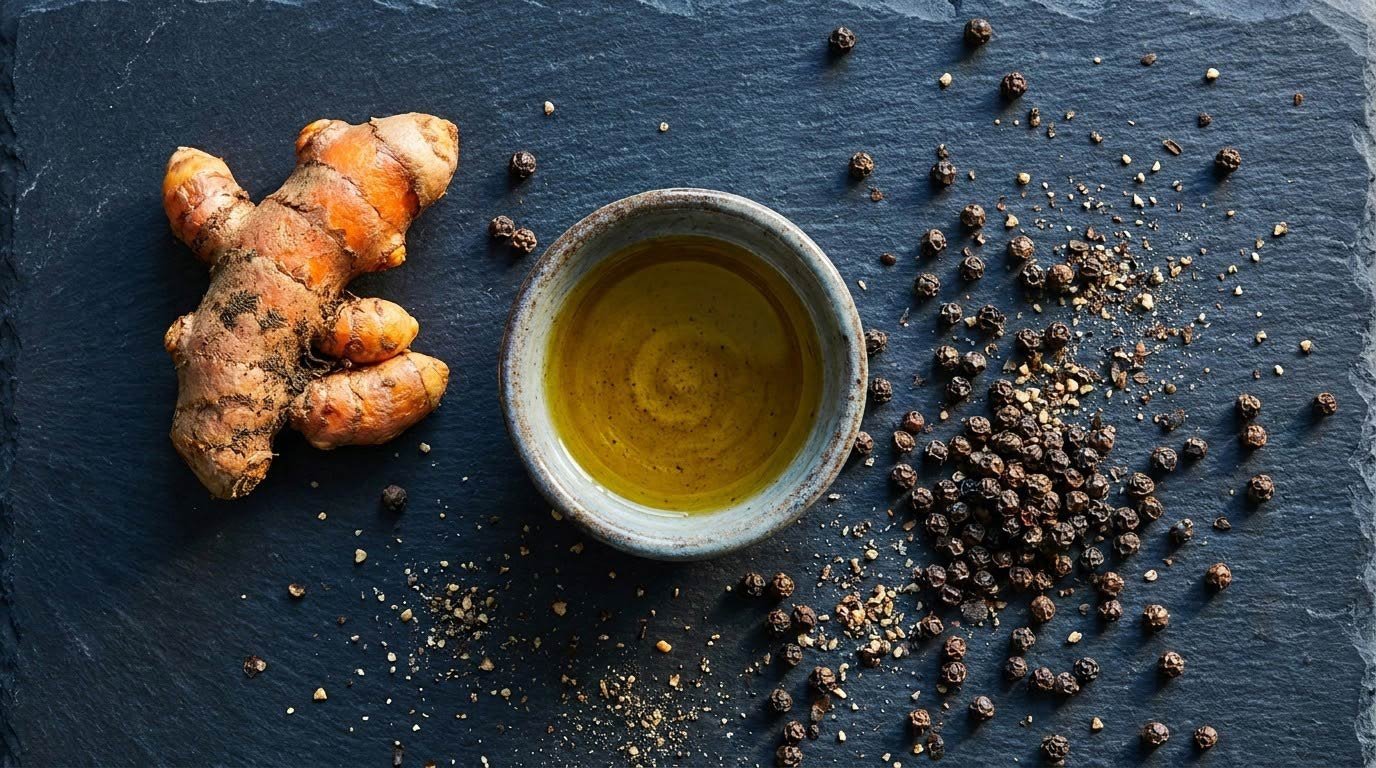
The takeaway: your grandmother's recipe was scientifically optimized — combining turmeric with pepper, fat, and heat in a way that modern pharmacokinetics confirms is the best way to get curcumin from food.
What the trials actually show
Here's where the honest grading matters. The evidence for curcumin falls into two very different categories:
- Lab studies (strong). In cell and animal models, curcumin consistently shows anti-inflammatory, antioxidant, and even anti-cancer properties. The mechanisms are real and replicated.
- Human trials (modest but growing). Several RCTs show meaningful improvements in joint discomfort (particularly for knee osteoarthritis), some inflammatory markers, and certain metabolic measures. Effect sizes are small-to-moderate — comparable to NSAIDs in some joint-comfort trials, with fewer side effects, but not dramatic.
- The dose gap. The trials that showed effects used 500–1,500mg of concentrated curcumin (often absorption-enhanced), not a pinch of culinary turmeric. One serving of golden milk delivers roughly 200–500mg of turmeric, which at 2–8% curcumin means 4–40mg of curcuminoids — well below the trial doses.
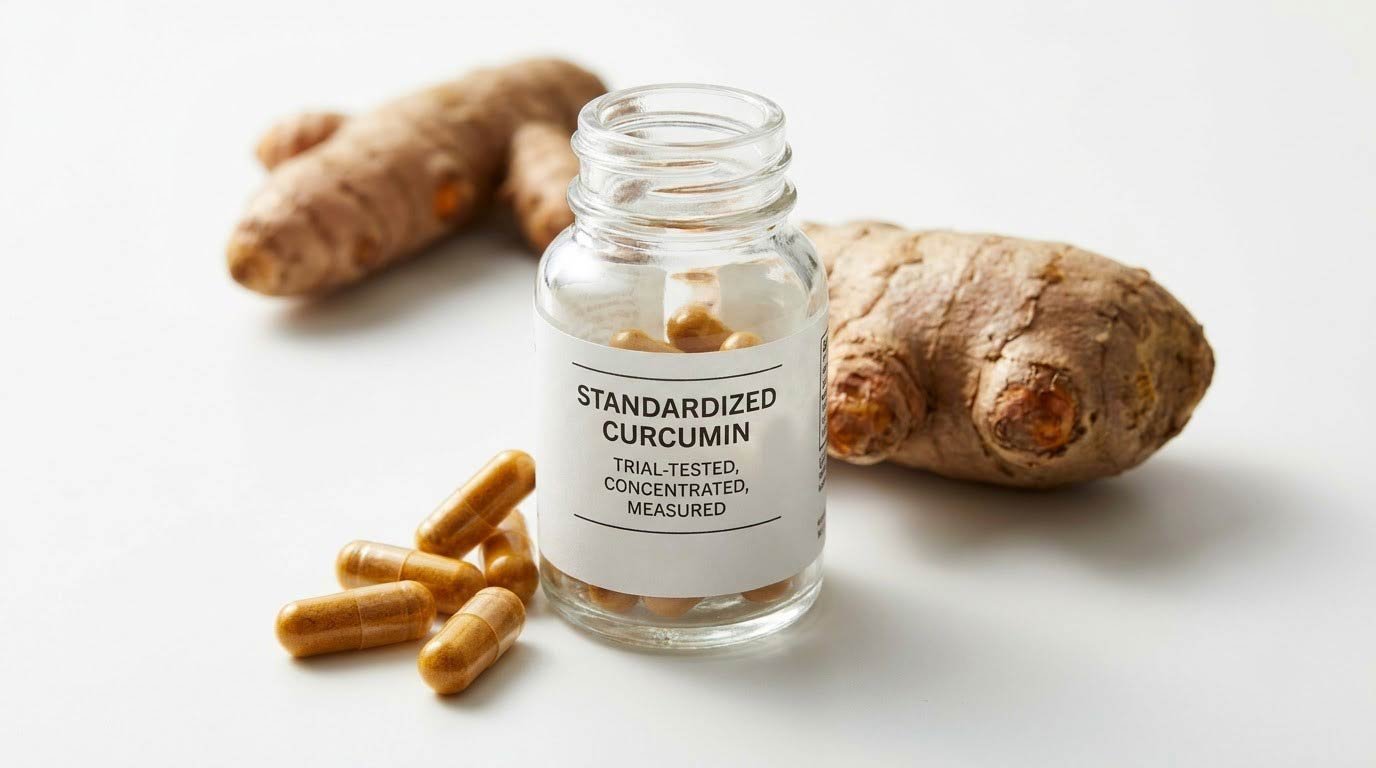
Culinary turmeric is a daily micro-dose of a real bioactive — pleasant, traditional, and modestly beneficial. Standardized curcumin supplements at 500mg+ are the version with clinical trial evidence. Golden milk is a food ritual, not a treatment. Both are fine — know which one you're consuming.
The practical golden milk recipe
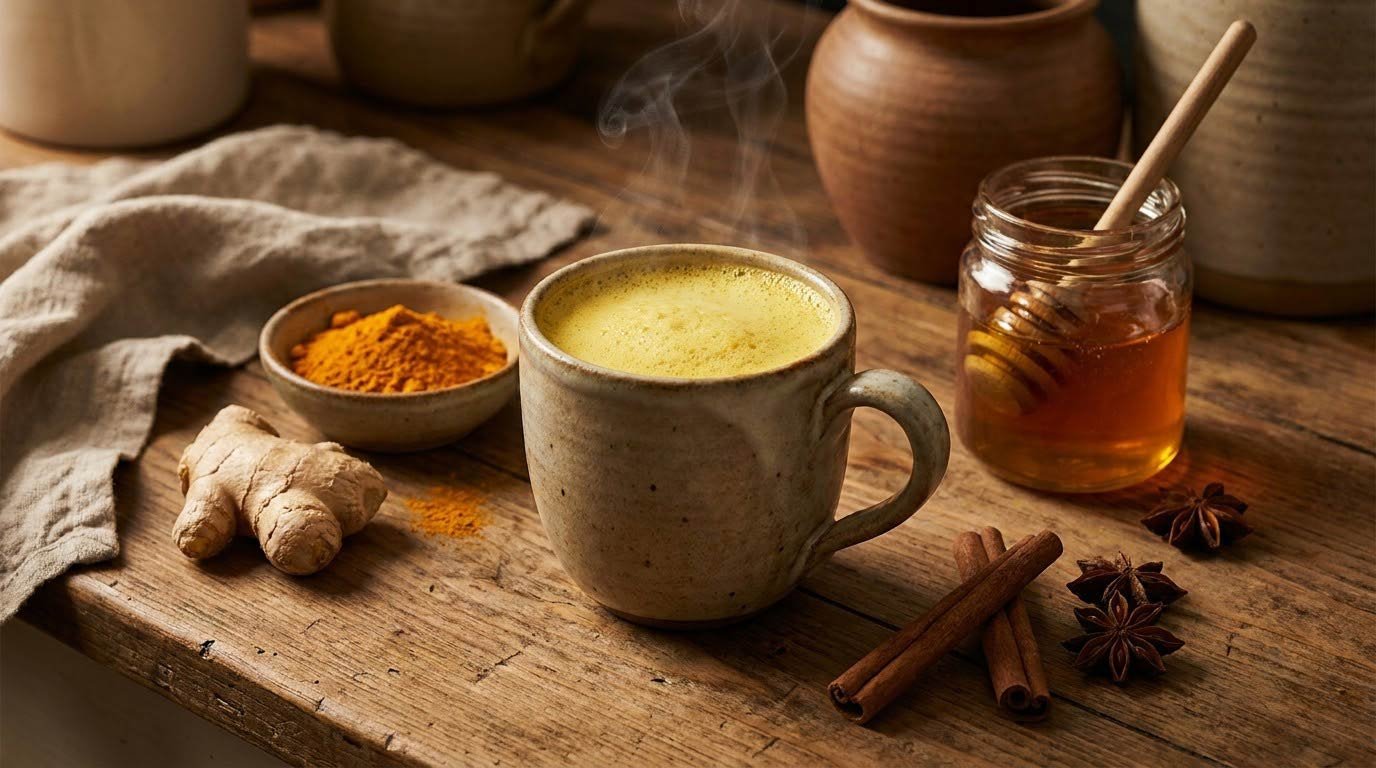
If you want to make golden milk the traditional way (optimized for absorption by intuition or by pharmacokinetics — your call):
- 1 cup milk (dairy, coconut, or almond — the fat helps absorption)
- ½ tsp ground turmeric (or 1 tsp fresh grated)
- A pinch of black pepper (non-negotiable — this is where the 2,000% absorption boost lives)
- ½ tsp cinnamon (flavor, plus its own modest metabolic benefits)
- ¼ tsp fresh ginger (flavor, and a complementary anti-inflammatory)
- 1 tsp coconut oil or butter (dissolves the curcumin)
- Honey to taste (add after heating — raw honey's enzymes survive)
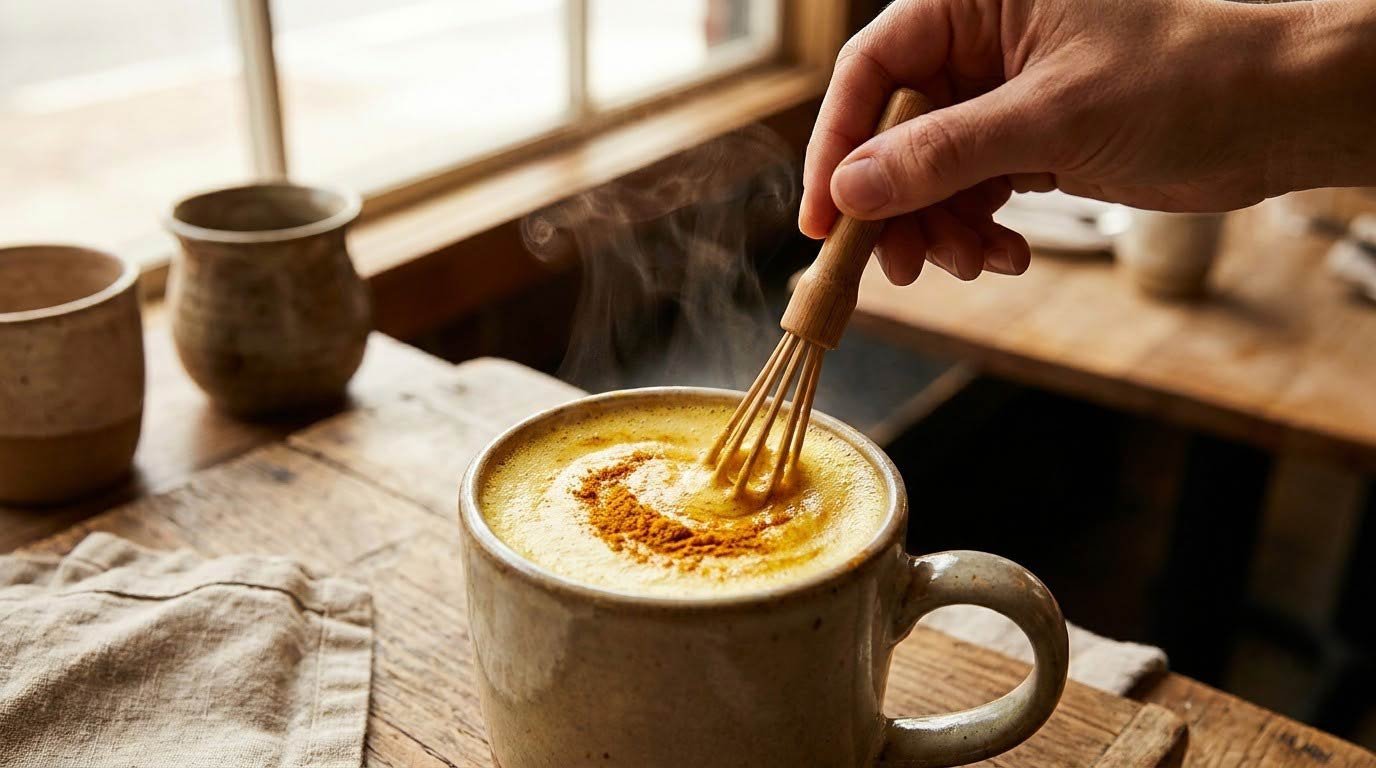
Simmer gently for 5–7 minutes (the heat improves extraction and solubility), then drink warm. The milk fat, the pepper, and the gentle heat together create the conditions for the best possible curcumin absorption from food.
Turmeric in cooking — the everyday strategy
Golden milk is the trend, but curries, soups, and roasted vegetables are the more sustainable daily strategy. The same principles apply: always pair turmeric with black pepper and some source of fat. If you're adding turmeric to a soup or stew, add a crack of pepper and a tablespoon of oil. If you're making a curry, the traditional base of sautéed onions in oil with turmeric and pepper is already pharmacologically correct.
Fresh turmeric root is milder and slightly less concentrated than the dried powder — but both work. If you can find the fresh root (it looks like a small orange ginger), grate it into warm dishes, smoothies, or teas.
When supplementation makes sense
If you have a specific goal — joint comfort, persistent inflammation, metabolic markers — the concentrated version with trial evidence makes more sense than relying on culinary doses. But choose carefully:
- Standardized extracts (with piperine or phytosome): These are the forms used in clinical trials. They solve the absorption problem at the formulation level — you don't need to pair them with pepper and fat.
- Avoid megadose capsules without absorption enhancement — you'll excrete most of it. If the label doesn't mention bioavailability enhancement, the dose reaching your bloodstream is minimal.
- Check for gallbladder or bile-duct issues: curcumin stimulates bile production. People with gallstones or bile-duct obstruction should consult their clinician before supplementing.
- Blood-thinning caution: High-dose curcumin may have mild antiplatelet effects. If you take blood thinners, this is a conversation with your physician.
If you have a diagnosed inflammatory condition (arthritis, IBD, autoimmune disease), a turmeric latte is a pleasant daily ritual but never a treatment plan. Work with your clinician on the actual therapeutic approach. Don't replace medication with a beverage.
The bottom line
Turmeric contains one of the best-studied anti-inflammatory compounds in food — with a genuine absorption problem that traditional cooking solved and modern science confirmed. The honest framework:
- As a daily food: excellent. Pair it with pepper and fat. The compounds are real, the doses are modest, the ritual is enjoyable.
- As a treatment: unproven at culinary doses. The clinical trial evidence exists, but at concentrated doses (500mg+ curcumin), not at the golden-milk level.
- The absorption playbook: black pepper + fat + gentle heat. Non-negotiable if you want the turmeric you eat to actually reach your bloodstream.
- For specific goals: choose a standardized, absorption-enhanced supplement — not megadose capsules without bioavailability technology.
Think of turmeric as a daily micro-dose of a real bioactive — not a treatment, and not nothing.— The fair verdict
This week: make one golden milk (with the pepper + fat + heat trio), or add turmeric + black pepper to one cooked meal. If you want the trial-backed version for a specific goal, choose a standardized supplement — we grade them honestly in the curcumin journey.
Curcumin: The Golden Anti-Inflammatory
The full journey: absorption-enhanced forms, the clinical trials for joints and inflammation, the delivery science, and honest grades for the entire curcumin aisle.
Explore the curcumin journey →Where this information comes from
- piperine increasing curcumin absorption by up to 2000%
- formulation differences (native vs enhanced)
- plasma curcuminoid levels
- trial evidence for joint comfort and inflammatory markers
- effect sizes and duration
- population-specific findings
- turmeric curcumin content in culinary doses
- safety considerations at supplemental doses
- comparison with NSAIDs for osteoarthritis discomfort
- effect size honesty
- trial quality assessment
Our evidence principles
How we evaluated the claims on this page
- Prefer government health agencies, major medical organizations, clinical guidelines, systematic reviews, and well-designed human studies.
- Distinguish established evidence from promising but uncertain research.
- Avoid presenting turmeric or curcumin as a universal anti-inflammatory solution.
- Use numbers only when the population, context, and evidence are clear.
- Encourage clinician involvement when inflammation relates to a diagnosed condition or medication.
Educational information — not medical advice
This article is for educational purposes and does not diagnose, treat, or prevent any medical condition. If you have a diagnosed inflammatory condition, gallstones, or take blood-thinning medications, consult your healthcare provider before using concentrated curcumin supplements. Culinary turmeric at normal food doses is generally safe. BodyFinds should display its medical disclaimer and source methodology alongside this article.