The Spice Rack Pharmacy: Turmeric, Ginger, and What's Real
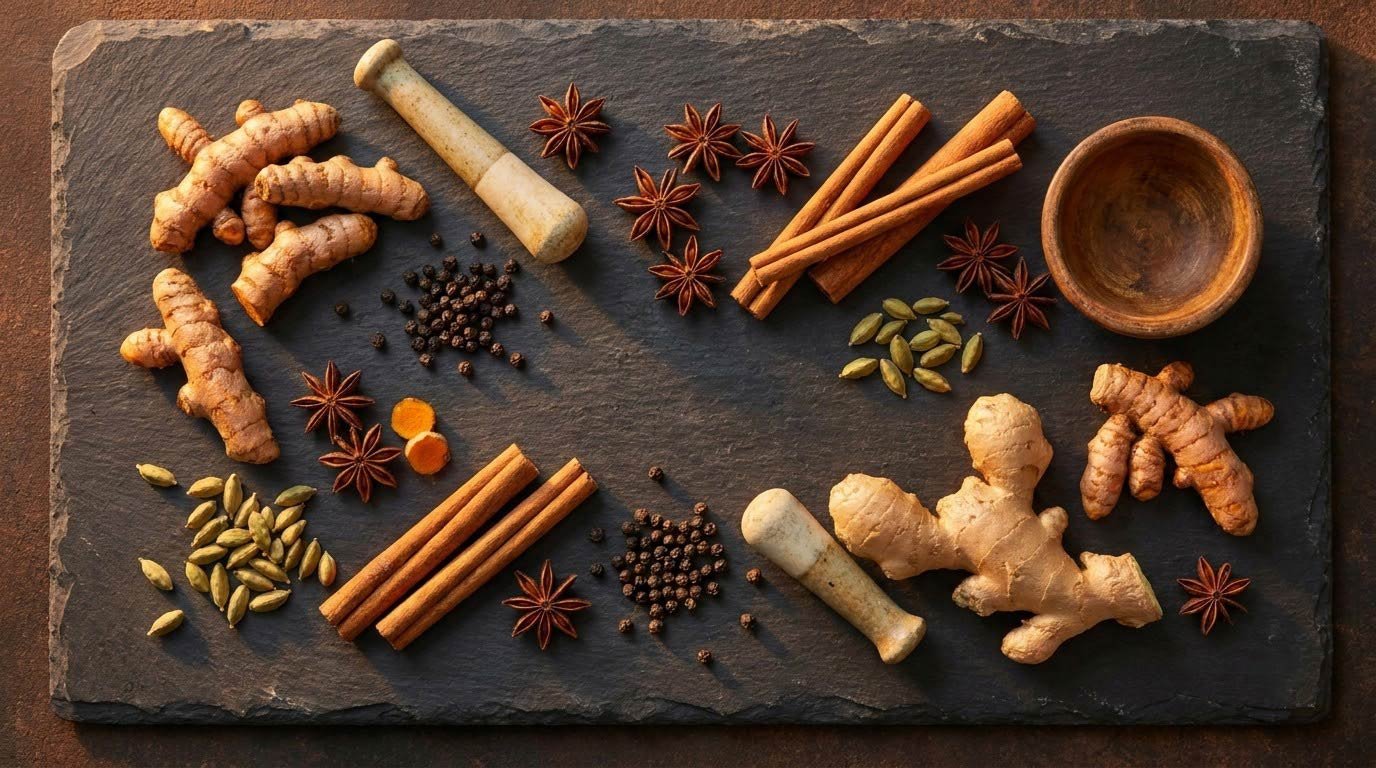
Traditional medicine systems treasured spices for millennia; modern research is now testing those claims with controlled trials. The results are more interesting than either enthusiasts or dismissers expect — some spices carry genuine trial evidence, some have real chemistry with delivery problems, and some are pure folklore with good PR.
Spices won't out-prescribe medicine — but as daily micro-doses of bioactive compounds, they're among the easiest wins in the kitchen. The skill is knowing which ones have real evidence, and how to prepare them so your body actually absorbs what's inside.
The spices with the strongest evidence
Ranked by the strength and consistency of human trial data — not laboratory studies, which nearly all spices pass:
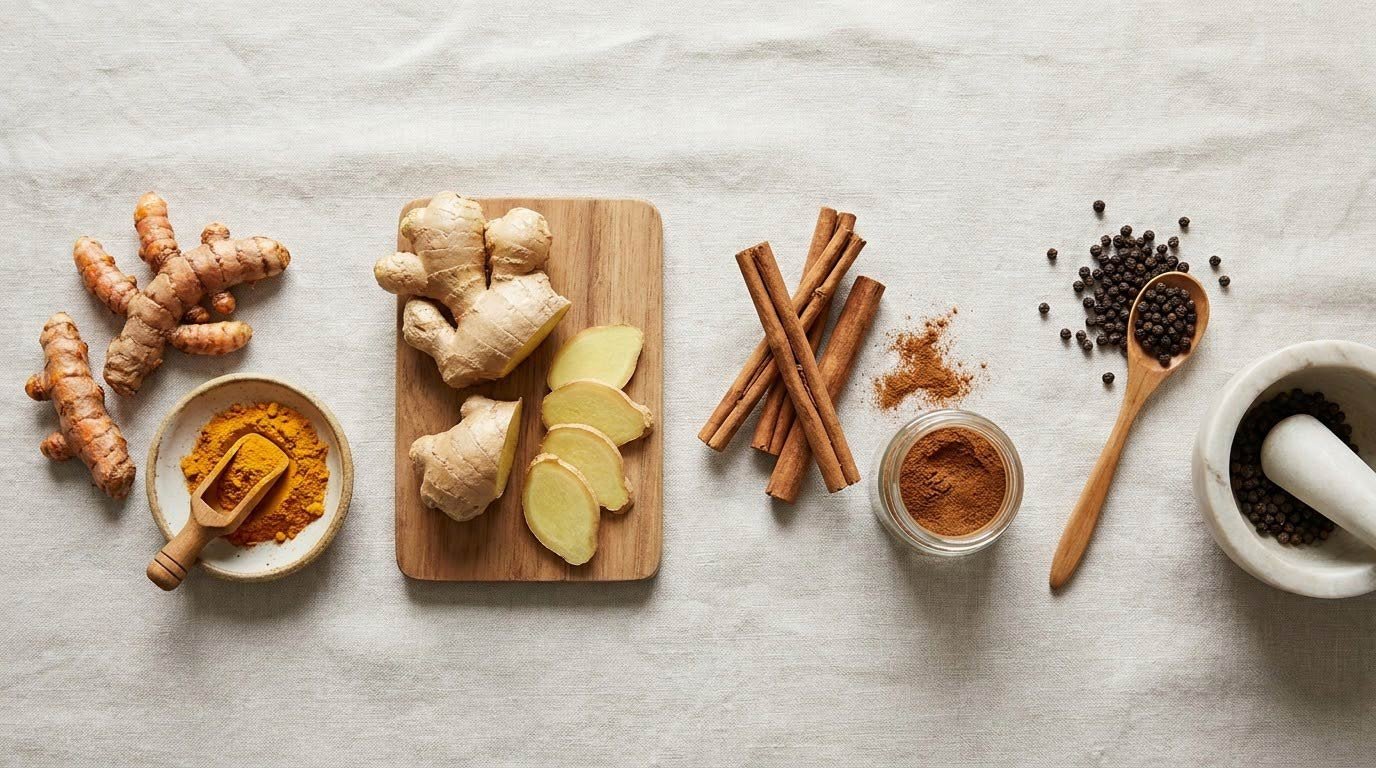
- Ginger — the quiet achiever. Consistent evidence for nausea (pregnancy-related, motion-induced, post-surgical) across hundreds of trials. Modest anti-inflammatory effects in osteoarthritis studies. A genuine, well-evidenced kitchen medicine with an excellent safety record.
- Turmeric / curcumin — real anti-inflammatory chemistry with a serious delivery problem. Curcumin shows genuine activity in laboratory studies, but on its own, almost none of it reaches your bloodstream. The traditional pairing with black pepper and fat isn't folklore — it's pharmacokinetics.
- Cinnamon — modest, inconsistent evidence for glucose metabolism. Some trials show benefit, others don't. The Ceylon vs cassia distinction matters: cassia contains coumarin, which at high daily doses can stress the liver.
- Black pepper — not a medicine on its own, but the absorption multiplier. Piperine (the compound that makes pepper spicy) dramatically increases the bioavailability of curcumin and other compounds. It's the most important supporting actor in the spice pharmacy.
Turmeric: the delivery problem
Curcumin — the golden compound in turmeric — genuinely shows anti-inflammatory, antioxidant, and even anti-amyloid activity in laboratory studies. The problem isn't chemistry; it's pharmacokinetics. Curcumin is poorly absorbed on its own, rapidly metabolized by the liver, and almost entirely eliminated before reaching systemic circulation.
This is where the story gets genuinely interesting. Traditional recipes solved the problem before science understood it:
- Black pepper increases curcumin absorption by up to 2000%. Piperine inhibits the liver enzymes that would otherwise break curcumin down. A pinch of pepper with your turmeric isn't tradition for taste alone — it's absorption engineering.
- Fat increases bioavailability significantly. Curcumin is fat-soluble; consuming it with dietary fat (as in golden milk, curries, or eggs cooked in turmeric-ghee) enhances uptake.
- Heat helps too. Cooking turmeric (even briefly) can increase solubility and improve bioavailability compared to raw powder.
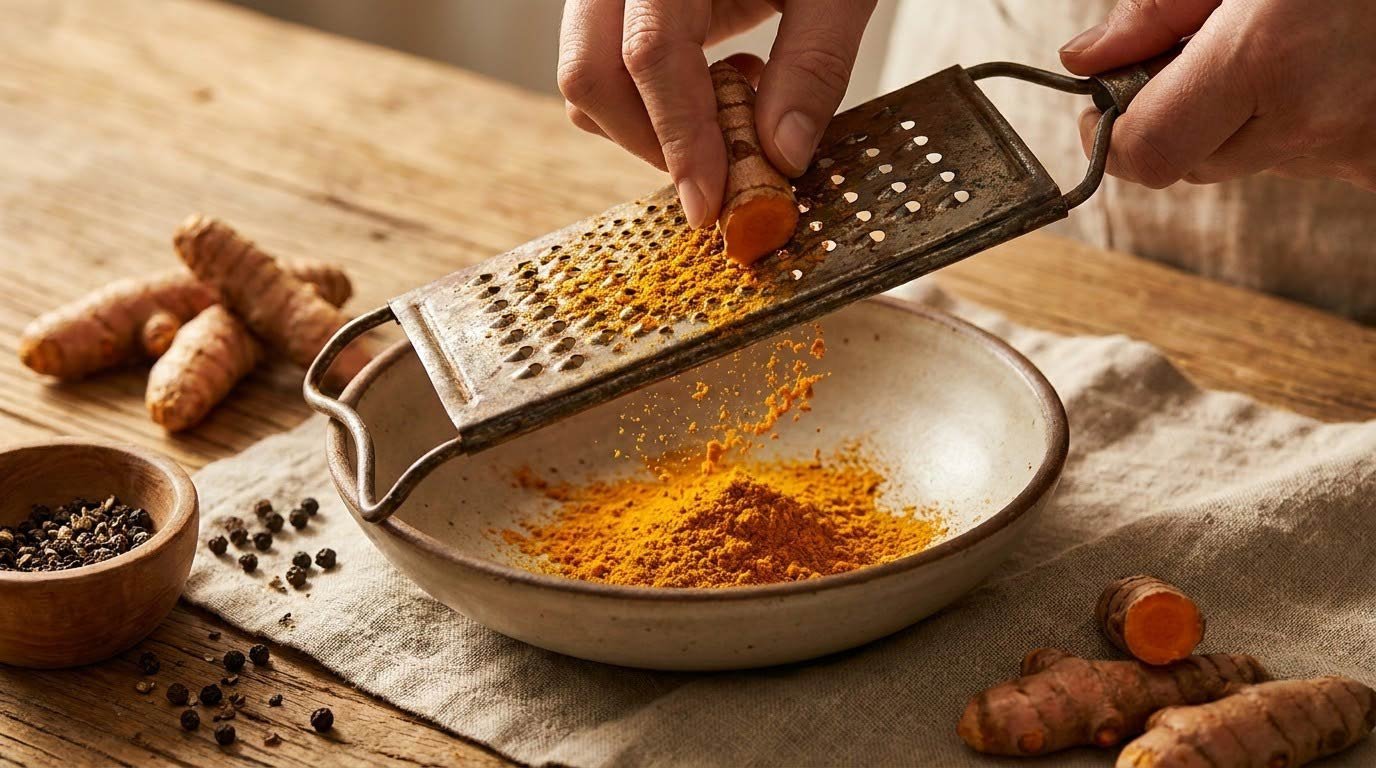
Always pair turmeric with black pepper and a source of fat. Always. A teaspoon of turmeric in a curry already does this. Golden milk does this. A turmeric capsule without piperine — not so much. If you use cinnamon daily, choose Ceylon over cassia (lower coumarin). Use fresh ginger liberally in cooking and tea. These are culinary optimizations, not medical ones.
Ginger: the most underrated
While turmeric gets the headlines, ginger quietly accumulates the strongest trial evidence of any common spice. The findings span:
- Pregnancy nausea — multiple trials show meaningful reduction in nausea and vomiting with ~1g daily of ginger. Recommended in some clinical guidelines.
- Motion sickness — consistent benefit at ~1g doses, comparable to standard anti-motion medications for many people.
- Osteoarthritis pain — trials show modest reduction in pain scores, comparable to NSAIDs in some studies but with a better side-effect profile.
- General inflammation — gingerols show anti-inflammatory activity in both lab and human trials. The effect sizes are modest but real.
Ginger may be the most practically evidence-backed spice in the kitchen. No delivery tricks needed — just eat it.— The quiet achiever
What the evidence does NOT show
The honest negative space — the claims that outpace the human data:
- 'Spices prevent cancer.' Laboratory studies show anti-cancer properties; human trials are absent or inconclusive. No population study has demonstrated that daily spice consumption prevents cancer.
- 'Turmeric is a natural anti-inflammatory drug.' A pinch of turmeric in a curry is a seasoning, not a treatment. The doses in studies are concentrated and standardized — nothing like what you'd add to food.
- 'Cinnamon cures diabetes.' Modest, inconsistent effects on glucose in some trials. Not a treatment, not a substitute for medication, and the cassia-coumarin risk is real at high daily doses.
- 'More spice = more benefit.' There's no established dose-response relationship for culinary amounts. The evidence doesn't support megadosing spices any more than it supports avoiding them.
Ginger and turmeric have mild blood-thinning properties. If you take anticoagulants (warfarin, apixaban) or are preparing for surgery, tell your clinician about your spice habits — especially if you take concentrated supplements. The culinary amounts in food are generally fine; concentrated capsules are a different conversation.
The practical verdict
Think of your spice rack as a micro-pharmacy with an excellent safety profile and a few genuinely evidence-backed compounds. The practical protocol:
- Use turmeric with pepper and fat. Every time. The traditional pairing exists because it works.
- Eat ginger liberally. Fresh ginger in cooking, tea, smoothies — no delivery tricks needed. The strongest evidence of any common spice.
- Choose Ceylon cinnamon for daily use. Lower coumarin. Save cassia for occasional baking.
- Use pepper generously. Not for itself, but as the absorption multiplier for everything else.
- Don't replace medicine with spices. If you have a diagnosed inflammatory condition, spices are a complement, not a treatment.
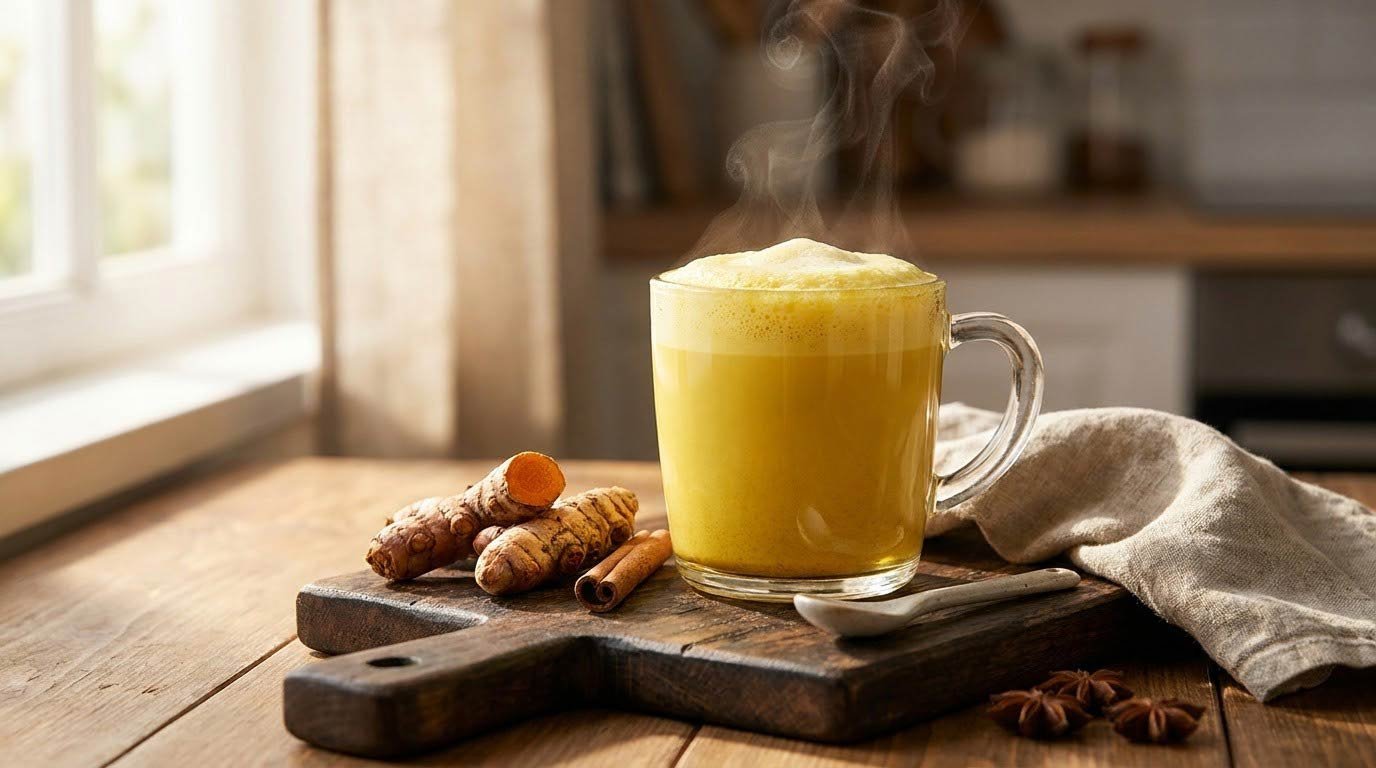
This week: make one golden milk (turmeric + black pepper + warm milk + coconut oil). Add fresh ginger to your tea or stir-fry. Sprinkle cinnamon on your morning oats. These are culinary habits with genuine biochemical payload — not medicine, but more than folklore.
Curcumin: The Golden Anti-Inflammatory
The concentrated, absorption-enhanced version of turmeric's active compound — the full journey: phytosome forms, trial evidence for joints, and honest grades for the entire category.
Explore the curcumin journey →Where this information comes from
- 2000% absorption increase with black pepper extract
- curcumin's poor baseline bioavailability
- formulation studies (phytosome, nanoparticles)
- consistent benefit for pregnancy-related and motion-induced nausea
- anti-inflammatory effects in osteoarthritis trials
- dose-response findings
- modest glucose-lowering in some trials
- inconsistent results across studies
- coumarin safety concern with cassia cinnamon
- general supplement guidance
- evidence standards for botanical compounds
Our evidence principles
How we evaluated the claims on this page
- Prefer government health agencies, major medical organizations, clinical guidelines, systematic reviews, and well-designed human studies.
- Distinguish established evidence from laboratory plausibility.
- Avoid presenting any single spice as a universal anti-inflammatory or longevity solution.
- Use numbers only when the population, context, and evidence are clear.
- Encourage clinician involvement when spices interact with medications or health conditions.
Educational information — not medical advice
This article is for educational purposes and does not diagnose, treat, or prevent any medical condition. Ginger and turmeric may interact with anticoagulant medications and may be contraindicated before surgery. Cassia cinnamon contains coumarin, which may affect liver function at high doses. If you take blood thinners, are preparing for surgery, or have a liver condition, consult your healthcare provider about appropriate spice and supplement intake. BodyFinds should display its medical disclaimer and source methodology alongside this article.