Muscle & Recovery
The gym is the question; the hours after it are the answer. Training damages muscle deliberately — the stimulus — and the rebuild, completed over the next 48–72 hours, is where growth actually happens. That rebuild runs on three inputs: the material (protein), the shift (sleep — growth hormone peaks in deep sleep, and restriction measurably blunts repair), and time. This page covers the cycle, corrects the recovery-shelf myths, and grades every tool honestly.

The build-repair cycle
The cycle runs: stimulus → damage → repair → adaptation. Loading is the question the muscle is asked; over the following two to three days, it rebuilds slightly better prepared — the adaptation. The material questions are settled science: a meal of 20–40 g of quality protein crosses the leucine threshold that switches repair on, and the whole-day total matters more than timing — the famous 30-minute 'anabolic window' failed its trials (the Protein chapter carries that story in full).
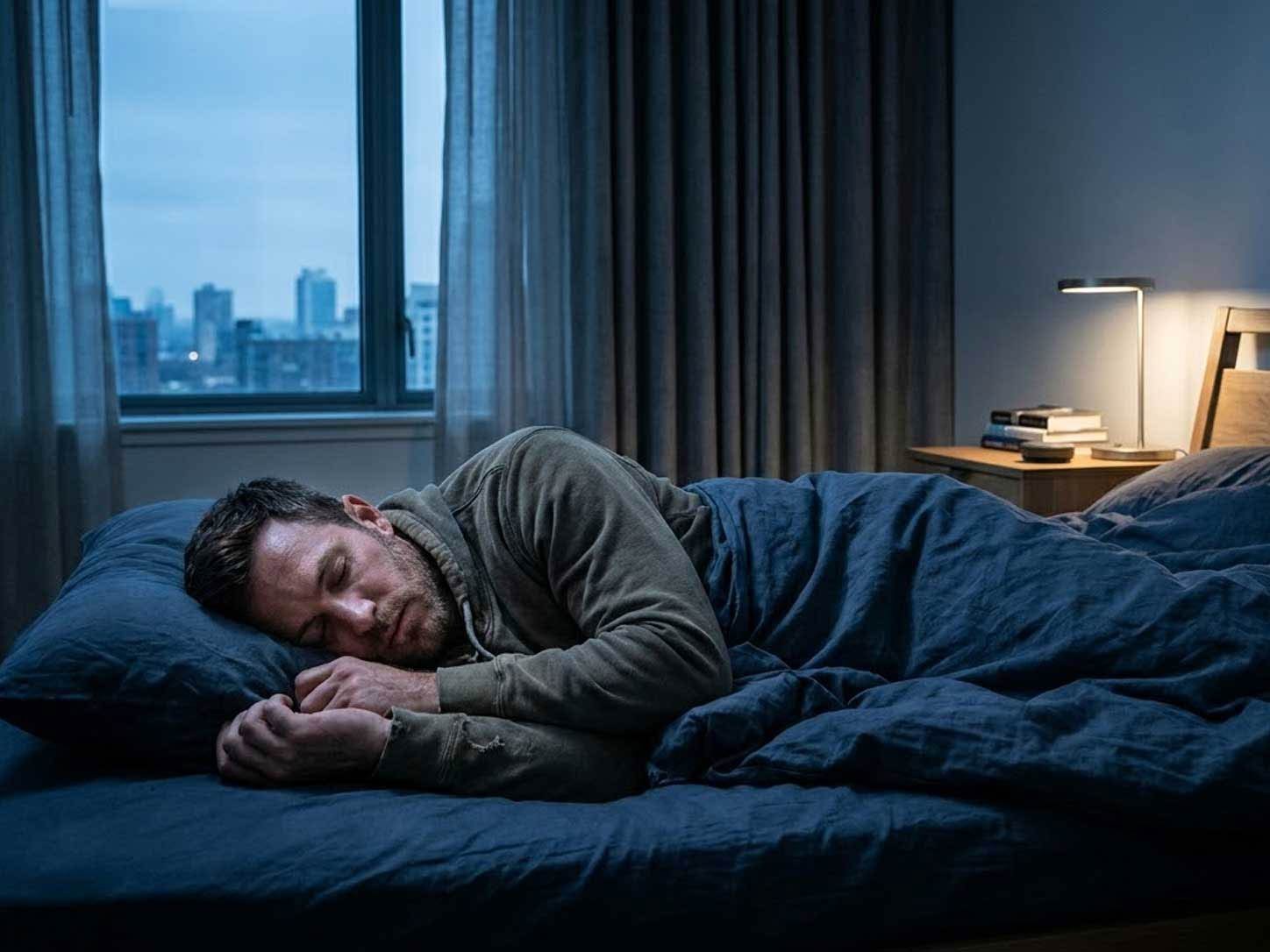
The shift is sleep: growth hormone releases in deep sleep, and restriction studies show measurably blunted muscle recovery and synthesis. The stress system overlaps the recovery system — chronically elevated cortisol is quietly catabolic, which is why the Stress page is on this map. And the aging side runs in the background: muscle drifts from the 30s unless loaded, making training a lifetime practice rather than a season (the Sarcopenia page).
The recovery-shelf honesty, because this category markets hardest: soreness is a poor proxy for progress — DOMS reflects novel stimulus and micro-damage, not growth, and 'no pain no gain' fails as physiology. Massage and foam-rolling genuinely feel better and modestly ease soreness — without speeding the repair itself. Cold-water immersion reduces soreness too — but newer research suggests it may blunt the adaptive signal when used right after training: comfort and adaptation trade off. Active recovery — easy movement — aids the process quietly. The hierarchy stands: sleep, protein, nutrition, and managed stress above every gadget on the shelf.
One honest paragraph on the strongest supplement in the entire training space, because it belongs here even without its own chapter yet: creatine — the most evidence-backed performance supplement ever studied, safe, cheap, effective for strength and lean mass, and now being researched well beyond muscle. Its day on this site's supplement shelf is a single file away.
- Muscle is built between workouts — the rebuild is the growth.
- Protein per meal: 20–40 g crosses the threshold; the day's total is what matters.
- Sleep is the anabolic shift — restriction blunts repair, measurably.
- Soreness ≠ progress; chasing it chases the wrong metric.
- Cold right after training may blunt adaptation — comfort trades against growth.
- Persistent unresolved fatigue and performance decline are deload signals, not weakness.
“Training is the question. Recovery is the answer. Muscle is built between workouts, not during them.”
— The adaptation principleThe factor families
The stimulus
Progressive loading is the question muscle is asked — enough demand to signal, not to break.
The material
20–40 g of quality protein per meal, distributed across the day — what the rebuild is made of.
Explore Protein →The repair shift
Growth hormone peaks in deep sleep; restriction measurably blunts muscle recovery — the shift no gadget replaces.
Explore Sleep →The stress overlap
The recovery system and the stress system share machinery — chronic load is quietly catabolic.
Explore Stress & Mental Wellbeing →The story, frame by frame


The cycle's players — and the route into each
Every card links to a full BodyFinds chapter, with an honest evidence grade. Recovery is a systems page: material, shift, aging, and stress.
The building material — the leucine threshold, whole-day totals, and the timing myth corrected.
supplementThe overnight repair shift — growth hormone in deep sleep, restriction blunting repair.
research-topicThe catabolic overlap — chronic stress spends the same resources recovery needs.
research-topicThe aging timeline — muscle drift from the 30s makes training a lifetime practice.
research-topicThe other currency — strength and aerobic fitness are separate accounts; train both.
research-topicSome evidence for reduced soreness and inflammation in recovery — modest, adjunct at best.
supplementA muscle-function mineral whose cramp claims outrun its evidence — the shortfall itself matters more.
supplementWhere does the material come from?
The full BodyFinds Protein journey — forms, doses, the timing myth, and the honest product grades.
Where this information comes from
- CDC — Muscle-Strengthening Activity Government
- NHLBI — Sleep Science and Sleep Disorders Government
- NIA — Exercise and Physical Activity Government
- NIH ODS — Omega-3 Fatty Acids Government
- NIH ODS — Magnesium Government