Fiber: The Most Underrated Nutrient for Gut Health
Almost every long-term nutrition study tells the same story: people who eat more fiber have better metabolic health, healthier guts, and lower disease risk. Yet fewer than 10% of adults meet the recommended intake. Fiber may be the single most underrated lever in the modern diet.
Fiber isn't just roughage. Soluble fiber feeds gut bacteria, which convert it into short-chain fatty acids — compounds that nourish the gut lining, support immune regulation, and influence metabolism. Insoluble fiber adds bulk and keeps digestion moving. Both matter.
What fiber actually does
Fiber comes in two primary forms, and the distinction matters for understanding its effects:
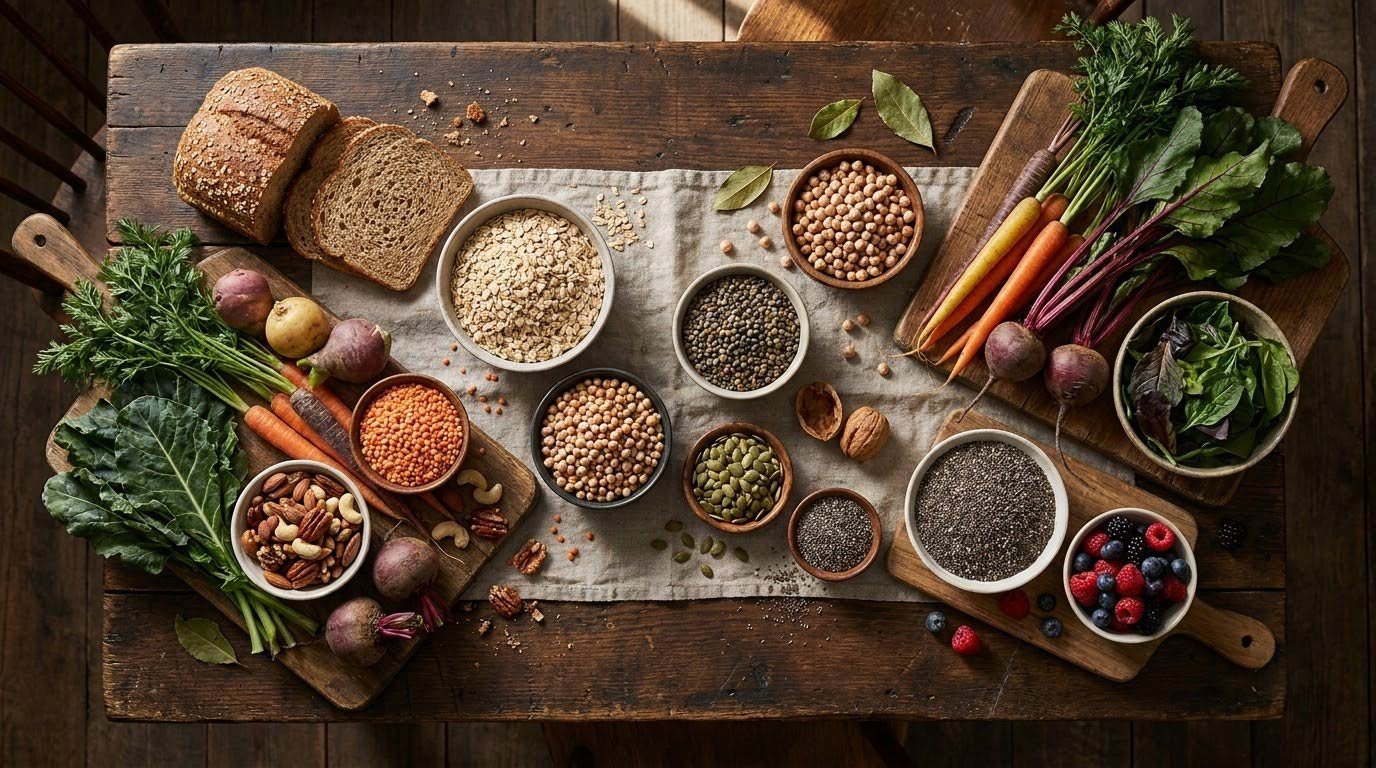
- Soluble fiber — dissolves in water, forming a gel-like substance. Found in oats, beans, apples, and psyllium. This is the type that feeds gut bacteria and produces short-chain fatty acids (SCFAs). It also slows glucose absorption and helps lower LDL cholesterol.
- Insoluble fiber — doesn't dissolve, adds bulk, and speeds transit through the digestive tract. Found in whole wheat, vegetables, and nuts. This is the type that keeps things moving and prevents constipation.
- Fermentable fibers (prebiotics) — a subset of soluble fiber that gut bacteria ferment particularly well. Found in garlic, onions, leeks, asparagus, and slightly green bananas. These have the strongest effect on microbiome composition.
The recommended daily target is 25–38 grams (depending on age and sex). The average adult consumes roughly 15 grams — about half of what's recommended, and well below what the healthiest populations in dietary studies consume.

The gut connection: why fiber feeds more than you
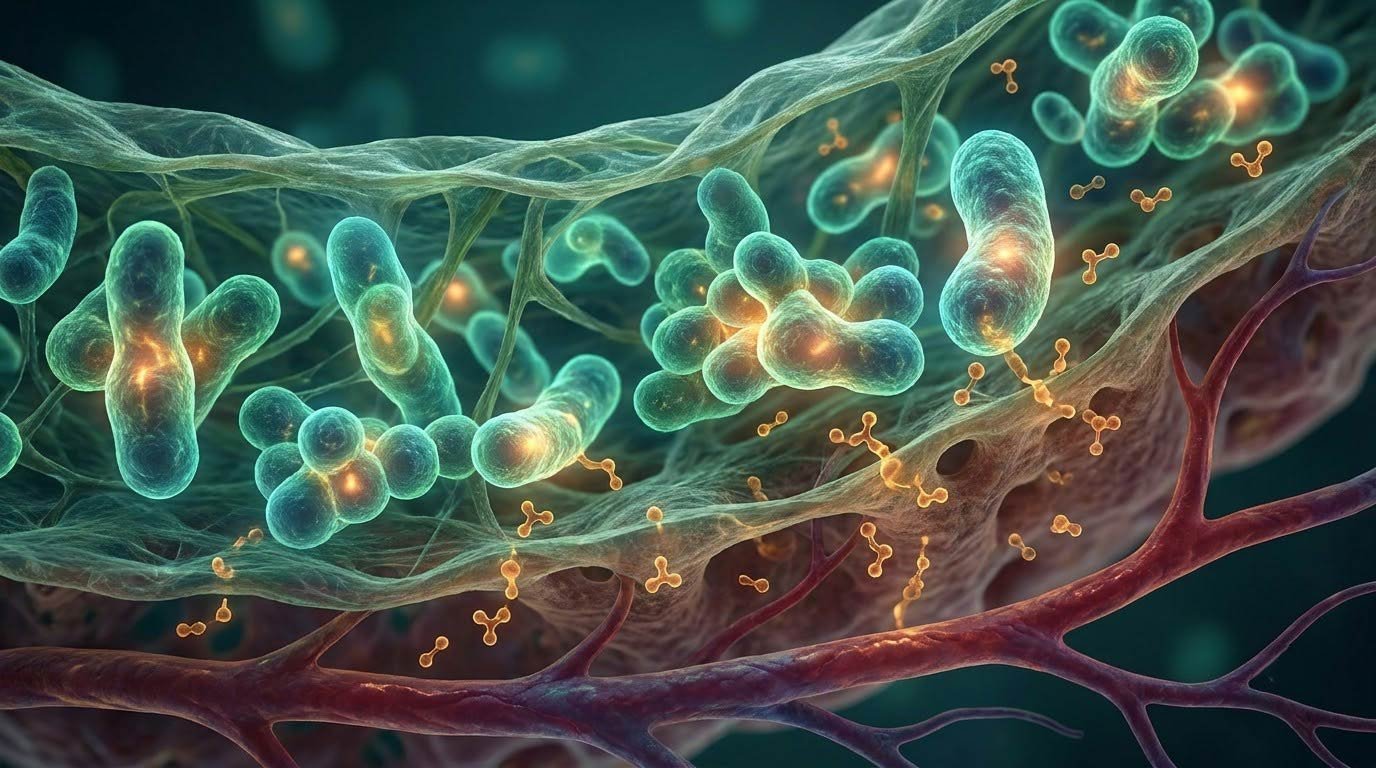
Here's where fiber stops being mechanical and starts being biological. Your gut contains trillions of bacteria that feed on the fiber you can't digest. In return, they produce short-chain fatty acids (SCFAs) — molecules with effects that reach far beyond the gut.
- Butyrate — the primary fuel for the cells lining your colon. It helps maintain the gut barrier (reducing permeability), has anti-inflammatory properties, and may protect against colorectal cancer.
- Propionate — involved in glucose regulation and may help with satiety signaling.
- Acetate — the most abundant SCFA, used by muscles and the brain, and a signaling molecule for metabolism.
This is why fiber's benefits extend to systems far from the digestive tract: the SCFAs produced by gut bacteria influence immune function, inflammation levels, glucose handling, and even brain chemistry. Your gut bacteria are a metabolic organ, and fiber is their primary fuel.
The Stanford trial: fiber vs fermented foods
In 2021, Stanford researchers ran a 10-week controlled feeding study comparing a high-fiber diet to a high-fermented-foods diet. The results rewired assumptions about the microbiome.
The fermented-food group showed increased microbiome diversity and measurable reductions in inflammatory markers. The high-fiber group — counterintuitively — showed neither effect to the same degree, at least not in the short timeframe studied.
The likely explanation: participants eating a typical Western diet lacked the fiber-fermenting bacteria needed to unlock fiber's benefits. Fermented foods appeared to rebuild that capacity first. The two approaches aren't rivals — fermented foods may restore the workforce; fiber keeps it employed.
Fermented foods may rebuild the workforce. Fiber keeps it employed.— The Stanford trial, summarized

Building up without the bloat
The most common reason people fail with fiber is that they increase too quickly and experience bloating, gas, and discomfort. This is the microbiome adjusting — the bacteria that ferment fiber need time to multiply. Here's how to build tolerance:
- Increase gradually. Add 5g more per week. Your gut bacteria need time to adapt to the new substrate. A sudden jump from 15g to 35g will produce predictable discomfort.
- Spread across meals. 8–10g per meal is more comfortable than 25g at dinner. It also produces a more consistent SCFA supply throughout the day.
- Drink more water. Fiber absorbs water — without adequate hydration, increasing fiber can worsen constipation rather than improve it.
- Prioritize whole foods. The fiber in intact foods (vegetables, legumes, whole grains) comes packaged with water, micronutrients, and phytochemicals. Isolated supplements (psyllium, inulin) can help fill gaps but don't carry the same package.
- Diversity matters as much as quantity. Each fiber type feeds different bacteria. The 30-plants-per-week target captures this better than a single gram count.
Aim for 30 different plant foods per week — not 30 servings. Herbs, spices, nuts, seeds, grains, and different colored vegetables all count. Microbiome studies link plant diversity directly to microbial diversity, the strongest marker of gut resilience.
When fiber isn't the answer
Fiber helps most people, but not everyone. If you have a diagnosed digestive condition, the fiber conversation changes:
- IBS — some fibers (particularly fermentable FODMAPs) can worsen symptoms. A low-FODMAP trial under dietitian guidance may identify which fibers are problematic for you.
- Inflammatory bowel disease (IBD) — during flares, reducing insoluble fiber may be necessary. During remission, gradual reintroduction is often beneficial but should be clinician-guided.
- SIBO (small intestinal bacterial overgrowth) — fermentable fibers may feed bacteria in the wrong location. Treatment comes first, then gradual fiber reintroduction.
- Persistent symptoms — blood in stool, unintended weight loss, symptoms waking you at night, or new symptoms after age 50 are evaluation territory, not fiber-trial territory.
Fiber helps most healthy people. It does not treat inflammatory conditions, infections, or structural problems. If you have persistent or concerning digestive symptoms, seek professional evaluation before treating yourself with more roughage.
The practical starting point
This week: add one serving of legumes to a meal. Swap white bread for whole grain. Add a handful of berries to breakfast. That's 10 extra grams without any supplements.
Start where you are. Add one fiber-rich food per day, drink more water, and let your microbiome adjust over weeks rather than days. Consistency beats intensity — the people with the healthiest guts eat moderate fiber daily for years, not heroic amounts for a week.
Fiber: The Whole Story
From psyllium to inulin to resistant starch — the full evidence journey: which types work for what, how they interact with the microbiome, and honest grades for supplementation vs whole foods.
Explore the fiber journey →Where this information comes from
- 10-week controlled feeding study comparing high-fiber vs high-fermented-foods diets
- microbiome diversity findings
- inflammatory marker reductions
- fiber intake and health outcome associations
- SCFA (short-chain fatty acid) production research
- recommended daily fiber targets
- soluble vs insoluble fiber breakdown
- fiber content of common foods
- dietary pattern recommendations
- population-level fiber intake data
- percentage meeting recommendations
- servings guidance
Our evidence principles
How we evaluated the claims on this page
- Prefer government health agencies, major medical organizations, clinical guidelines, systematic reviews, and well-designed human studies.
- Distinguish established evidence from promising but uncertain research.
- Avoid presenting a single fiber type, food, or supplement as a universal gut-health solution.
- Use numbers only when the population, context, and evidence are clear.
- Encourage clinician involvement when digestive symptoms are persistent, severe, or accompanied by concerning signs.
Educational information — not medical advice
This article is for educational purposes and does not diagnose, treat, or prevent any medical condition. Digestive symptoms can signal underlying conditions that require professional evaluation. If you have IBS, IBD, or another diagnosed digestive condition, fiber guidance should be individualized with your healthcare team. BodyFinds should display its medical disclaimer and source methodology alongside this article.