Bone Broth on Trial: Collagen, Joints, and Gut — What the Science Actually Shows

Bone broth became a phenomenon on three promises: joint healing, gut repair, and skin rejuvenation. Each claim contains a kernel of biochemistry wrapped in generous extrapolation. The honest verdict is more interesting than either the marketing or the dismissal — because underneath the hype sits real collagen peptide research that may actually matter, and underneath the dismissal sits a genuinely nourishing food that's being undersold by its own PR.
As a warm, satiating, mineral-containing food: excellent. As medicine: unproven. If you enjoy it, it's a fine way to get protein and hydration — just don't expect it to outperform the boring fundamentals.
The collagen math problem
Bone broth does contain collagen — but the amounts vary wildly depending on cooking time, bone types, and preparation method. More fundamentally: dietary collagen is digested into amino acids like any other protein. Your body doesn't route those amino acids directly to your joints; it uses them wherever demand dictates.
A cup of typical bone broth contains roughly 10 grams of protein — a modest amount compared to a chicken breast (30g), a scoop of whey (25g), or even a cup of Greek yogurt (17g). If you're drinking bone broth for protein, there are cheaper and more reliable sources.
Where the kernel of truth lives
Here's where the story gets genuinely interesting — and where the marketing accidentally lands near something real. Collagen peptide supplements — concentrated, hydrolyzed collagen in measured doses, not broth — show modest evidence for joint comfort and skin elasticity in several randomized trials.
- Athletes and joint pain. Several trials in athletes with activity-related joint discomfort found modest improvements with 10g daily collagen peptides over 12–24 weeks. The effect sizes are small but measurable.
- Skin elasticity. A handful of trials suggest improvements in skin elasticity and hydration with collagen peptide supplementation. The trials are mostly industry-funded, small, and short — but the direction of effect is consistent.
- The dose gap. The trials used 10–20g of concentrated collagen peptides daily. A cup of bone broth delivers a fraction of that, in an unstandardized amount. Broth may deliver similar compounds in less predictable doses.
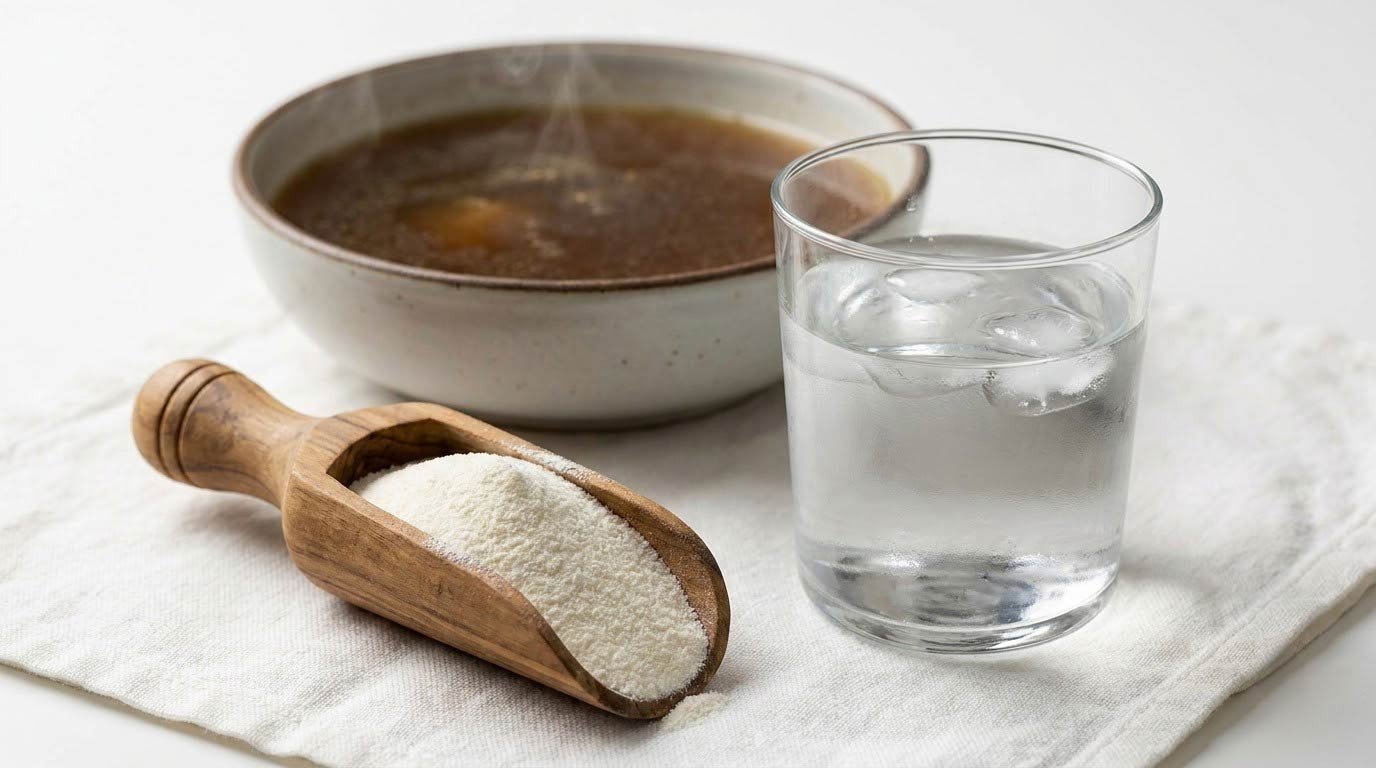
Collagen peptide supplements have modest trial evidence. Bone broth contains some collagen in variable, lower doses. That's not the same as 'bone broth heals joints' — but it's also not nothing.
The gut-healing claim
'Heals the gut lining' is the claim most often repeated and least supported by evidence. The theory is real biochemistry: glutamine (an amino acid abundant in bone broth and collagen) is the preferred fuel for rapidly dividing intestinal cells, and glycine (also abundant) supports the mucosal barrier in laboratory studies.
The problem is the translation from lab to clinic. Laboratory studies show glutamine supporting gut cell metabolism under controlled conditions. Clinical evidence for bone broth specifically healing intestinal permeability in humans doesn't exist in any robust form. The claim borrows laboratory plausibility and presents it as clinical proof — the supplement industry's oldest trick.

The theory is real biochemistry. The evidence for broth healing guts in humans is not.— The gap between mechanism and outcome
What bone broth actually is
Setting aside the medical claims, bone broth is a genuinely good food — and that's not nothing. Here's what it actually delivers:
- A warm, hydrating liquid. For people who struggle to drink enough water or eat enough warm meals, broth is an easy win.
- Modest protein. 7–12g per cup — not a protein powerhouse, but a contribution.
- Minerals. Some calcium, magnesium, phosphorus, and potassium — amounts vary depending on bones and cooking time.
- Glycine. Collagen is rich in glycine, an amino acid that's underrepresented in modern diets and may have modest calming and sleep-supporting properties.
- Satiety. Warm broth before a meal can reduce total intake — useful for appetite management.
The comparison that matters
If you're considering bone broth for joint health, here's the honest decision framework:
If you want the collagen peptides that have trial evidence, taking a standardized supplement is more reliable and cheaper than drinking broth. If you want a nourishing, comforting food that contributes to your protein and fluid intake, bone broth is excellent. Conflating the two — paying medicine prices for food benefits — is where the value disappears.
Bone broth from conventionally raised animals may concentrate lead and other heavy metals stored in bones — a documented concern in some analyses. If you make or buy broth, sourcing from grass-fed, pasture-raised animals reduces this risk. This is a real consideration, not fear-mongering.
The practical verdict
Bone broth is a nourishing, protein-rich food with an excellent PR team. If you enjoy it — as a warm drink, a soup base, or a cooking ingredient — it's a perfectly good addition to your diet. But the medical claims deserve honest grading:
- Joint comfort: modest evidence for concentrated collagen peptides, not for broth specifically. If you want this effect, take the standardized version.
- Gut healing: real laboratory biochemistry, no clinical evidence for broth specifically. If you have gut symptoms, see a clinician — don't self-treat with soup.
- Skin rejuvenation: small trials for collagen peptides, mostly industry-funded. A variable amount in broth is even further from proven.
- As food: genuinely good — warm, hydrating, modest protein, cheap if homemade.
Enjoy it as exactly what it is. Just don't expect it to outperform the boring fundamentals.— The fair verdict
If joint comfort is your goal: prioritize resistance training (strongest evidence), maintain a healthy weight (biggest mechanical lever), and consider standardized collagen peptides if you want the supplemental evidence. Drink bone broth because you like it — not because you expect it to heal anything.
When this article is not enough
If you have persistent joint pain, digestive symptoms that concern you, or skin changes that appeared suddenly, seek professional evaluation. These symptoms can signal conditions that require diagnosis and treatment — not a bowl of soup or a scoop of powder. A registered dietitian can also help you evaluate whether your overall protein intake is adequate for your goals.
Collagen Peptides: The Trial Evidence
The concentrated, standardized version of what bone broth contains — the full journey: 10g trial doses, joint comfort results, skin elasticity data, and honest grades for the entire category.
Explore the collagen journey →Where this information comes from
- randomized trials of collagen supplements for joint comfort
- athlete studies showing modest improvements
- effect sizes and limitations
- glutamine's role in gut cell metabolism (laboratory evidence)
- the gap between lab findings and clinical outcomes
- pooled analysis of skin elasticity and hydration trials
- funding source considerations
- effect size honesty
- protein quality and amino acid profiles
- whole-food protein vs supplement comparison
- dietary pattern context
Our evidence principles
How we evaluated the claims on this page
- Prefer government health agencies, major medical organizations, clinical guidelines, systematic reviews, and well-designed human studies.
- Distinguish established evidence from promising but uncertain research.
- Avoid presenting a single food or supplement as a universal solution for joints, gut, or skin.
- Use numbers only when the population, context, and evidence are clear.
- Encourage clinician involvement when joint pain, digestive symptoms, or skin changes are persistent or concerning.
Educational information — not medical advice
This article is for educational purposes and does not diagnose, treat, or prevent any medical condition. Persistent joint pain, digestive symptoms, or skin changes deserve professional evaluation. If you have a diagnosed joint condition or gut disorder, work with your healthcare provider on your treatment plan. BodyFinds should display its medical disclaimer and source methodology alongside this article.