The 3-Hour Rule: How to Flatten Your Glucose Curves Without a Gadget
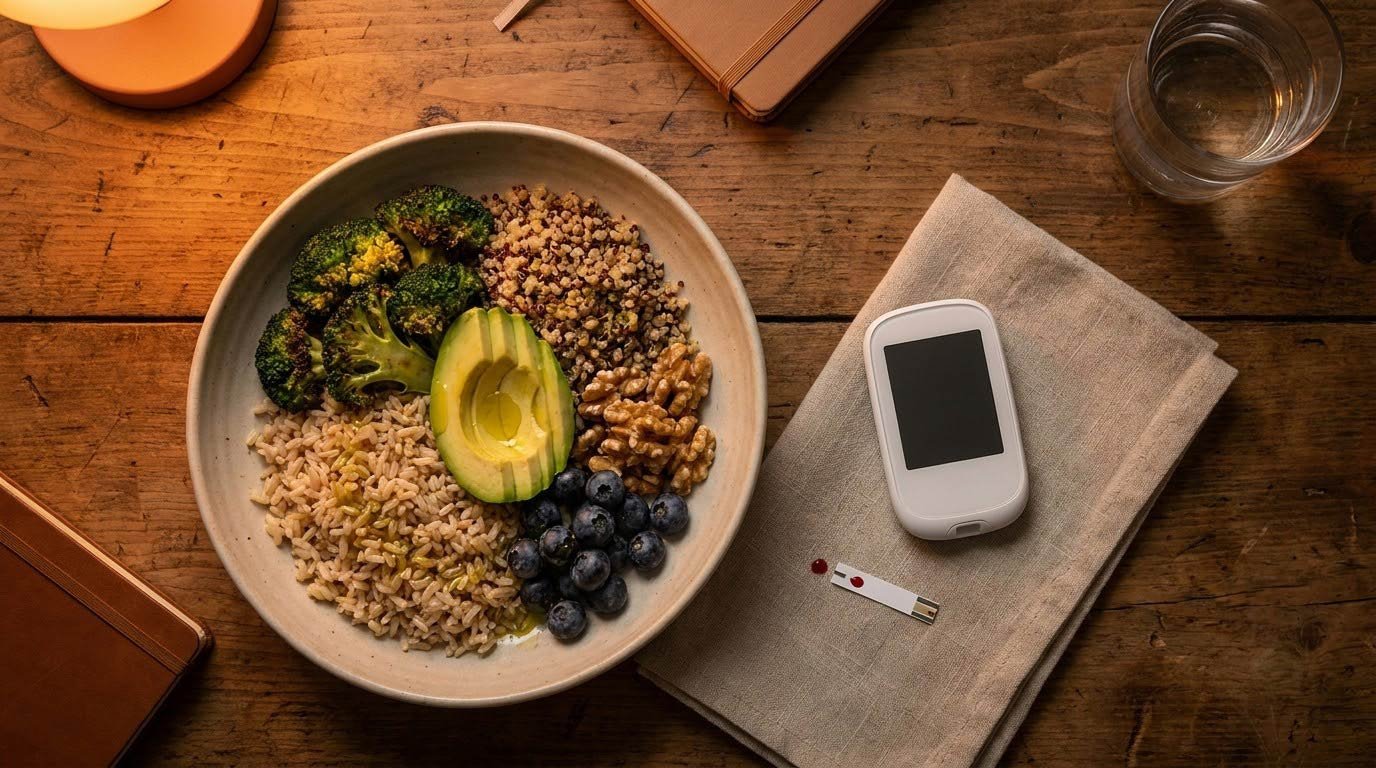
Continuous glucose monitors turned blood-sugar management from a diabetes-specific concern into a mainstream curiosity. But behind the gadgets sits genuinely useful science about timing — when you eat and move matters nearly as much as what you eat. You don't need a sensor on your arm to benefit from any of it.
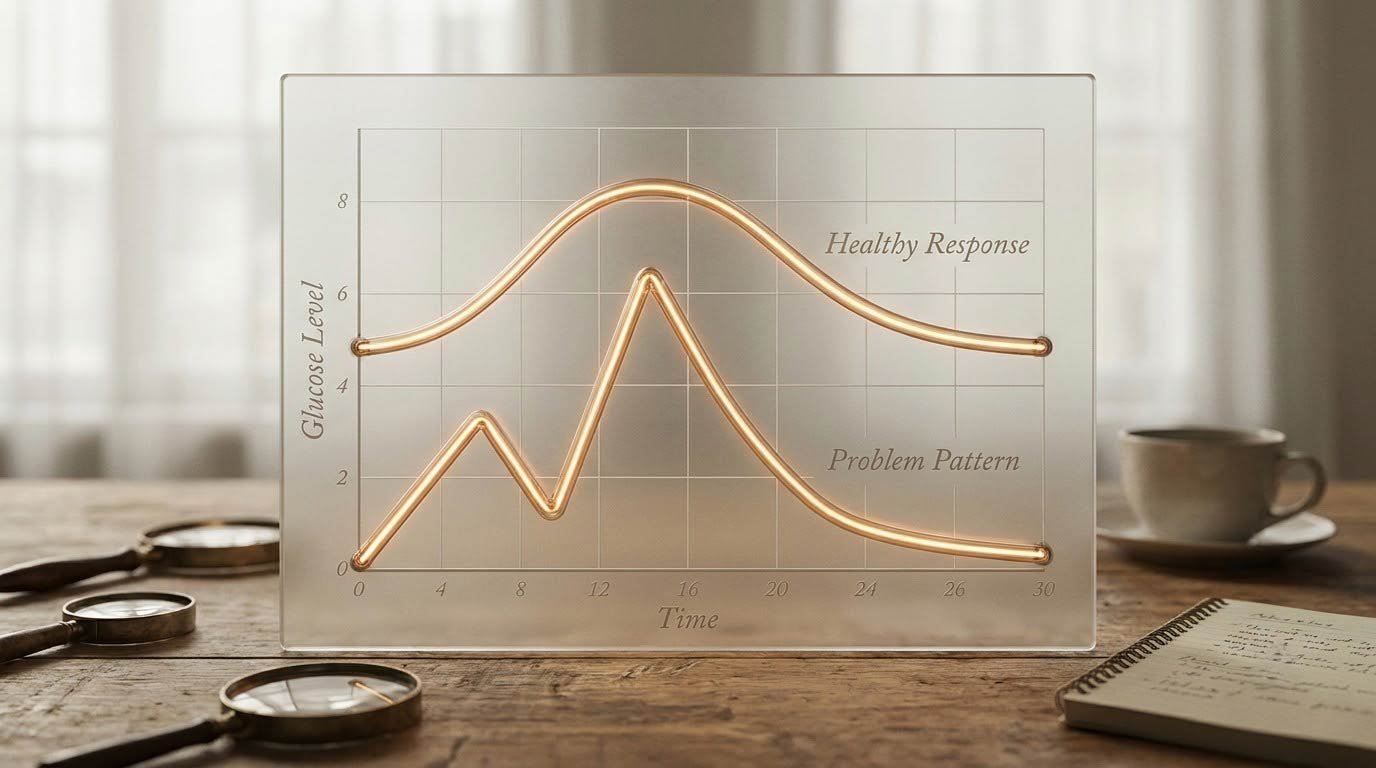
The healthy glucose curve is a rolling hill — rise after eating, return within roughly two hours, wait for the next meal. The swings that bother people are the spike-crash shape: too fast up, too far down, and a craving for whatever repeats it.
What a healthy curve actually does
Blood sugar is supposed to move — the question is how far and how fast. After a meal, glucose rises as digested carbohydrates enter the bloodstream. Insulin responds, helping cells absorb the glucose, and the curve returns toward baseline within about two hours. That's the design working correctly.
The problem isn't the rise — it's the shape and speed. A rapid spike followed by an insulin overshoot and a dip below baseline is what people experience as brain fog, fatigue, and the 3pm crash. That's not weakness — it's a predictable curve shape with a predictable set of levers to flatten it.
Meal sequencing: the order on your plate matters
One of the most practically useful findings from glucose research in recent years: eating the same foods in a different order produces a meaningfully different glucose response. The sequence that consistently blunts the spike:
- Vegetables and fiber first. Fiber slows gastric emptying and creates a physical barrier that slows subsequent carbohydrate absorption.
- Protein and fat second. These trigger satiety hormones and further slow the digestive process.
- Starch and sugar last. By the time carbohydrates arrive, the digestive system is already primed to handle them gradually.
The effect isn't trivial — some studies show reductions in the post-meal glucose spike of 30–70% from order alone. Same meal, same calories, different metabolic response.
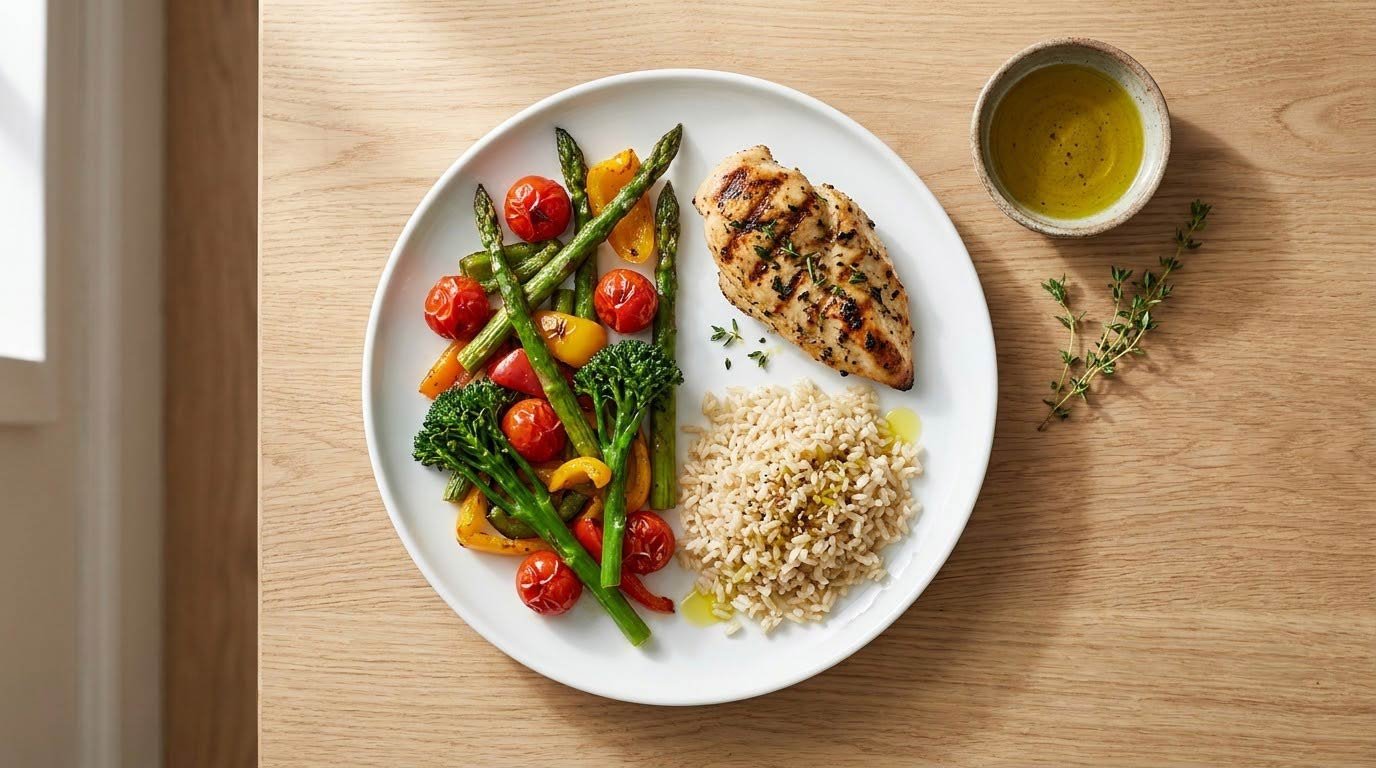
You don't need to eat foods separately or rearrange your plate. Just eat a few bites of vegetables or salad before touching the bread or rice. That alone starts the fiber-first effect.
The post-meal walk
Working muscles pull glucose from the blood independently of insulin — which means movement after eating directly lowers the glucose curve. The evidence here is unusually clean and practical:
- 10 minutes is enough. A short walk after eating — even apartment pacing — measurably blunts the glucose peak compared to the same walk at a random time.
- Timing matters. Walking within 30 minutes after the meal works best; the glucose is still peaking and the muscles can intercept it.
- After the biggest meal. For most people that's dinner — and post-dinner walking is also the easiest to make habitual.

The hidden variables nobody mentions
If you've ever worn a CGM or tracked your glucose, you've noticed that the same meal hits differently on different days. That's not the sensor being unreliable — it's real biology, and the variables are worth knowing:
- Sleep debt. Short sleep measurably worsens next-day glucose handling — the same slice of bread lands on a different system after a bad night.
- Stress hormones. Cortisol raises blood glucose directly; a stressful morning can push the whole day's curves upward.
- Exercise from previous days. A single workout improves insulin sensitivity for up to 48 hours — your glucose handling today reflects your training from the past two days.
- Morning vs evening. Glucose tolerance is typically better in the morning and declines through the day — the identical meal eaten at 8am produces a flatter curve than at 8pm.
- Menstrual cycle phase. Hormonal shifts across the cycle influence insulin sensitivity in ways that create real week-to-week variation.
Seeing a high glucose reading on a consumer device can be alarming — but a single post-meal spike is not diabetes. Diagnosis requires fasting glucose, HbA1c, or an oral glucose tolerance test, interpreted by a clinician. If readings concern you, that's a blood-work conversation, not a reason to restrict carbohydrates aggressively.
The food-level levers
Sequencing and timing are free and immediate. The food-level changes below are the structural version — they shift the curve shape itself:
- Intact grains over flour. Whole oats, quinoa, and brown rice produce flatter curves than the same grains ground into flour — the intact structure slows digestion.
- Whole fruit over juice. The fiber in whole fruit slows absorption; juice delivers the same sugars without the brake.
- Pair carbs with protein and fat. A banana alone spikes faster than a banana with peanut butter — the pairing changes the curve.
- Vinegar before meals. A spoonful of vinegar before eating shows modest spike reduction in some trials — interesting, cheap, and not a magic bullet.
What continuous monitors are actually good for
CGMs are genuinely valuable for people with diabetes who use them for dosing decisions — that's their clinical purpose, and it's life-changing. For healthy people, the honest assessment is: interesting data, unproven health outcomes. They can reveal which foods spike your individual glucose (responses vary significantly between people), but no trial has shown that healthy people chasing flat curves live longer or better.
If you use one, the most useful thing to look for is patterns — which meals consistently produce a crash, what happens after late dinners, how your curve differs on exercise days — rather than obsessing over any single reading.
You don't need a sensor to benefit from the science — just change the order on your plate and take a short walk after dinner.— The practical summary of the timing research
The compounding effect
Flattening your glucose curves isn't about any single meal — it's about reducing the cumulative metabolic stress across thousands of meals over years. The DPP trial proved that structured lifestyle change cut diabetes progression by 58% — not through perfection, but through consistent, modest changes to food patterns and activity maintained over time.
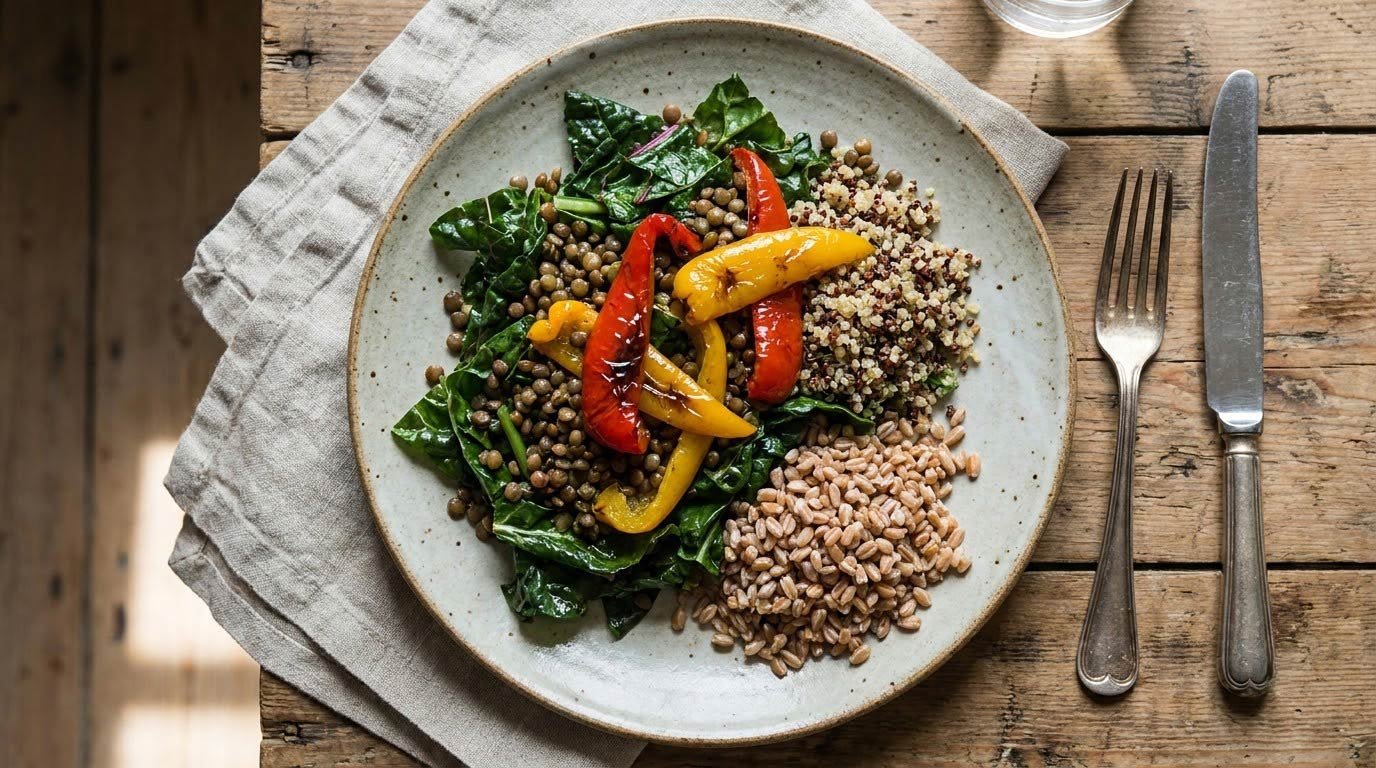
This week: eat your vegetables before your carbs at one meal daily. Take a 10-minute walk after dinner. Swap one refined-carb snack for something with protein. That's the foundation — no gadget required.
When this article is not enough
If you have symptoms of blood sugar dysregulation — excessive thirst with frequent urination, unexplained weight change, shakiness that only food fixes, or persistent fatigue despite adequate sleep — that's a clinical evaluation, not a self-tracking project. Prediabetes rarely announces itself. If it's been more than a year since blood work, that's the appointment to make.
Berberine: 'Nature's Metformin?'
The yellow plant alkaloid that activates the same metabolic switch as metformin — pooled HbA1c reductions, the LDL pathway, absorption chemistry, and the honest evidence-class grade.
Explore the berberine journey →Where this information comes from
- prediabetes prevalence (~1 in 3 US adults)
- fasting glucose and A1c diagnostic thresholds
- Diabetes Prevention Program results
- 58% reduction in type 2 diabetes progression with structured lifestyle change
- comparison with the medication arm
- meal sequencing studies (fiber-first, carbs-last)
- post-meal walking trials and glucose response
- acute glucose handling research
Our evidence principles
How we evaluated the claims on this page
- Prefer government health agencies, major medical organizations, clinical guidelines, systematic reviews, and well-designed human studies.
- Distinguish established evidence from promising but uncertain research.
- Avoid presenting a single food, timing trick, or habit as a universal glucose solution.
- Use numbers only when the population, context, and evidence are clear.
- Encourage clinician involvement when glucose readings, symptoms, or medication decisions are involved.
Educational information — not medical advice
This article is for educational purposes and does not diagnose, treat, or prevent any medical condition. Blood glucose interpretation requires clinical context — individual readings, symptoms, medications, and medical history all matter. If you have concerns about your glucose readings or metabolic health, consult a qualified healthcare provider. BodyFinds should display its medical disclaimer and source methodology alongside this article.