Seed Oils: Panic, Science, and What to Actually Cook With
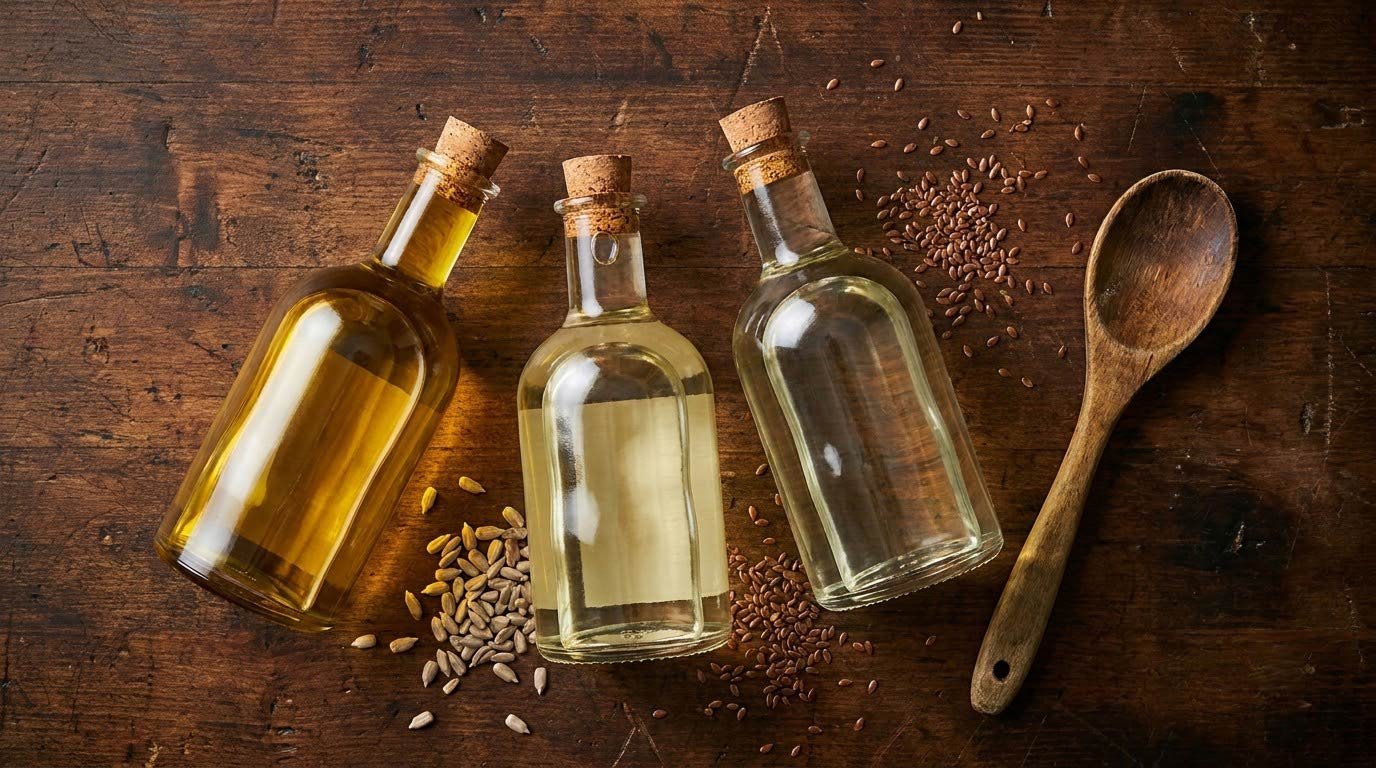
Few food topics generate more heat than seed oils. Are industrial oils quietly poisoning populations, or is this the latest nutrition moral panic? The research offers a calmer answer than either camp expects — one that separates the chemistry from the fear and the fear from the facts.
Controlled trials consistently show that higher omega-6 intake doesn't raise inflammatory markers in humans as theory predicted. The real concern about seed oils is what they travel in — ultra-processed foods — not the oils themselves. Olive oil remains the best-evidenced default fat.
The omega-6 question
Seed oils (sunflower, canola, soybean, corn) are rich in omega-6 linoleic acid. The theoretical concern is real biochemistry: linoleic acid converts to arachidonic acid, which is a precursor to inflammatory signaling molecules (prostaglandins, leukotrienes).
That's the mechanism. It's genuinely plausible — and it's where most of the internet panic starts. But mechanism is not outcome. The question isn't whether the pathway exists; it's whether consuming seed oils at normal dietary levels actually produces more inflammation in living humans.

Here's what the controlled trials show: when researchers feed people higher amounts of linoleic acid and measure actual inflammatory markers (CRP, IL-6, TNF-alpha), the inflammatory markers don't rise. The theory predicted they would. The body's regulatory systems — the ones that maintain homeostasis — appear to handle dietary omega-6 without tipping toward inflammation.
What the controlled trials actually show
Let's be specific about the evidence hierarchy here, because this is where the debate gets confused:
- Replacing saturated fat with omega-6 polyunsaturated fat lowers LDL cholesterol. This is one of the most replicated findings in nutrition science — confirmed across dozens of controlled feeding trials.
- Inflammatory markers don't rise with higher omega-6 intake. Multiple trials have specifically looked at CRP, IL-6, and TNF-alpha in response to increased linoleic acid. The results are consistently null.
- Observational studies linking high omega-6 to worse outcomes are confounded. People eating lots of seed oils are eating lots of fried and processed food — the seed oil isn't the independent variable.
The mechanistic concern is real biochemistry. The clinical evidence doesn't support it at dietary doses. This happens in nutrition science more often than you'd think — the body is better at maintaining balance than isolated pathways suggest.
Where the real concern lives
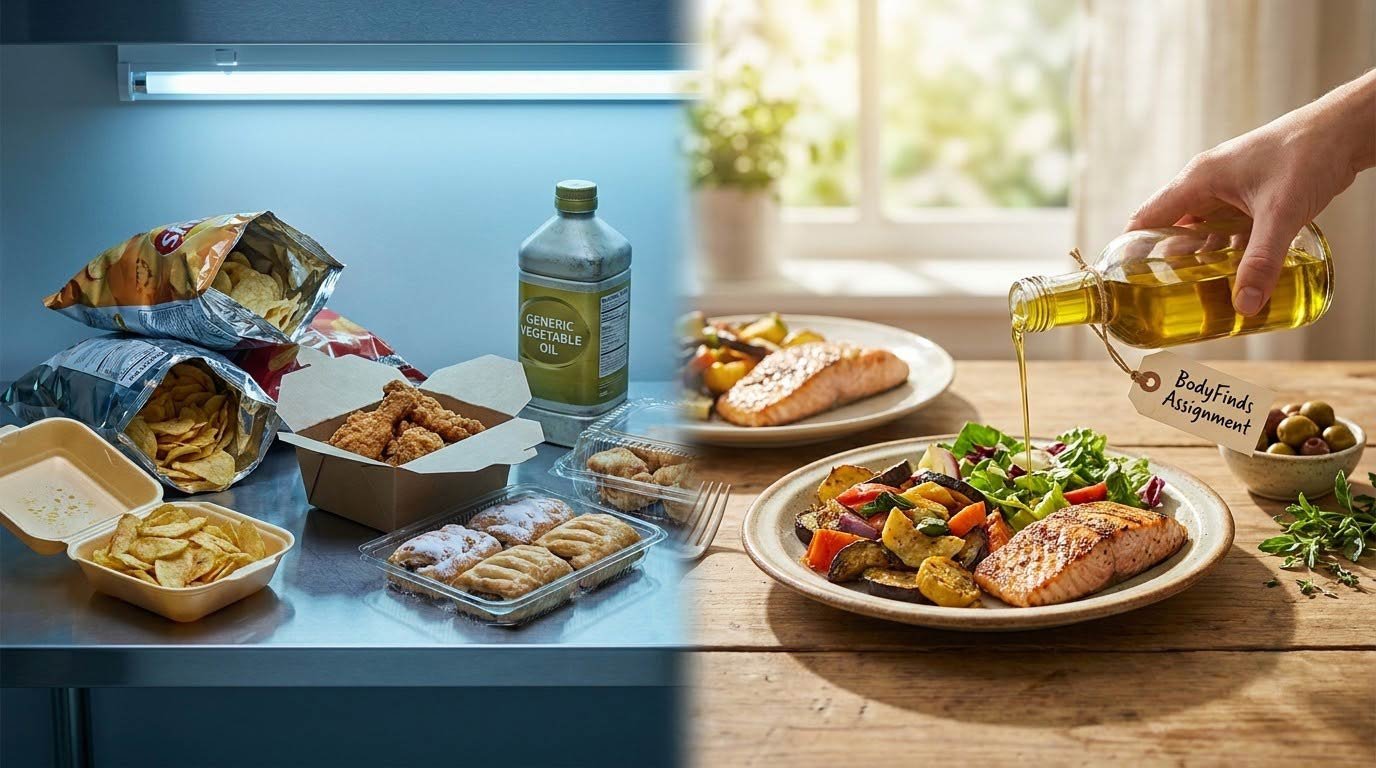
The legitimate issue isn't the oils themselves — it's what they travel in: ultra-processed food engineered for overconsumption. People eating lots of fried and packaged food have worse health outcomes regardless of which specific oil is used.
Here's the honest framing: if your diet is mostly home-cooked with olive oil as the default, seed oils in moderation are unlikely to be your bottleneck. If your diet is mostly fried food and packaged snacks, the seed oil is the least of your problems.
Blaming seed oils for the harms of ultra-processed food is like blaming flour for the harms of donuts.— A fair framing of the evidence
The smoke point and oxidation issue
A more practical concern than the omega-6 pathway: oils degrade at high heat. When oils are heated past their smoke point, they break down and produce compounds that are genuinely harmful. This applies to all oils — not just seed oils — but the specifics matter:
- Refined seed oils have high smoke points (~230°C). Sunflower and canola can handle deep-frying temperatures without breaking down — this is why the food industry uses them.
- Extra-virgin olive oil has a lower smoke point (~190°C). Fine for most home cooking, but not ideal for sustained deep-frying.
- Avocado oil has the best of both worlds (~270°C smoke point + healthy fat profile). The premium option for high-heat cooking.
- Reused frying oil is the real problem. Regardless of type, oils that are repeatedly heated and reused (restaurant deep fryers) accumulate degradation products. This is a genuine health concern — but it's about reuse, not about seed oils specifically.
Repeatedly reused frying oil (restaurant and commercial), trans fats on ingredient labels, and ultra-processed food consumption have much stronger evidence for harm than seed oils consumed in home cooking at moderate amounts.
The practical kitchen guide
Here's the evidence-based guide to what you should be cooking with:
- Extra-virgin olive oil — the default for dressings, sautéing, and most home cooking. The best-evidenced fat in nutrition science, full stop.
- Avocado oil — the high-heat specialist. For searing, roasting at high temperatures, and anything above olive oil's comfort zone.
- Seed oils (canola, sunflower) — fine in moderation for high-heat applications where you don't want to spend avocado-oil prices. Not the villain the internet makes them.
- What to avoid: repeatedly reused oil, anything with 'partially hydrogenated' on the label, and cooking past an oil's smoke point.
Why the fear narrative spread so fast
The seed oil panic follows a familiar pattern in nutrition discourse: a real biochemical mechanism (omega-6 → arachidonic acid → inflammation), amplified by a grain of truth (processed foods are bad for you), stripped of nuance (the controlled trials showing no inflammation increase), and packaged as a simple enemy (seed oils are poisoning you).
The truth is more boring: home-cooked food with olive oil as your default fat is the recommendation that has survived decades of research. Seed oils in moderation won't hurt you. Ultra-processed food in excess will — regardless of which oil it contains.
Cook most meals at home, use olive oil as your default, and stop agonizing over the rest.— The practical takeaway
This week: use extra-virgin olive oil for dressings and medium-heat cooking. If you need high-heat, use avocado oil. Don't throw away your canola — just don't make it your primary fat. And if you eat a lot of fried food, the oil is the smallest part of that problem.
When this article is not enough
If you have a diagnosed cardiovascular condition, high cholesterol, or a family history of heart disease, the fat-type conversation belongs with your clinician or a registered dietitian. They can help you balance fat types within your overall health picture.
Omega-3: The Other Half of the Fat Story
The omega-3 family that balances omega-6 — the full journey: EPA vs DHA, forms, absorption, the REDUCE-IT trial, and honest grades for heart and inflammation.
Explore the omega-3 journey →Where this information comes from
- controlled trials showing omega-6 intake does not raise inflammatory markers in humans
- the gap between mechanistic theory and measured outcomes
- polyunsaturated fat guidance
- LDL cholesterol effects of fat substitution
- cooking oil recommendations
- the evidence hierarchy for dietary fats
- replacing saturated fat with unsaturated fat
- oil smoke points and oxidation
- pooled analyses of fat type and heart outcomes
- the saturated vs unsaturated substitution evidence
Our evidence principles
How we evaluated the claims on this page
- Prefer government health agencies, major medical organizations, clinical guidelines, systematic reviews, and well-designed human studies.
- Distinguish established evidence from mechanistic speculation.
- Avoid presenting any single oil as universally harmful or universally healthy.
- Use numbers only when the population, context, and evidence are clear.
- Frame dietary fat advice within the context of overall dietary patterns rather than single ingredients.
Educational information — not medical advice
This article is for educational purposes and does not diagnose, treat, or prevent any medical condition. Dietary fat needs vary by medical history, medications, and individual circumstances. People with cardiovascular conditions should consult their healthcare provider about appropriate fat intake. BodyFinds should display its medical disclaimer and source methodology alongside this article.