Creatine: Not Just for Bodybuilders Anymore
Creatine has spent three decades as the gym's favorite supplement — and earned the best safety record in the industry along the way. Over 500 peer-reviewed studies have examined its effects, making it the most scrutinized supplement on earth. But the newest research frontier isn't muscle at all: it's the brain.
Creatine isn't just a muscle fuel — it's a brain fuel. The same energy-buffering system that helps muscles perform under intensity also operates in neurons, which consume 20% of your body's energy despite being 2% of its weight. The cognitive research is young but genuinely promising.
What creatine actually does
Creatine is a molecule your body already makes (from amino acids in the liver and kidneys) and stores primarily in muscle — and secondarily in the brain. Its job is elegantly simple: it buffers energy at the cellular level.
When a cell needs energy fast — a muscle contracting under load, a neuron firing rapidly — it burns ATP (the energy currency). The problem is that cells only store a few seconds' worth of ATP at any moment. Creatine acts as a backup battery: it donates a phosphate group to spent ATP (now ADP), instantly regenerating it back to usable ATP. This system, called the phosphocreatine system, is the bridge between the 2-second ATP supply and the slower oxygen-dependent systems that take over after.
Supplementing with creatine increases your body's stores of this backup battery by 20–40%. More stored phosphocreatine means more immediate energy available during high-intensity efforts — whether that's a heavy set of squats or a burst of demanding thinking.
The muscle evidence: still the gold standard
Let's not skip past the original reason creatine became famous — the muscle evidence is extensive, replicated, and impressive. Meta-analyses consistently show that creatine supplementation combined with resistance training produces 5–10% greater strength gains than training alone. This is one of the largest, most reliable effects of any legal supplement ever studied.
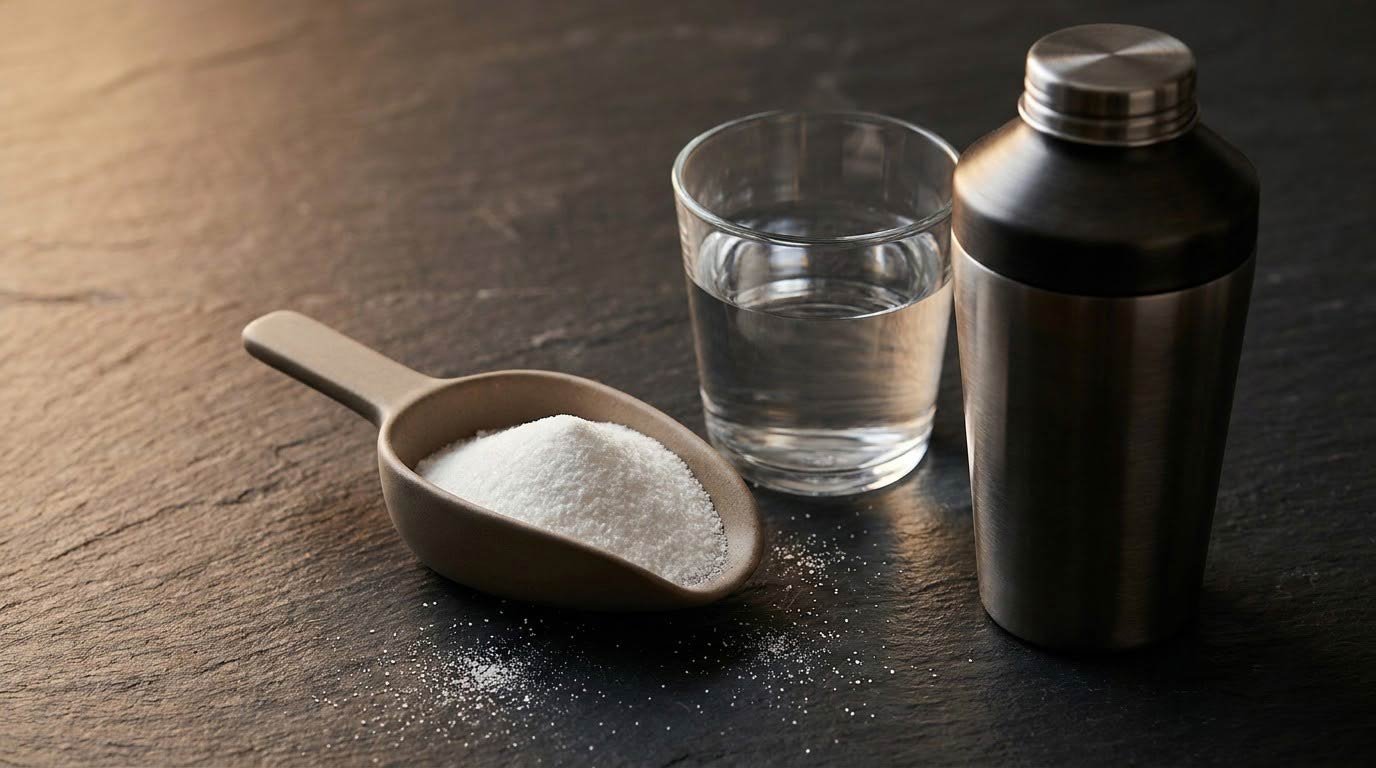
The practical protocol is equally well-established: 3–5 grams of creatine monohydrate daily, taken at any time, with or without food. The commonly cited 'loading phase' (20g daily for 5–7 days) only accelerates saturation by about a week — you reach the same steady state at 3–5g daily within 3–4 weeks. Consistency, not timing, is what matters.
The cognitive connection: the exciting frontier
The brain is a metabolically expensive organ — it consumes roughly 20% of your body's energy while representing only 2% of its weight. Neurons fire through the same ATP-dependent process that muscles contract through, and the brain's phosphocreatine system operates on the same principles.
The research here is newer and smaller than the muscle literature, but the findings are genuinely interesting:
- Sleep deprivation. Trials show creatine supplementation improves memory and reasoning under sleep deprivation — the brain's energy stores deplete during extended wakefulness, and supplementing appears to buffer this deficit.
- Vegetarians and vegans. The strongest cognitive effects appear in people whose baseline creatine levels are lower — which includes vegetarians and vegans who don't get dietary creatine (found only in meat and fish). Studies in this population show the largest improvements in memory and processing tasks.
- Older adults. The brain's creatine stores may decline with age, parallel to muscle creatine. Early trials in older populations show mixed but encouraging results for cognitive performance.
- Stress and demanding cognition. Some evidence suggests benefits during prolonged cognitive stress — exam conditions, shift work, high-pressure decision-making — where the brain's energy systems are under sustained demand.
For muscle performance: strong evidence, hundreds of trials. For cognition: promising early evidence, strongest in vegetarians and under metabolic stress (sleep deprivation, aging, high cognitive load). The brain research is where the excitement is, but the trial base is still building.

The healthy aging angle
This is where creatine's story gets particularly interesting for people who don't care about gym performance. Multiple lines of evidence converge on the same conclusion: creatine may be one of the most practical supplements for aging well.
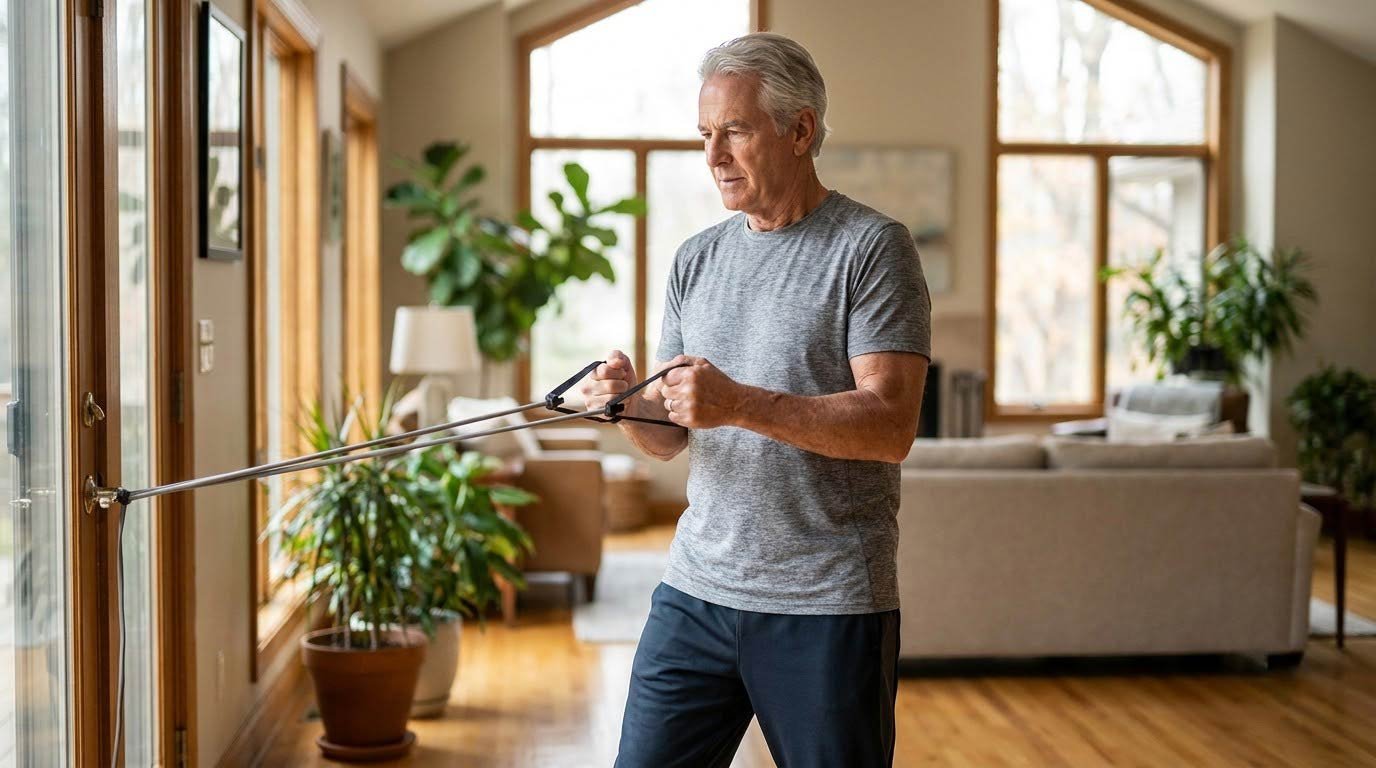
- Muscle preservation. Trials in older adults (including 80- and 90-year-olds in nursing homes) show that creatine combined with resistance training produces greater gains in muscle mass and functional strength than training alone. For sarcopenia prevention, this is one of the few supplements with direct outcome evidence.
- Bone mineral density. Emerging research suggests creatine may support bone density in older adults — possibly through improved muscle pull on bone (the primary stimulus for bone maintenance) or direct cellular effects. The trials are early but the direction is consistent.
- Brain energy support. The brain's energy metabolism changes with age, and creatine's buffering role in neurons may help maintain cognitive reserve. This is the most speculative but also the most potentially significant aging application.
- Recovery from hospitalization. Hospital stays cause rapid muscle loss. Early research is examining whether creatine supplementation during recovery helps rebuild capacity faster — the 'muscle as crisis reserve' concept applied to acute medical situations.
If a pharmaceutical matched creatine's evidence profile, it would be prescribed universally after 50.— An honest reading of the aging evidence
The safety record: genuinely remarkable
Over 500 peer-reviewed studies have examined creatine's safety. The collective verdict: no adverse effects at recommended doses (3–5g daily) in healthy populations across short-term and long-term trials. This is a safety record that no other supplement in the industry matches.
Common concerns, addressed honestly:
- Kidney damage: not found in healthy people. Long-term trials have monitored kidney function extensively — no deterioration in healthy populations at recommended doses. The concern originated from a single early case report involving someone with pre-existing kidney disease.
- Hair loss: one small study, unreplicated. A single study found increased DHT (a hormone linked to hair loss) in rugby players taking creatine. The finding hasn't been replicated in subsequent research. If you have male-pattern baldness concerns, this is worth knowing about but not established.
- Water retention: real but harmless. Creatine draws water into muscle cells — this is part of how it works, not a side-effect. You may gain 1–2 kg of water weight in the first weeks. This is intracellular, not bloating.
- Muscle cramps: no evidence. Multiple trials have specifically examined cramping — creatine users show either no difference or fewer cramps than placebo. The old wrestling-coach warning has no trial support.
- Kidney disease: a genuine caution. If you have diagnosed kidney disease or elevated creatinine, creatine supplementation is a clinical conversation. Not because creatine damages healthy kidneys — but because the lab values become harder to interpret and the safety margin narrows.
No adverse effects in healthy populations at 3–5g daily, across 500+ studies. If you have kidney disease, take medications that affect renal function, or are unsure — consult your clinician first. This is a caution for a specific population, not a general warning.
Who benefits most
Not everyone needs creatine — but for certain groups, the evidence is unusually strong:
- Older adults (50+): Combined with resistance training, one of the most evidence-backed interventions for preserving muscle, function, and potentially bone density.
- Vegetarians and vegans: Lower baseline creatine stores mean the biggest response — both for muscle and for the cognitive effects.
- Athletes in explosive sports: The original use case — well-proven for repeated sprint performance, power output, and training volume.
- Shift workers and the sleep-deprived: The cognitive buffering under sleep debt has practical implications for anyone working irregular schedules.
- People recovering from hospitalization: The muscle-rebuilding application is early but promising — a conversation for you and your medical team.

The practical protocol
If you want to try creatine, the evidence supports a simple approach:
- Dose: 3–5 grams daily. Skip loading phases — they only speed saturation by a week. Consistency is what matters.
- Form: creatine monohydrate. The cheapest, most tested, most effective version. 'Advanced' forms (HCl, buffered, liquid) cost more and have no evidence of superiority.
- Timing: any time. Post-workout may be marginally better for muscle uptake, but total daily consistency matters far more than timing.
- With or without food: both work. Taking it with a meal containing carbs and protein may slightly enhance uptake, but this is optimization, not requirement.
- Stay hydrated. Creatine draws water into muscle cells — make sure you're drinking enough overall.
- Be patient. Full saturation takes 3–4 weeks at 3–5g daily. The muscle performance benefits appear after saturation; the cognitive effects may appear sooner or later depending on your baseline.
Creatine is the rare supplement with an exceptional safety record, strong muscle evidence, promising brain research, and emerging aging applications. If you're over 50 and doing any resistance training, or if you're vegetarian, or if you work demanding cognitive hours — the evidence suggests this is one of the safest high-return additions available.
When this article is not enough
If you have kidney disease, elevated creatinine levels, or take medications that affect renal function, the creatine conversation belongs with your clinician — not the internet. The supplement's safety record is excellent for healthy populations, but that boundary is real and worth respecting.
Creatine: The Full Evidence Journey
The most-studied supplement on earth — forms, dosing, timing, the brain connection, safety record, and honest grades for muscle, cognition, and healthy aging.
Explore the creatine journey →Where this information comes from
- 500+ peer-reviewed studies on safety
- no adverse effects at recommended doses in healthy populations
- kidney function findings in long-term trials
- improved memory and reasoning under sleep deprivation
- strongest effects in vegetarians (lower baseline stores)
- brain energy metabolism research
- muscle preservation in older adults combined with resistance training
- bone mineral density findings
- functional outcome measures
- position statement on creatine safety and efficacy
- dosing recommendations
- population-specific guidance
Our evidence principles
How we evaluated the claims on this page
- Prefer government health agencies, major medical organizations, clinical guidelines, systematic reviews, and well-designed human studies.
- Distinguish established evidence from promising but uncertain research.
- Avoid presenting creatine as a universal cognitive enhancer or anti-aging intervention.
- Use numbers only when the population, context, and evidence are clear.
- Encourage clinician involvement when kidney disease, medications, or specific health conditions are involved.
Educational information — not medical advice
This article is for educational purposes and does not provide medical advice. If you have kidney disease, elevated creatinine, take medications that affect renal function, or have concerns about whether creatine supplementation is appropriate for you, consult a qualified healthcare provider. BodyFinds should display its medical disclaimer and source methodology alongside this article.