Appetite & Metabolism
Hunger feels like a personal failing and operates like a hormone system: ghrelin scheduling the next meal, leptin reporting the body's reserves, GLP-1 and its partners ending each one. The GLP-1 medication era proved beyond argument that appetite is biology — and the food industry spent decades engineering products that bypass the signals. This page covers the system, the myths, and the levers that work with the biology rather than against it.
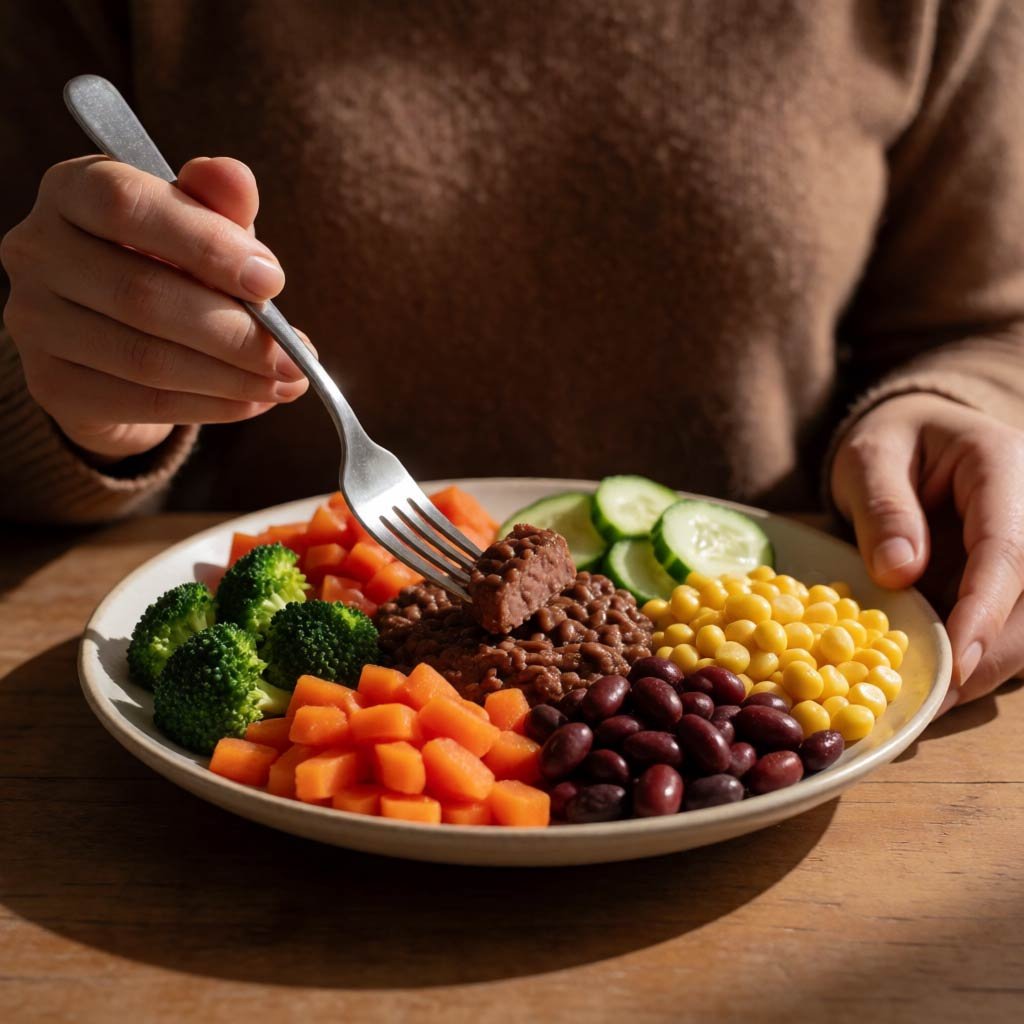
The system, the era, and the myths
The system: ghrelin rises before habitual mealtimes and falls after — hunger is largely scheduled. Leptin, secreted by fat cells, reports long-term energy reserves to the brain — the reason body weight defends itself. CCK and peptide YY terminate each meal. The system is regulated, redundant, and ancient — built for scarcity, now surrounded by engineering.
The GLP-1 era, honestly: the new medications amplify exactly one of these signals — and their effectiveness proved that appetite is powerfully, mechanically modifiable. That's the lesson: overeating is not a willpower disorder. The honest frame includes the rest: they're clinical tools with clinical trade-offs (muscle loss alongside fat, regain after stopping), not casual shortcuts — and the supplement shelf's 'nature's Ozempic' claims (berberine and friends) are marketing borrowing the science's credibility. The natural GLP-1 levers exist — protein, fiber, slower meals — at modest, real sizes.
The metabolism myths: 'slow metabolism' as an explanation is mostly myth — energy expenditure is largely predictable from body size and composition. What's real is adaptation: the famous Biggest Loser follow-up found persistent metabolic slowdown after major weight loss — the body defends its set point, which is why regain is physiology, not weakness. And the thermic effect is real arithmetic: protein spends 20–30% of its own calories being digested (consistent with the Protein chapter's facts ✓).
The engineered environment: the landmark NIH controlled-feeding trial found people ate roughly 500 more calories per day on ultra-processed diets — eating faster, needing more to feel full. The hormones didn't fail; the food was designed to bypass them. The levers that work with the system: protein first (the hierarchy's top), fiber and volume (fullness per calorie), slower eating (the satiety signals need ~20 minutes), sleep (short sleep disrupts leptin and ghrelin measurably), and unprocessed patterns — each modest, each stackable.
- Ghrelin is a schedule, leptin is a report — hunger is regulated biology.
- The GLP-1 era proved appetite is mechanical — and its 'natural' imitators are marketing.
- Metabolic adaptation is real: regain after weight loss is physiology, not weakness.
- Ultra-processed diets drove ~+500 kcal/day in the controlled trial.
- The satiety levers: protein, fiber and volume, slower eating, sleep.
- Protein spends 20–30% of its own calories in digestion — arithmetic, not magic.
“You don't lack willpower. You have an ancient hormone system in an engineered food environment.”
— The appetite principleThe factor families
The satiety architecture
Protein first, fiber and volume, slower meals — the levers that work with the hormone system.
Explore Protein →The sleep-hunger wiring
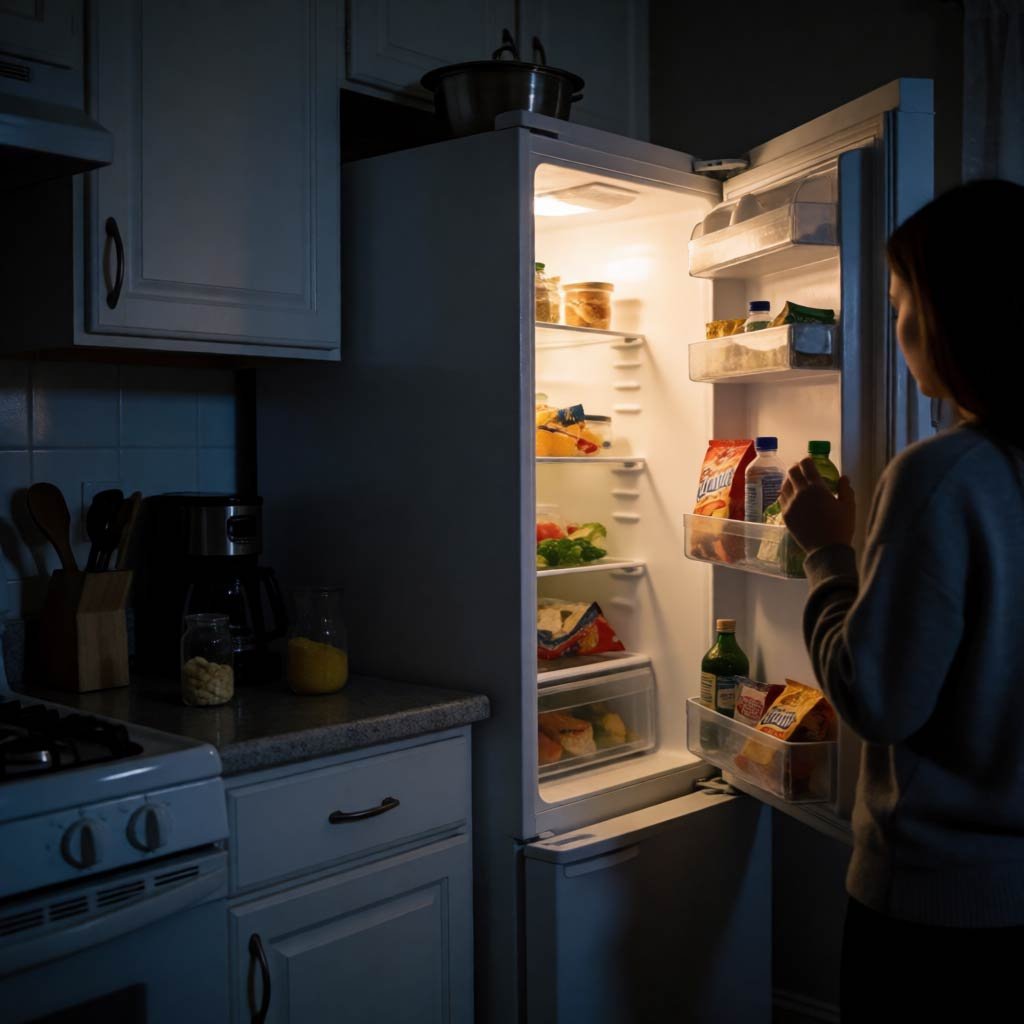
Short sleep disrupts leptin and ghrelin measurably — the late-night craving is chemistry.
Explore Sleep →The stress appetite
Stress eating is cortisol wiring, not character — the appetite-stress overlap is real biology.
Explore Stress & Mental Wellbeing →The engineered appetite
Ultra-processed food is designed to bypass satiety — the environment half of the story.
The story, frame by frame
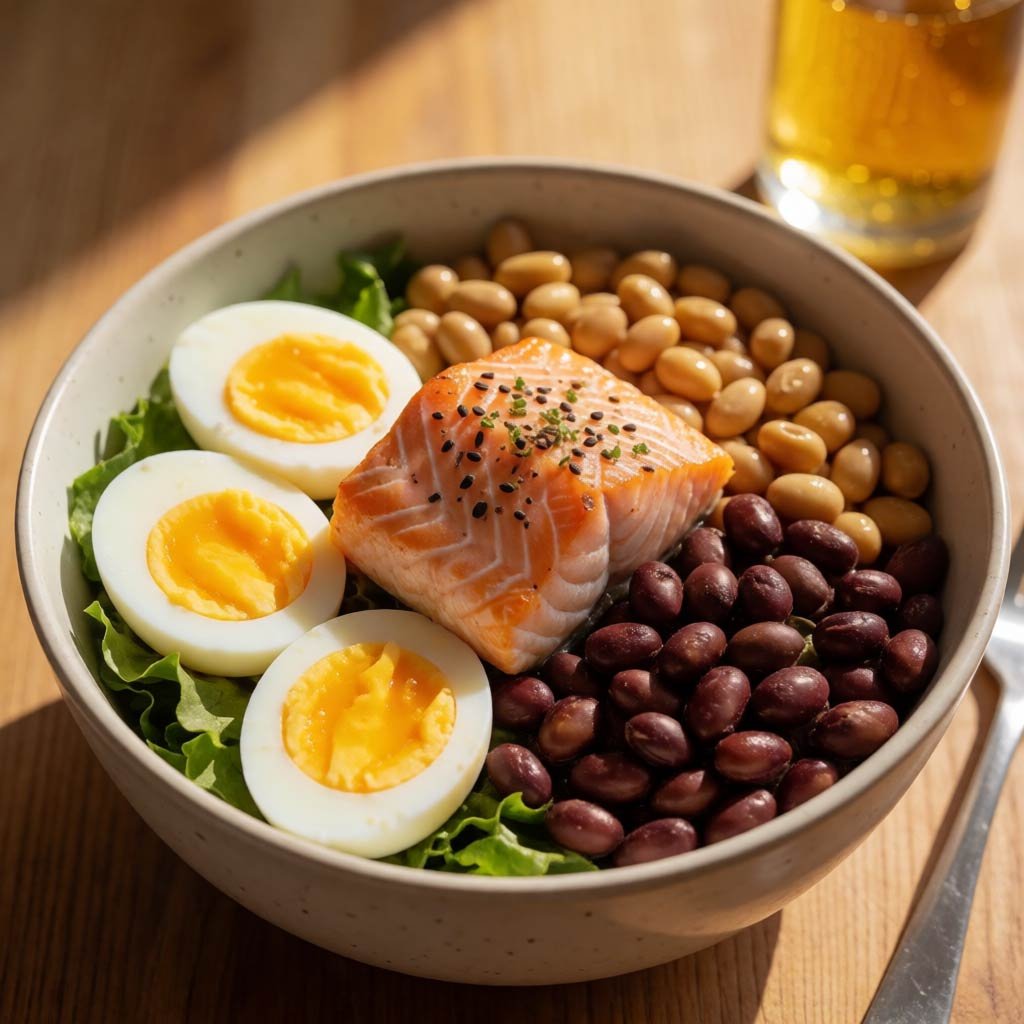

The appetite system's players — and the route into each
Every card links to a full BodyFinds journey. The appetite story touches satiety, sleep, stress, and the metabolic cluster.
The satiety king — the hierarchy's top, the thermic arithmetic, the lever that's food.
supplementThe overnight regulation — short sleep dysregulates the hunger hormones measurably.
research-topicThe stress wiring — cortisol appetite is biology, and recovery is the intervention.
research-topicThe crash loop's appetite half — the spike-dip-crave cycle that drives the 3pm raid.
research-topicThe system hub — markers, insulin resistance, and the DPP's pattern evidence.
research-topicThe 'nature's Ozempic' myth — GLP-1 borrowing versus the trials' modest reality.
supplementThe satiety king's full journey
The complete BodyFinds Protein journey — forms, the timing myth, the honest product grades.
Where this information comes from
- PubMed — Ultra-Processed Diets and Energy Intake (Hall et al.) Database
- NHLBI — Sleep Science and Sleep Disorders Government
- MedlinePlus — Eating Disorders Government
- CDC — Adult Obesity Government
- WHO — Healthy Diet Government