VO2 Max & Lifespan
Most longevity advice is fuzzy. This number isn't. VO2 max — the maximum oxygen your body can use — is the gold-standard measure of cardiorespiratory fitness, and the landmark cohort analysis found it stratifies survival more sharply than many traditional risk factors, with low fitness predicting death more strongly than smoking or diabetes in the same population. The encouraging half: it's trainable, at every age studied. This page covers the measurement, the evidence, and the work that moves the number.

The measurement, the evidence, and the work
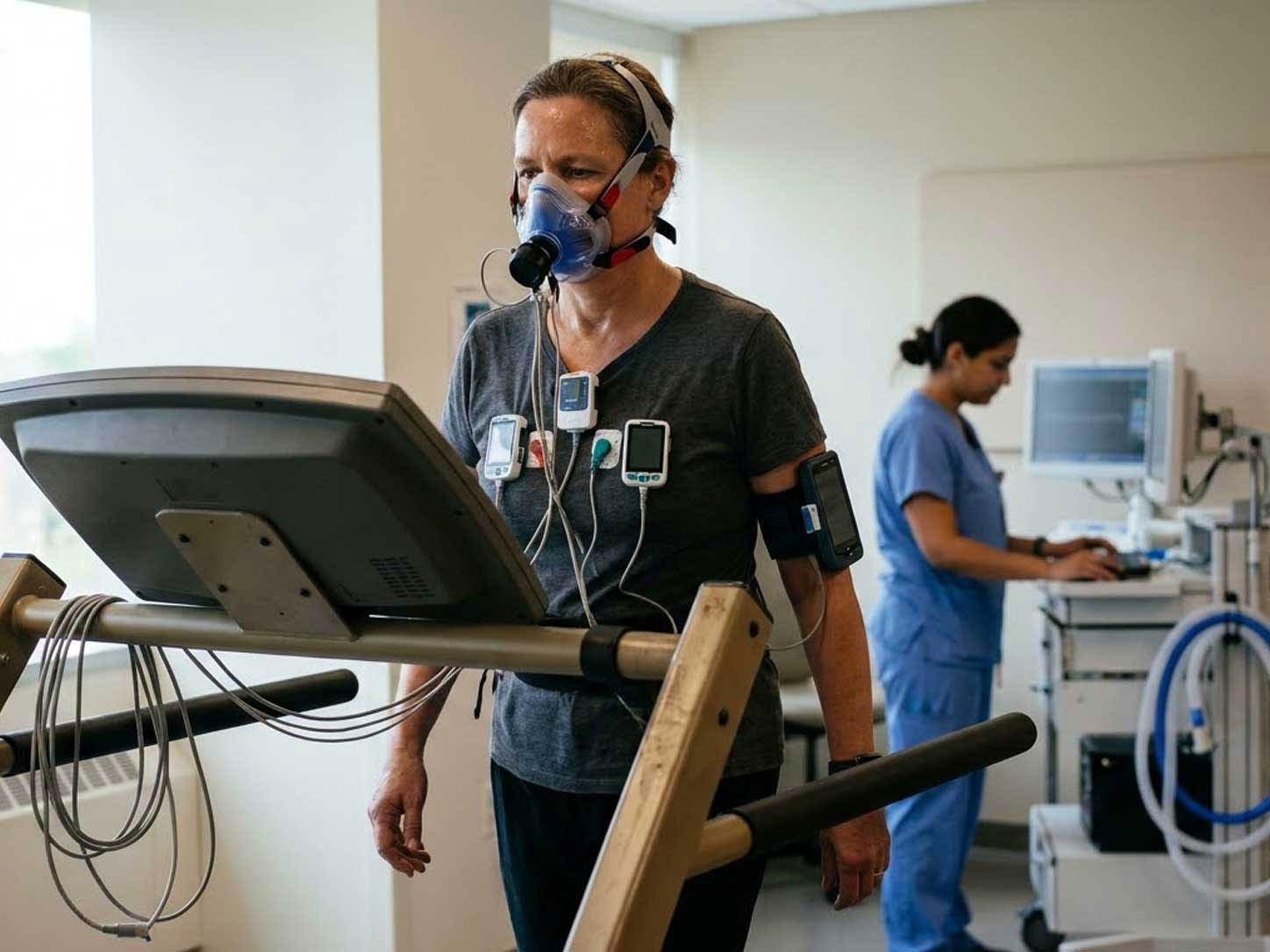
The measurement: VO2 max is the maximum amount of oxygen your body can use during all-out effort — the ceiling of the engine that combines lungs, heart, blood, and muscle. It's measured directly in a graded exercise test with a breathing mask (the clinical gold standard), and estimated respectably by modern wearables — good enough for tracking your trend, not for a diagnosis. Genetics set a range; training decides where in it you live.
The predictor: the landmark analysis followed 122,007 patients who underwent treadmill testing, dividing them into fitness bands and tracking mortality. The result: survival curves separated by fitness level more sharply than by many traditional risk factors — and low fitness predicted death more strongly than smoking or diabetes in the same cohort. That finding reframed fitness from a lifestyle virtue into a vital sign.
The bands: the survival staircase is not evenly spaced — the largest gain of any step belongs to moving from the lowest fitness band to the next one up. The couch-to-something jump is worth more, in survival terms, than athlete-to-slightly-better-athlete ever is. If you're currently sedentary, that is genuinely the best news on this page: your biggest available win is the cheapest one.
The work: untrained, VO2 max declines roughly 10% per decade after 30 — and training flattens that curve at every age studied. The two evidence-backed tools: interval work (short, hard efforts that push the system toward its ceiling) and the zone-2 base (the conversational-pace volume that builds the engine underneath). Consistency beats any single heroic session — the number responds to months of regular work, not one brutal workout. Start where you are; the staircase's first step is the one that counts.
- VO2 max = maximum oxygen uptake — the gold-standard measure of cardiorespiratory fitness.
- The 122,007-patient cohort stratified survival by fitness band more sharply than many risk factors.
- Low fitness predicted death more strongly than smoking or diabetes in the same cohort.
- The largest survival gain of any step: lowest fitness band → the next one up.
- Untrained decline runs ~10% per decade after 30; training flattens the curve at every age.
- Intervals push the ceiling; zone-2 volume builds the base — consistency beats intensity.
“You can't see your VO2 max in the mirror — but it's quietly one of the strongest predictors of how long you stay alive and independent.”
— The fitness principleThe factor families
The pump at the center
A four-chambered muscle beating ~100,000 times a day — the delivery system the whole measurement rides on.
Explore Heart →The engine room
Skeletal muscle is where the oxygen actually gets spent — mitochondria are the furnaces VO2 max measures.
Explore Muscle & Recovery →The aging curve
The ~10%-per-decade drift is the aging story — and the curve training bends at every age studied.
Explore Healthy Aging →The numbers next door
Blood pressure and lipids are fitness's co-predictors — the numbers conversation that travels with it.
Explore Heart Health →The story, frame by frame


The fitness story's players — and the route into each
Every card links to a full BodyFinds journey. The VO2 max story touches the heart, the training, the aging curve, and the numbers that travel with it.
The organ itself — the pump whose output the whole measurement rides on.
organThe numbers conversation — pressure, lipids, and the screening that travels with fitness.
research-topicThe engine room — skeletal muscle and its mitochondria, where the oxygen gets spent.
research-topicThe aging lens — the per-decade drift and the trainability that bends it.
research-topicThe training application — programming the intervals and base work that lift the number.
research-topicWhy does cardiovascular health matter for longevity?
The complete BodyFinds journey — the strongest predictor, the silent number, the late-start good news, and the honest omega-3 evidence.