Healthy Aging
Aging is not one process — it is a set of negotiable ones. Muscle begins drifting in the 30s, bone accelerates after menopause, deep sleep thins, balance sharpens then fades, and protein needs rise when most people cut back. The science of healthy aging is the science of negotiating each one — and the remarkable, replicated finding is that the negotiation works at every age: muscle responds to loading in the very old, balance retrains, and the playbook starts wherever you are.

The processes, then the playbook
What actually changes: muscle — the quiet drift beginning decades before it's visible, roughly 1–2% per year after 50 without loading; bone — density declining faster after menopause, until fractures become the event; balance and reaction — slowing by fractions that matter at curbs and stairs, which is why falls outrank every other injury over 65; deep sleep — thinning with age while repair still depends on it; metabolism — drifting toward insulin resistance; and the senses — where hearing loss quietly doubles dementia risk (the Brain page carries that story).
The playbook, by decade: in the 30s–40s, build the reserves — muscle mass, bone density, and cardio fitness all peak or bank here, and what you bank is what you draw on later. In the 50s, defense begins — strength training becomes non-negotiable, screening schedules start, and the menopause transition deserves real medical partnership, not silence. In the 60s and beyond: preserve capability — balance work alongside strength, more protein per meal (the threshold roughly doubles with anabolic resistance), the senses checked and corrected, and connection treated as medicine.
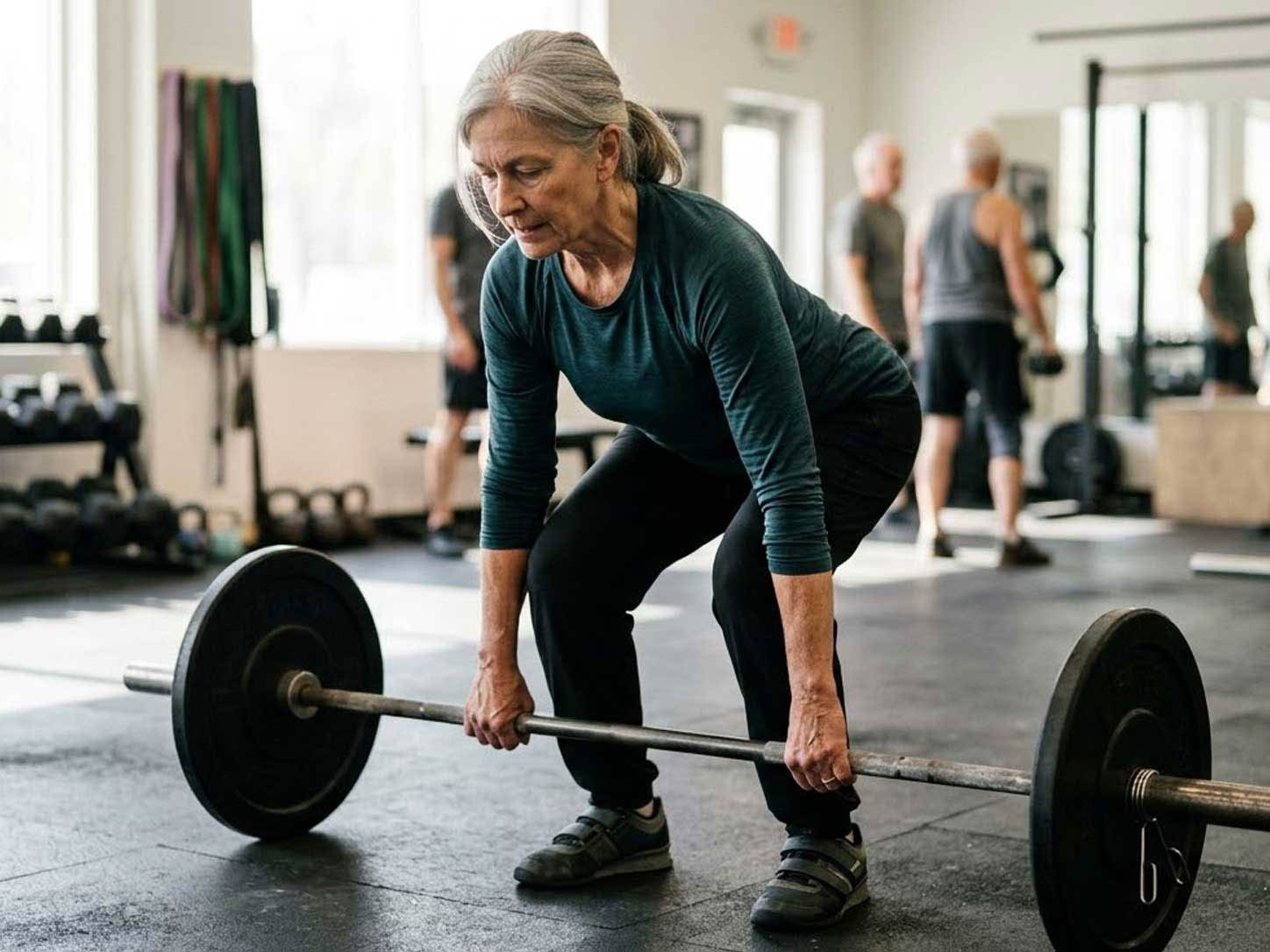
The through-line is one intervention wearing many hats: strength training is the only lever that simultaneously loads muscle, stresses bone, trains balance, and improves insulin sensitivity — and the trials that put resistance training in 80- and 90-year-olds found muscle listening at every age.
- Muscle drift starts in the 30s — the playbook starts there too, not at 70.
- Anabolic resistance: protein needs per meal roughly double with age.
- Falls are the #1 injury killer over 65 — balance is as trainable as biceps.
- Hearing loss is a modifiable dementia risk factor — check it, correct it.
- Resistance training is the one lever moving every aging process at once.
“Muscle doesn't care how old you are — only whether you load it.”
— The aging evidence, in one sentenceThe factor families
The master lever
Strength training loads muscle, bone, balance, and metabolism simultaneously — the one intervention with four benefits.
Explore Muscle & Aging →Rising protein needs
Anabolic resistance means older muscle needs more protein per meal — roughly double the young threshold.
Explore Protein →Aging sleep
Deep sleep thins with age while overnight repair still depends on it — the shift gets quieter, not less important.
Explore Sleep →The screenings
Bone density, hearing, vision, and blood work on schedule — preventive care is aging care with the best evidence there is.
The story, frame by frame


The aging systems — and the route into each
Every card links to a full BodyFinds chapter. Healthy aging is a systems page — each process has its own destination below.
The master process: muscle drift from the 30s, and the loading that answers it at any age.
research-topicThe anabolic-resistance story — rising per-meal protein needs with honest trial grades behind the practice.
supplementThe crown: cognitive aging — pillars over pills, hearing and vessels included.
research-topicThe moving parts: joints feed on motion — the wear-and-tear myth corrected for aging bodies.
research-topicThe overnight shift: repair still rules aging — the architecture changes, the need doesn't.
research-topicThe transitions are real medicine — the 'boosters' mostly aren't. Honest grading for a hyped category.
research-topicThe menopause transition — the most under-served chapter of aging medicine, covered in full.
research-topicThe sibling hub: the outcomes view — the strongest measured predictors of long, healthy life.
research-topicWhat predicts a long, healthy life?
The Longevity hub — the outcomes view: the strongest measured predictors, the blue-zones evidence, and the frontier graded honestly.
Where this information comes from
- WHO — Ageing and Health Government
- NIA — Exercise and Physical Activity Government
- NIA — Menopause Government
- NIDCD — Age-Related Hearing Loss Government
- MedlinePlus — Healthy Aging Government