Heart & Metabolic Health
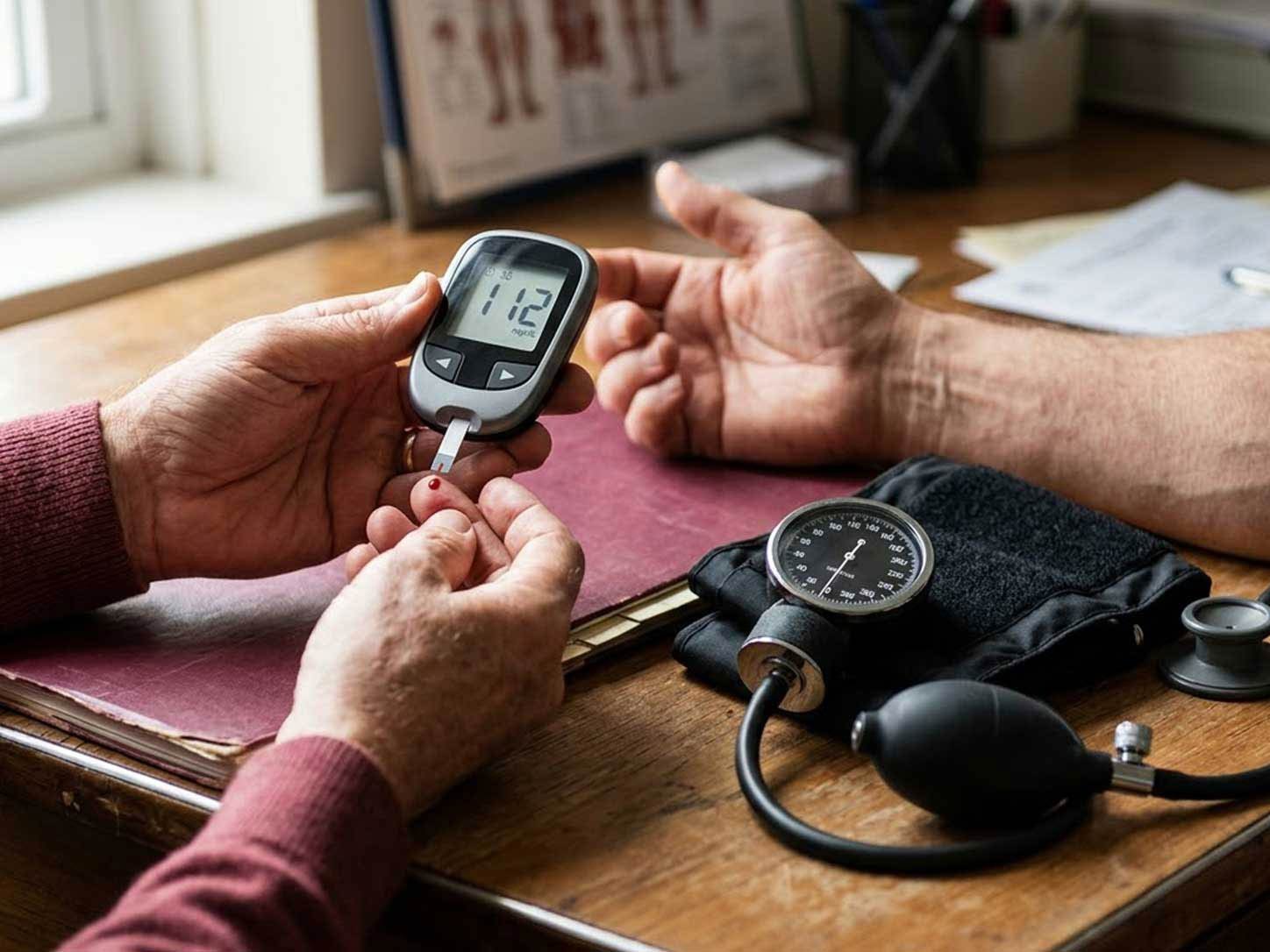
Cardiology and metabolism turn out to be one story told by two gauges. Insulin resistance strains the vessels; vessel disease strains the heart; and the shared markers — blood pressure, glucose, lipids, waist — read both systems from one blood draw. This page is the bridge: the connection mechanism, the shared panel, and the single set of levers that improves both engines at once. The full systems live in their own chapters below.
The interlock, in one paragraph
The mechanism chain runs: insulin resistance — the fuel system weakening — damages the endothelium, the vessel lining; endothelial dysfunction drives blood pressure up and plaque growth in artery walls; and the strained vessels land on the heart as the classic outcomes. This is why diabetes is treated as a heart-disease risk equivalent — the two systems are downstream of the same drivers, and why one blood panel (pressure, glucose, lipids, waist) reads both engines at once.
The hopeful inversion is the same: one set of levers moves both systems. The DPP's structured lifestyle change cut diabetes progression 58%; blood-pressure control is the highest-leverage cardiac move; aerobic fitness is a vital sign for both engines; and one Mediterranean pattern carries trial evidence on each side. Nobody needs two separate healthy lifestyles — the pillars are shared, which is precisely why they're worth doing.
- Insulin resistance → endothelium → vessels → heart: one causal river.
- Diabetes is treated as a heart-disease risk equivalent — shared fate, shared panel.
- One set of levers — movement, pattern, pressure control, sleep — improves both engines.
- The two full systems live in their own chapters — linked below.
“The heart and the fuel system are one machine with two gauges.”
— The cardiometabolic principleThe factor families
The interlock
Insulin resistance damages the vessel lining — the mechanism that makes metabolic strain cardiac strain.
Explore Diabetes →The shared panel
Blood pressure, glucose, lipids, waist — one blood draw reads both systems. Get the panel.
Explore Hypertension →One set of levers
Movement, pattern, and pressure control improve both engines simultaneously — the efficiency of the pillars.
Explore VO2 Max & Lifespan →The risk calculator
Clinicians combine these markers into shared risk scores — one number, both systems, in a clinical partnership.
The story, frame by frame



The two systems — and the route into each
This bridge page routes to both systems in full. Conditions grade as the connection story; topics are the destinations.
The risk equivalent — diabetes is managed clinically as heart disease's twin, with 2–4× the cardiac death risk.
conditionThe shared gauge — where metabolic strain reads out on the vessels, and the highest-leverage control point.
conditionLDL management is clinical territory — the statin evidence base spans both systems.
conditionThe engine downstream — its full journey lives here, from anatomy to the pillars that protect it.
organThe cardiac side in full — the three numbers, the five pillars, and the emergency signs.
research-topicThe metabolic side in full — insulin resistance, the five markers, and the DPP's 58%.
research-topicThe one supplement entry on the bridge: a modest, consistent blood-pressure effect — meaningful only inside the whole pattern.
supplementWhy am I always tired?
Metabolic and cardiac threads are among the contributors the guided journey helps you narrow down — health information, not a diagnosis.
Where this information comes from
- NIDDK — Diabetes, Heart Disease, and Stroke Government
- NHLBI — Metabolic Syndrome Government
- WHO — Cardiovascular Diseases Fact Sheet Government
- American Heart Association — Life's Essential 8 Institution
- NIH ODS — Magnesium Government