Inside the urogenital geography.
Where do UTIs actually happen in the body?
A UTI happens along a route, not at a spot: the gut reservoir (where E. coli lives as a normal citizen), the perineal gateway (where seeding happens), the urethra (the short road — four centimeters in women), the bladder (the battlefield and its anti-adhesion wall), and — when the defense fails badly — the kidneys above. Understanding the route explains every risk factor from anatomy to estrogen, and every prevention from wiping direction to D-mannose.
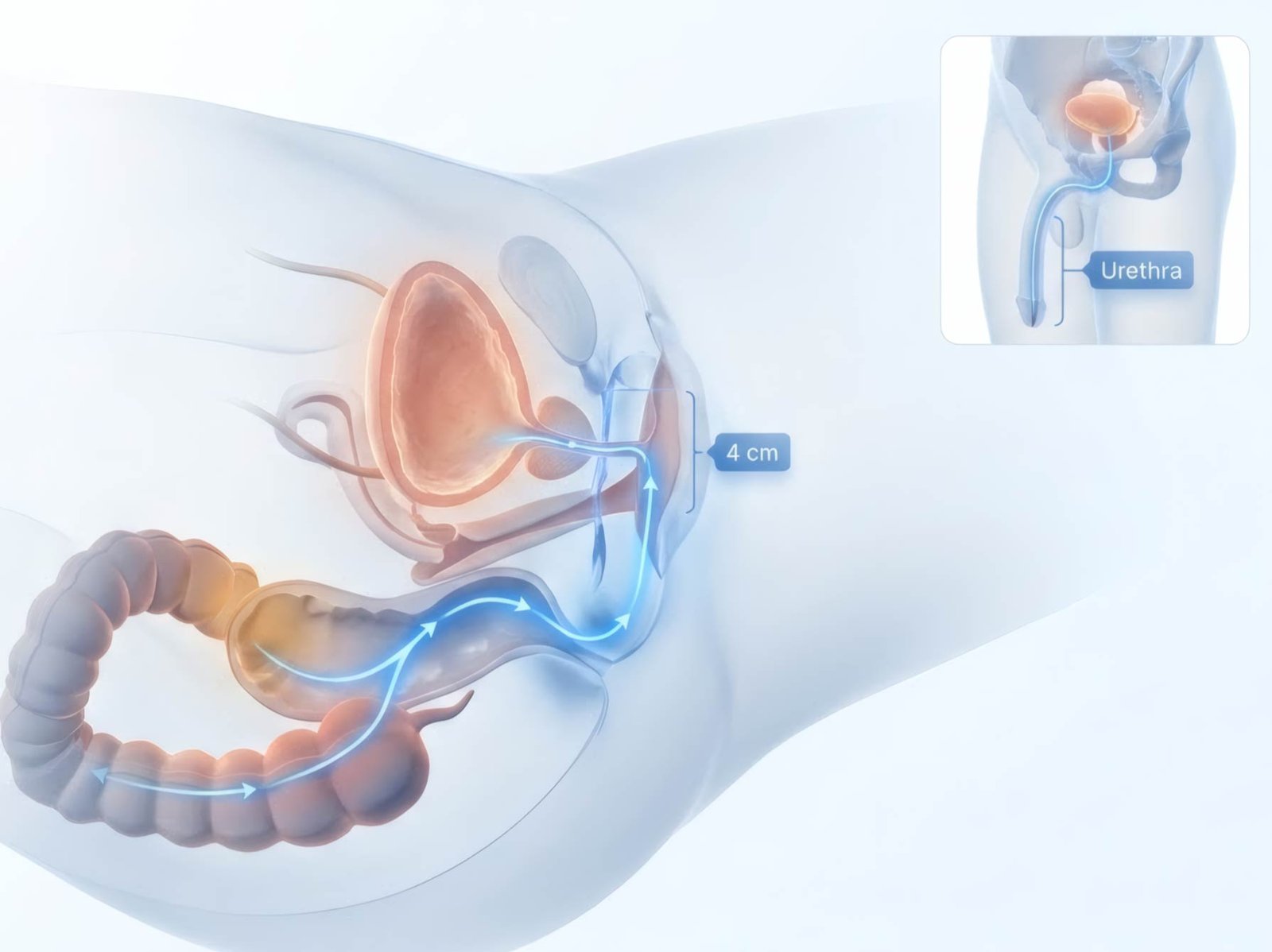
The infection route runs from colon to perineum to urethra to bladder — a four-stage pipeline in which each stage has a defense (gut flora competition, perineal ecology, urinary flow, the urothelial anti-adhesion layer) and a failure mode. The vagina's lactobacillus ecosystem is the route's independent defense force — and the postmenopausal shift that disbands it is a major recurrent-UTI driver.
The Anatomy of the Route
Stage one: the gut reservoir. The E. coli strains that cause UTIs are usually the patient's own intestinal flora — uropathogenic variants that carry extra adhesion and iron-scavenging equipment but live in the gut without symptoms. This is the microbiome connection this page's KG carries: the gut is the recruitment pool, and perianal hygiene and flora ecology are the border controls. Stage two: the perineal gateway — seeding between anus and urethral opening, where the wiping-direction advice (back to front colonizes, front to back spares) has genuine mechanistic plausibility. Stage three: the urethra — short in women, which is the anatomy tax; during sex, mechanical inoculation delivers bacteria to the bladder entrance, the post-coital pattern.
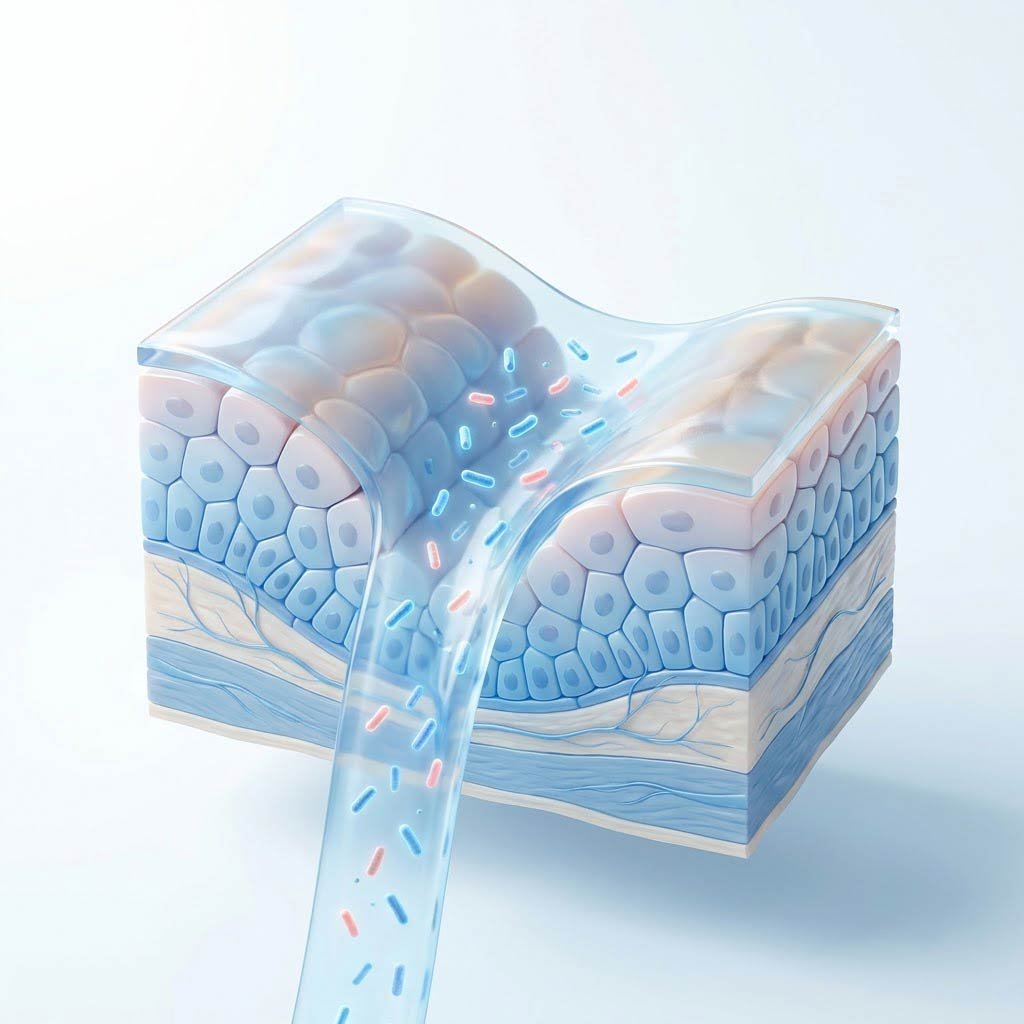
Stage four: the bladder battlefield. The urothelium is protected by a glycosaminoglycan layer — a non-stick coating — plus mucosal immune factors and the flush. The fimbriae defeat the coating by targeting the mannose sugars beneath; once anchored, the bacteria multiply, the wall inflames, and the classic symptoms (burning, frequency, urgency — the bladder's inflamed stretch receptors misfiring) explain themselves. And the vaginal ecosystem is the route's independent garrison: lactobacilli maintain an acidic environment hostile to E. coli colonization — the flora that spermicide disrupts and estrogen decline disbands, which is why the postmenopausal prevention conversation includes topical estrogen (a prescription option with genuine trial evidence).
Gut Reservoir
The E. coli homeland — flora competition as border control
Urethra
The 4 cm road — anatomy's tax on female biology
Urothelium
The non-stick bladder wall — the layer fimbriae defeat
Vaginal Microbiome
The lactobacillus garrison — estrogen's protectee, spermicide's casualty
From Foothold to Symptoms: The Cascade
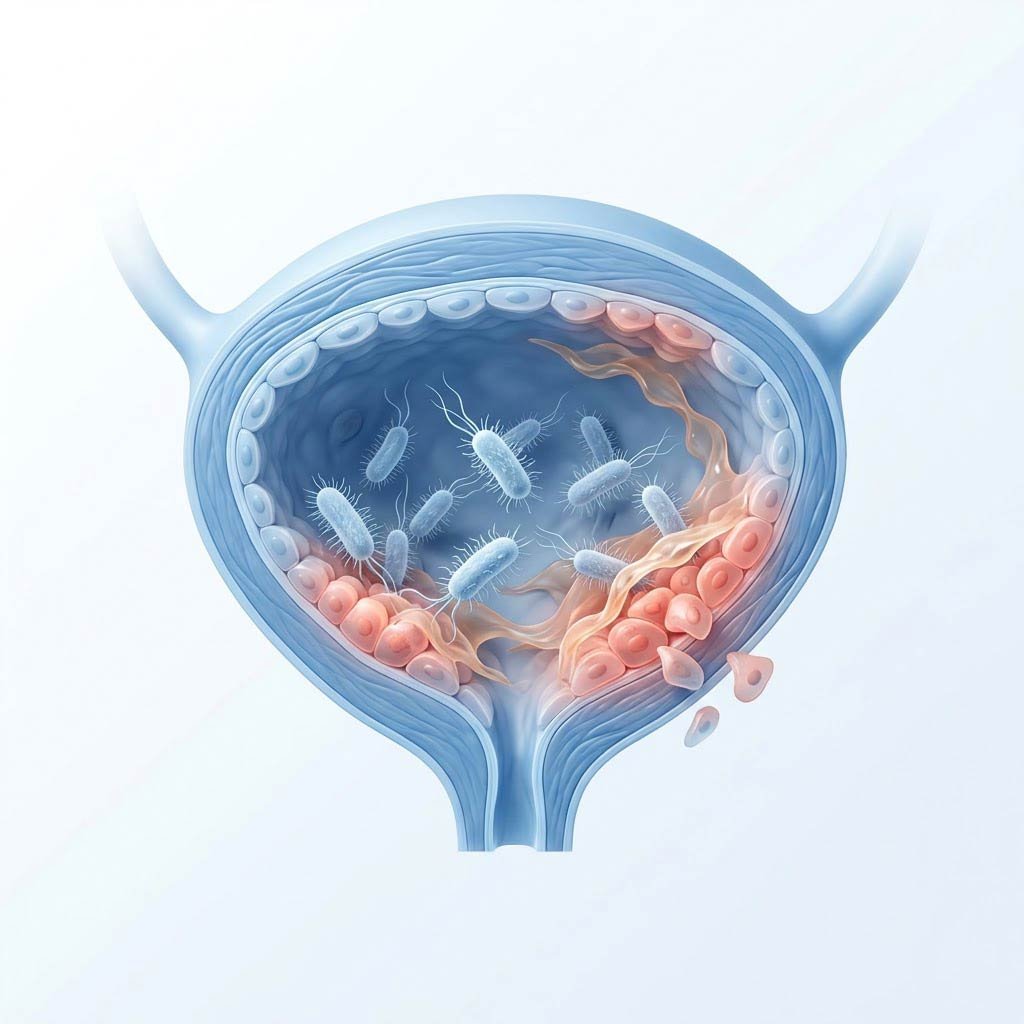
Once adhesion wins, the symptom sequence follows the inflammation:
- Colonization: anchored bacteria divide — the population doubles every ~20 minutes in favorable urine; glucose (uncontrolled diabetes) accelerates it.
- Inflammation: the epithelium responds — immune signaling, white cells arriving, the urine turning cloudy or foul; the sensitized bladder signals urgency and burning at tiny volumes.
- Hemorrhagic cystitis: some infections bleed — visible hematuria that warrants evaluation even in a classic UTI pattern.
- Ascension risk: bacteria climbing the ureters to the kidney — fever, flank pain, the pyelonephritis emergency; the boundary every chapter of this page marks.
- Biofilm and recurrence: some anchored bacteria persist inside bladder cells (quiescent reservoirs) — one mechanism of recurrence the complete prevention plan addresses.
Your bladder is a non-stick pan flushed every few hours — a system that fails only when bacteria learn to grip. Everything that works against UTIs, from antibiotics to cranberry's PACs to D-mannose, plays on the same battlefield: hold the wall, and the stream does the rest.