Inside the trigeminovascular system.
Where does a migraine actually happen in the body?
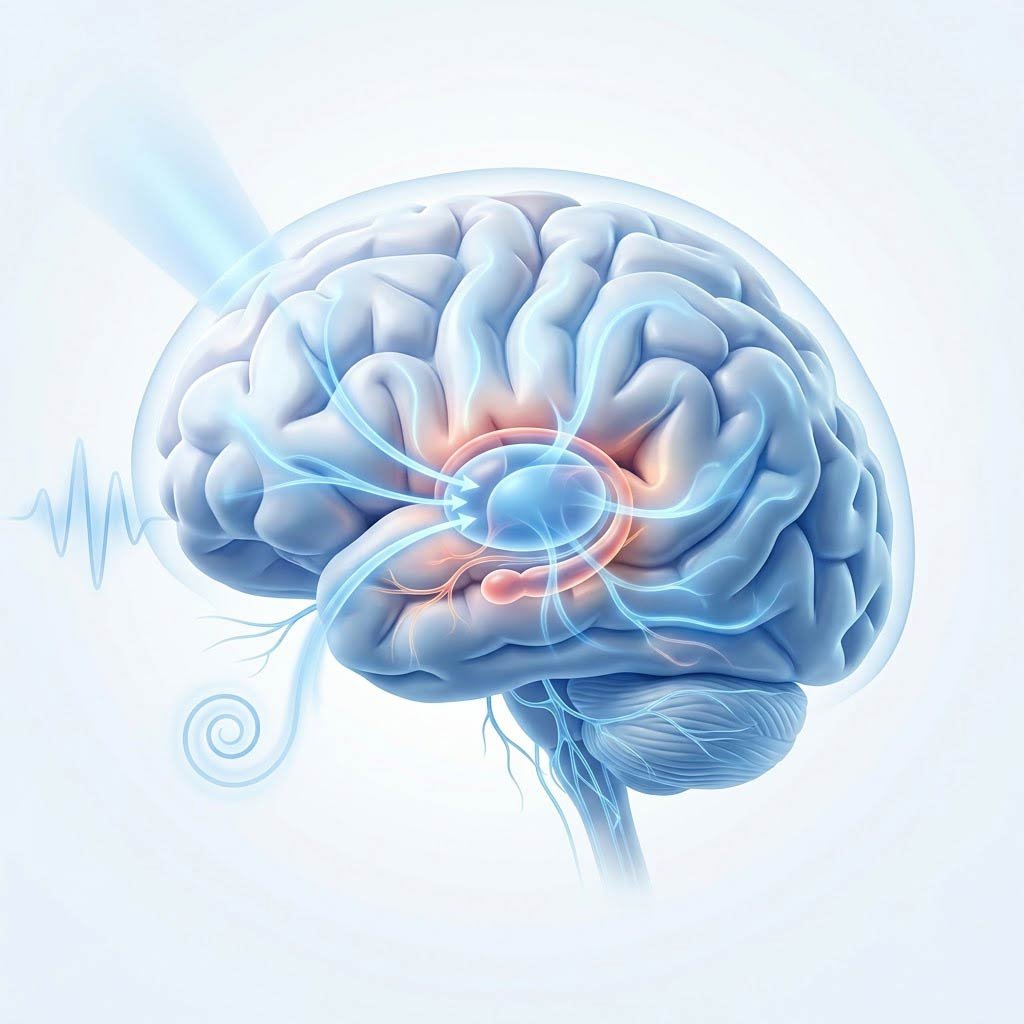
A migraine happens in a circuit, not a spot: the trigeminal nerve (the face's great sensory cable) sends branches to the meninges — the brain's wrappers — where pain is actually generated; the nerve reports downward to a brainstem relay that imaging shows activating during attacks; the hypothalamus (the brain's clock and thermostat) lights up in the prodrome hours before anything hurts; and the cortex generates aura with a slow electrical wave. Understanding the circuit explains every symptom — why light and sound hurt (the thalamus amplifies them), why the neck stiffens (prodrome), and why the pain throbs with the heartbeat (the meningeal vessels CGGRP dilates).
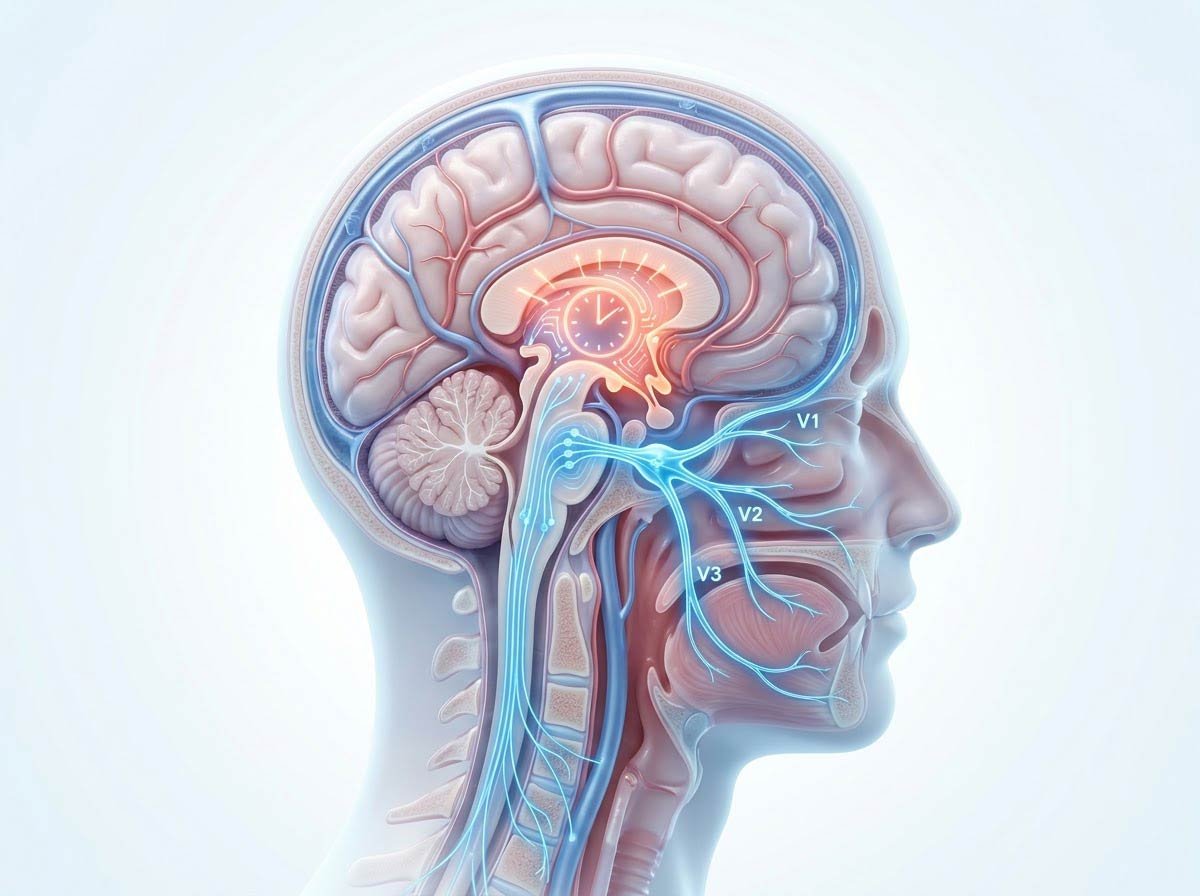
The trigeminal nerve's branches wrap the meninges and their vessels. When activated, its fibers release CGRP — dilating vessels, sensitizing pain pathways, and signaling down to the trigeminal nucleus in the brainstem, the relay that makes normal blood-vessel pulsation register as throbbing pain.
The Anatomy of the Attack
The pain of migraine is generated at the meninges — and that explains its signature features. The trigeminal fibers there are pain fibers, and when they release CGRP, the meningeal vessels dilate; sensitization then sets in, and every pulse of blood through those vessels registers as throbbing pain — why bending, climbing stairs, or your own heartbeat hurts. Meanwhile the signal descends to the brainstem's trigeminal nucleus, which shares circuitry with the neck's sensory roots — the reason prodrome neck stiffness and attack-time neck pain are part of the headache, not a separate complaint.
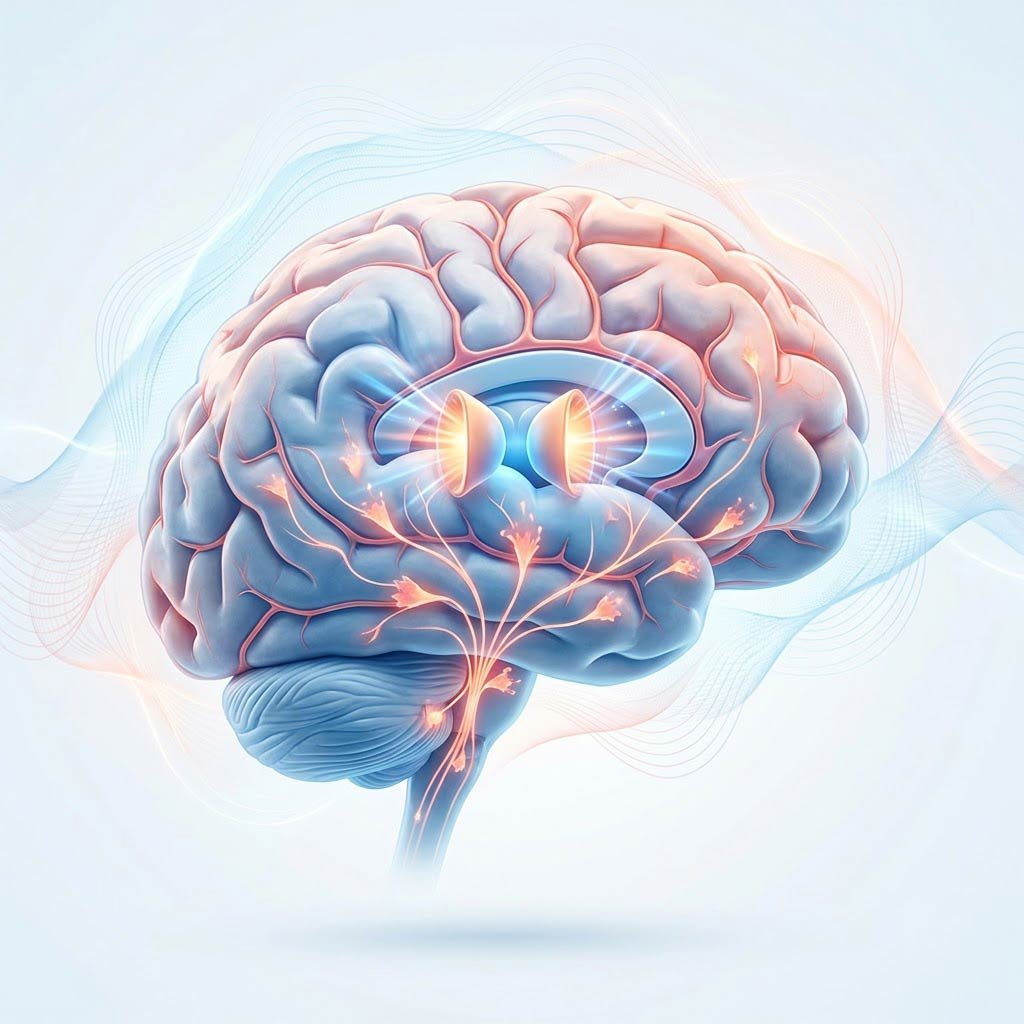
Upstream, two structures do the timing. The hypothalamus — the brain's clock, thermostat, and appetite center — activates in the prodrome and generates migraine's strange warnings: the yawning, the chocolate craving, the neck stiffness, the mood shift. It also explains the disorder's tyrannical relationship with schedule: the hypothalamus is why sleep irregularity, skipped meals, and cycle timing are migraine's most reliable triggers. And the cortex generates aura via cortical spreading depression — a wave of excitation followed by silence sweeping across the cortical surface at roughly 3 millimeters per minute: slow enough that a visual aura takes 20–30 minutes to cross your field of view, exactly as patients describe.
Trigeminal Nerve
The great sensory cable — its meningeal branches generate the pain
Hypothalamus
The clock — prodrome warnings and the schedule tyranny
Thalamus
The amplifier — light and sound turned into pain
Cortex
The aura generator — spreading depression at walking pace
From Circuit to Symptom: The Mechanism Map
Every migraine symptom traces to a piece of the circuit — which is why the treatments target pieces too:
- Throbbing pain: sensitized meningeal pain fibers reporting the pulse — CGRP's vascular effect, and the target of the new drug class.
- Light and sound intolerance: thalamic amplification of visual and auditory channels — why a dark quiet room is medicine, not indulgence.
- Nausea and vomiting: the attack activates the brainstem's vomiting center — a real neurological symptom, not a reaction to pain.
- Aura: the cortical spreading depression wave — visual zigzags building and resolving over 20–60 minutes, moving as the wave moves.
- Postdrome fog: cortical recovery from the wave and the inflammatory aftermath — a genuine neurologic phase with measurable cognitive cost.
Migraine pain is generated not in the brain itself — which feels no pain — but in its wrappers, where a trigeminal cable reports each heartbeat as throbbing agony while the thalamus turns the room's light up to unbearable. The circuits are real, mapped, and now, treatable.