Inside the second brain.
Where does IBS actually happen in the body?
IBS lives in the gut's own nervous system — the enteric nervous system, a mesh of some 500 million neurons embedded in the gut wall, sophisticated enough to run digestion independently and nicknamed the second brain. Its two nerve plexus coordinate every peristaltic wave, every secretion, every sphincter — while reporting upward to the brain through the vagus nerve and receiving instructions back. Add the microbiome's own signaling, and the gut becomes a three-way negotiation: brain, nerves, microbes. IBS is the negotiation breaking down.
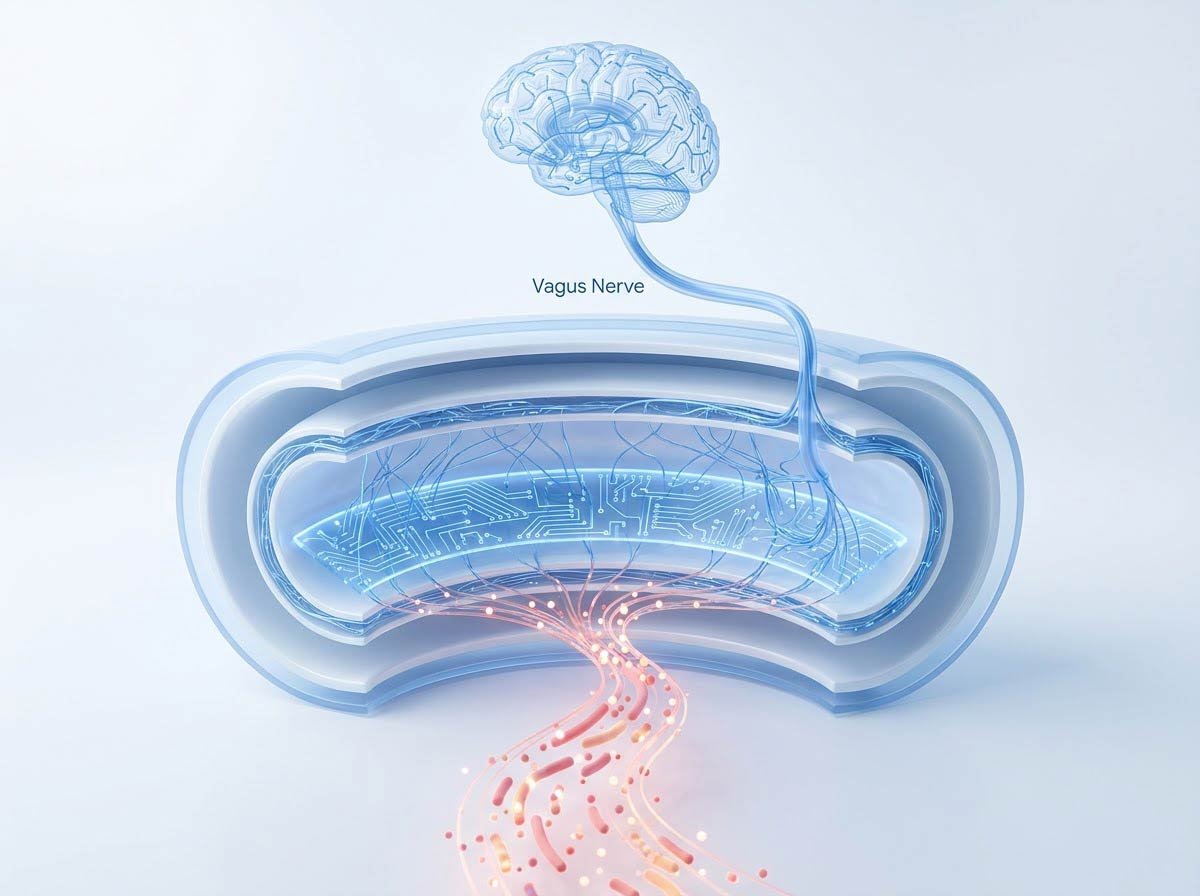
Two nerve networks — the myenteric plexus controlling motility and the submucosal plexus controlling secretion and sensation — embedded in the gut wall, wrapped around a lumen hosting trillions of microbes that signal into the same circuits. Connected to the brain by the vagus nerve: a two-way highway, with the gut sending the majority of traffic.
The Anatomy of Gut Sensation
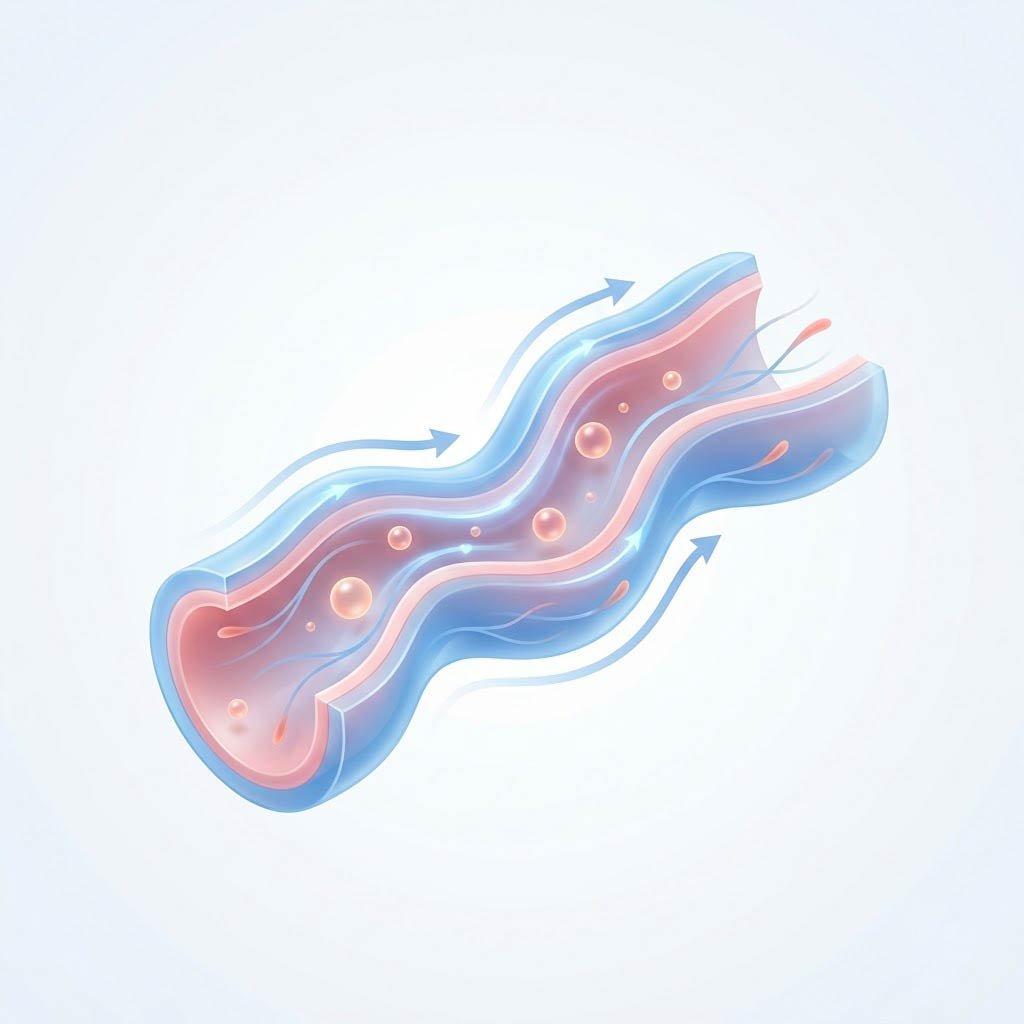
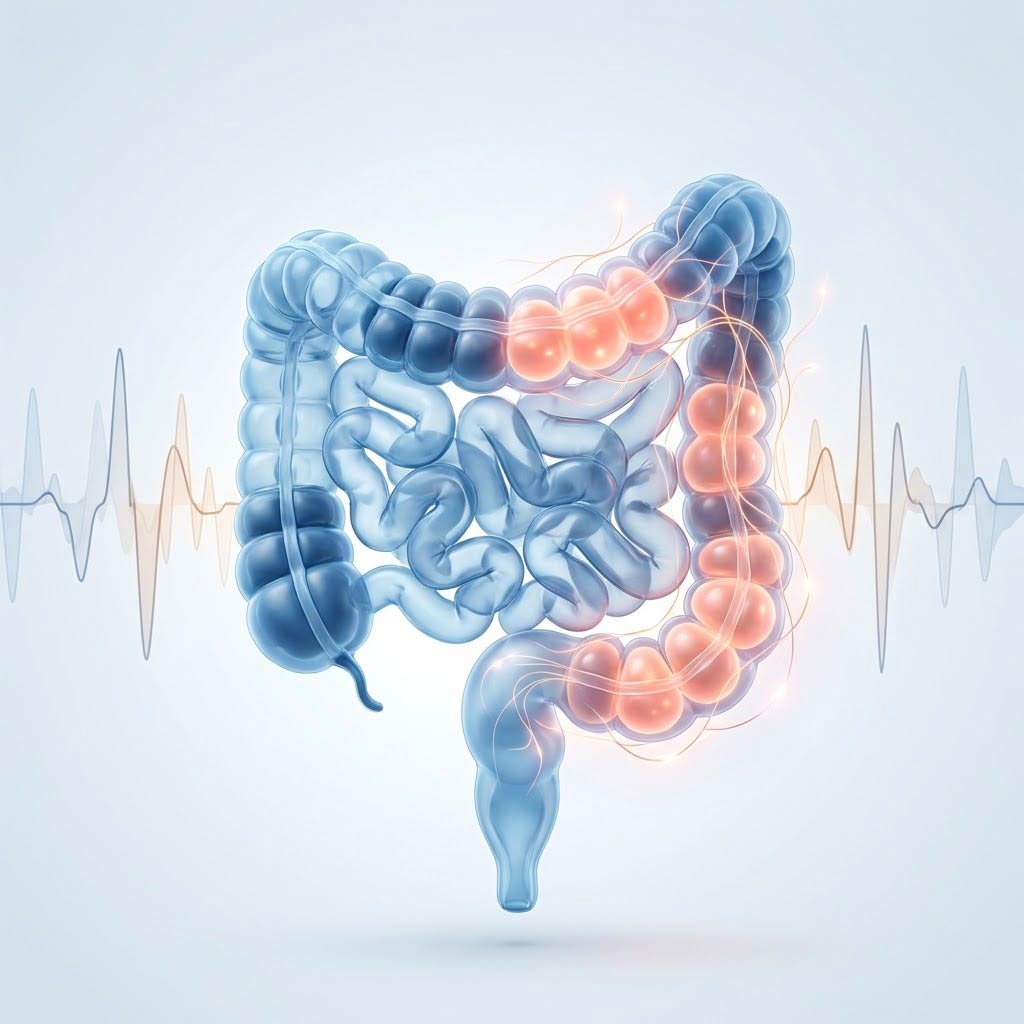
The enteric nervous system runs the gut's day-to-day operations: the myenteric plexus between the muscle layers sets contraction rhythm and direction, and the submucosal plexus manages secretion, blood flow, and sensation. When this coordination fails, the result is the IBS signature — segments of spasm adjacent to segments of stasis, gas trapped between contractions, stool alternately rushed and stalled. This is disordered motility: the machinery intact, the choreography broken.
Sensation is where IBS makes its diagnosis. Stretch receptors in the gut wall report to the brain via the spinal cord and vagus — and in IBS the threshold is lowered: balloon-inflation studies show IBS patients reporting pain at volumes healthy controls barely register. This visceral hypersensitivity is why normal digestion — a routine gas bubble, an ordinary stool passing — can hurt. The gut isn't damaged; its volume knob is turned up. And the microbiome sits in the loop: microbial metabolites (short-chain fatty acids, tryptophan products) modulate both nerve sensitivity and serotonin — 95% of the body's serotonin is manufactured in the gut, not the brain — which is why this page's three treatments each work a different side of the negotiation: muscle, fiber, microbes.
Enteric Plexus
The second brain — 500 million neurons running the gut
Vagus Nerve
The two-way highway — gut sends most of the traffic
Microbiome
The third negotiator — metabolites tuning nerve sensitivity
Stretch Receptors
The volume knob — hypersensitive in IBS
From Regulation to Symptoms: The Mechanism Chain
The IBS symptom picture assembles from four mechanisms, each targetable:
- Visceral hypersensitivity: lowered pain thresholds in the gut wall — normal stretch reported as pain; the target of mind-body therapies that recalibrate central processing.
- Dysmotility: discoordinated contraction — spasm, stasis, or both; the direct target of peppermint oil's smooth-muscle relaxation.
- Microbiome dysbiosis: altered fermentative populations — excess gas production, changed bile and serotonin handling; the target of probiotics and the reason elimination diets need reintroduction.
- Low-grade immune activation: subtle mast-cell activity after infection or stress — sensitizing nerve endings locally; the mechanism that connects post-infectious IBS to its trigger.
- The brain-gut feedback loop: symptoms raise anxiety, anxiety amplifies signals, amplified signals raise symptoms — the loop that makes gut-directed hypnotherapy and CBT genuine treatments, not consolation prizes.
Your gut sends more signals to your brain than your brain sends to it — and manufactures 95% of your body's serotonin along the way. IBS is what happens when that reporting line turns up its volume. The gut isn't lying; it's amplifying.