Inside the pressure system.
Where does blood pressure actually happen in the body?
Blood pressure is a system property — set by a pump, a network of pipes, and a filter that controls the fluid volume inside them. The heart generates the pulse, the large arteries cushion it, the tiny arterioles set the resistance dial, and the kidneys decide how much fluid the whole circuit holds. Hypertension is what happens when volume and resistance rise together — and understanding the three components explains every treatment that targets them.
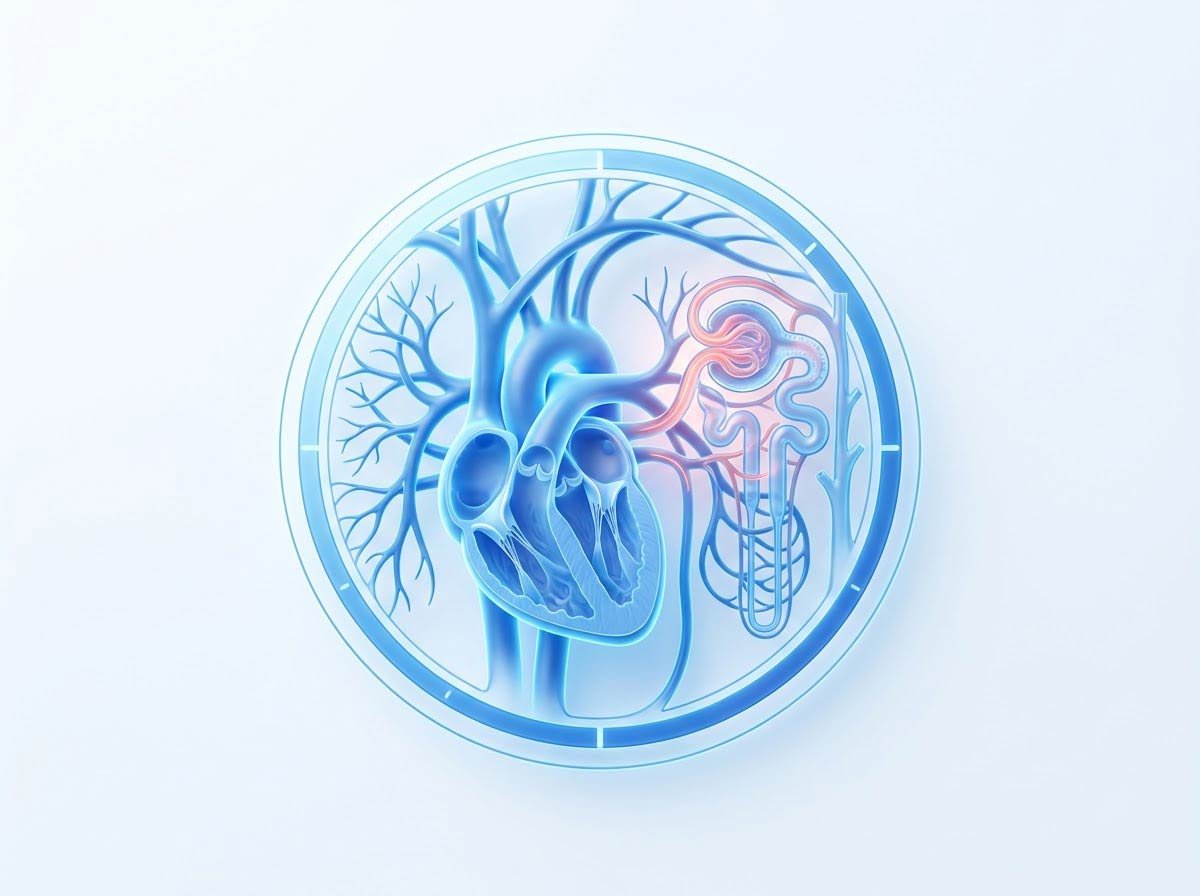
The heart generates pressure with every beat; elastic large arteries absorb the surge; arterioles — the smallest branches — set resistance by constricting or relaxing; and the kidneys filter roughly 180 liters of fluid daily, adjusting blood volume with milligram precision. Blood pressure is the negotiated output of all three.
The Anatomy of Pressure Regulation
The system is built for short-term agility. Baroreceptors in the carotid arteries and aorta sense every beat-to-beat change and adjust heart rate and arteriolar tone within seconds. The renin-angiotensin-aldosterone system (RAAS) manages the medium term: when kidney perfusion drops, a hormone cascade constricts vessels (angiotensin II) and retains sodium and water (aldosterone) — raising pressure deliberately. And the kidneys own the long term, tuning blood volume through fluid excretion.
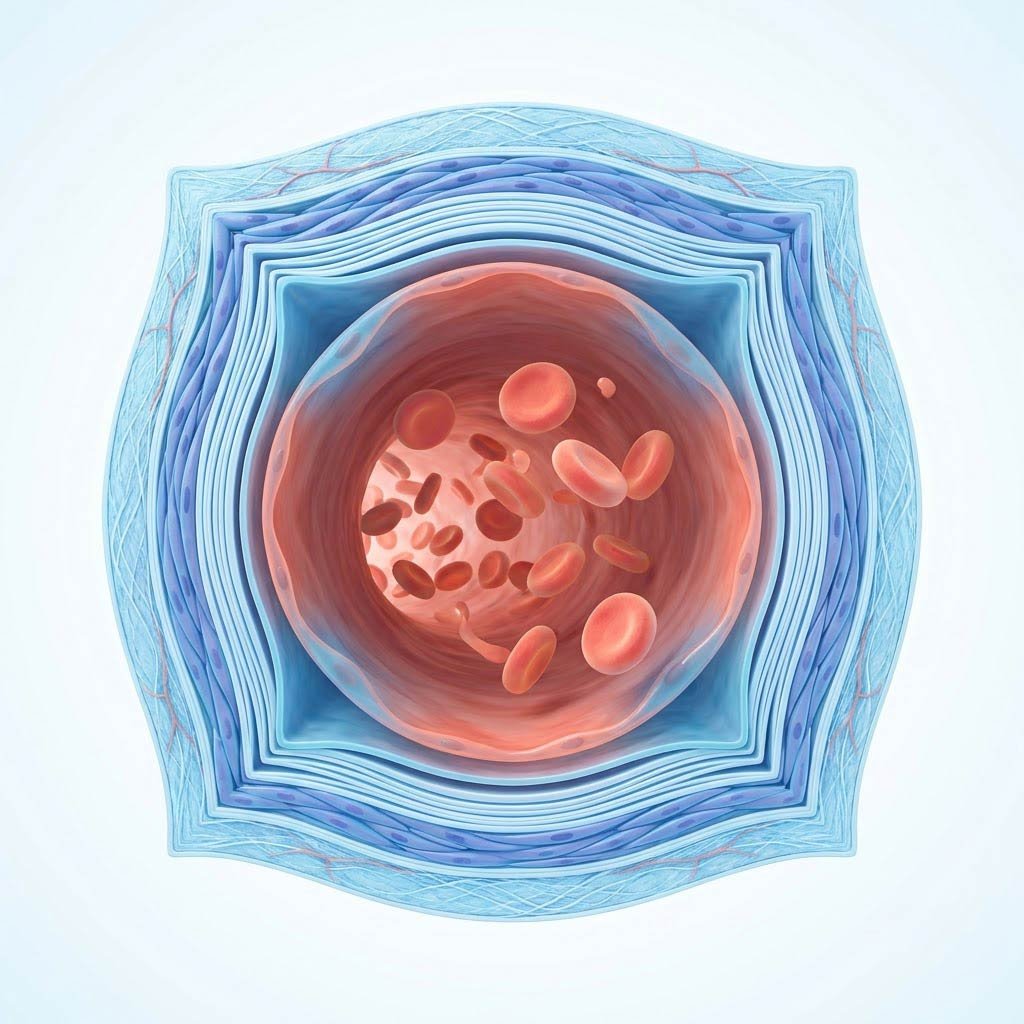
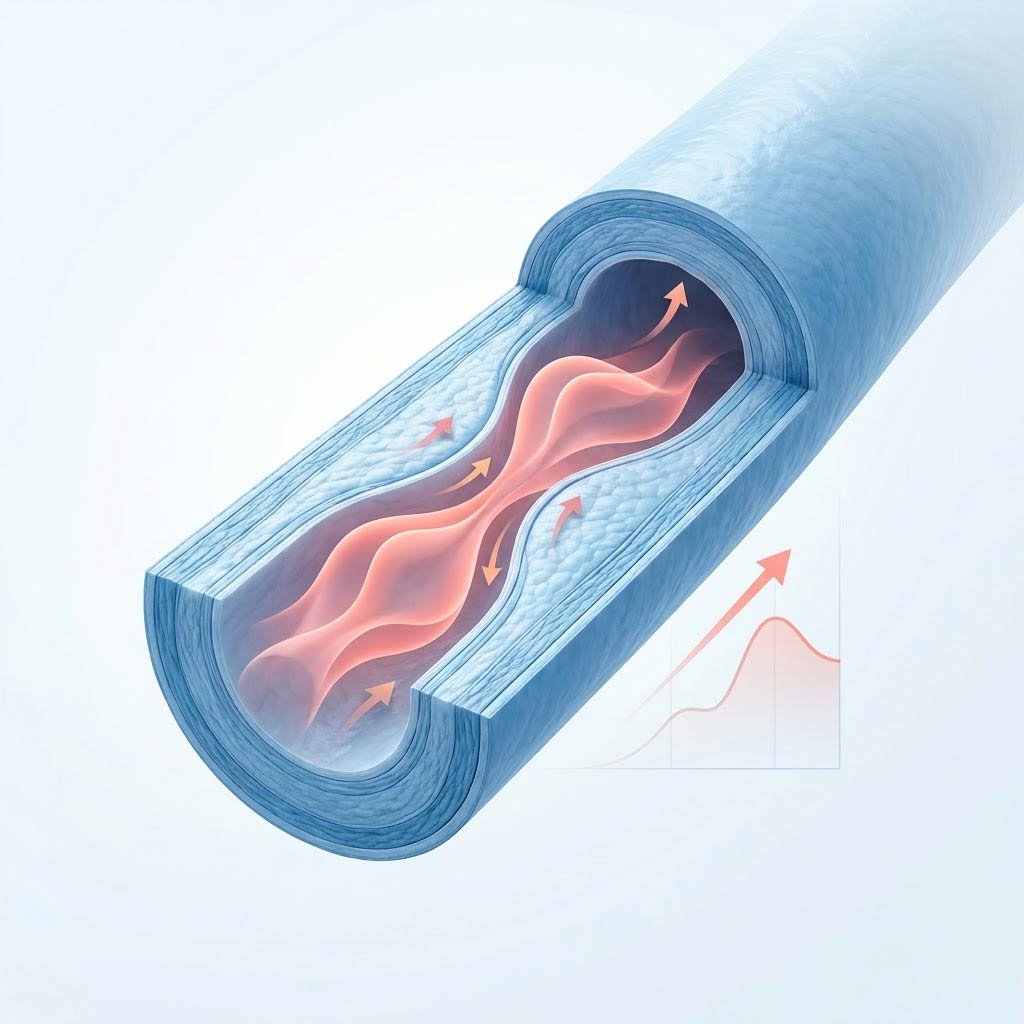
In primary hypertension, these systems drift into a higher set-point. Arteriole walls thicken and stay mildly constricted; the kidney's pressure-natriuresis curve shifts so that fluid balance is only achieved at a higher pressure; and the endothelium — the artery's inner lining — produces less nitric oxide, the molecule that keeps vessels relaxed. Each change reinforces the others. The system isn't broken; it has been re-calibrated upward — which is why treatment is typically lifelong, and why it works.
Heart
The pump — 100,000 beats a day, quietly
Arterioles
The resistance dial — where blood pressure is actually set
Kidneys
The volume dial — filter 180 L daily to tune pressure
Brain
The end organ that pays first — strokes are the headline risk
From Set-Point Drift to End-Organ Damage
The damage unfolds in parallel, silently, across every organ the circuit feeds:
- Heart: pumping against higher pressure thickens the left ventricle wall (LVH) — muscle mass bought at the cost of stiffness and arrhythmia risk.
- Arteries: chronic pressure accelerates endothelial injury and stiffening — feeding the atherosclerosis cycle of the high-cholesterol page.
- Kidneys: pressure scars the filters (nephrosclerosis) — and damaged kidneys raise pressure further, the vicious loop behind much resistant hypertension.
- Brain: small-vessel disease, silent mini-infarcts, and the elevated stroke risk that makes control non-negotiable.
- Eyes: retinal vessel changes visible on fundoscopy — one of the few places the damage can be directly seen.
Your heart beats about 100,000 times a day, moving roughly 7,500 liters of blood through a circuit of pipes that never gets a night off. Blood pressure is the lifetime contract between the pump and the pipes — hypertension is that contract renegotiated against you.