What is Anxiety?
A threat-response system recalibrated to fire too often — and the worry it produces.
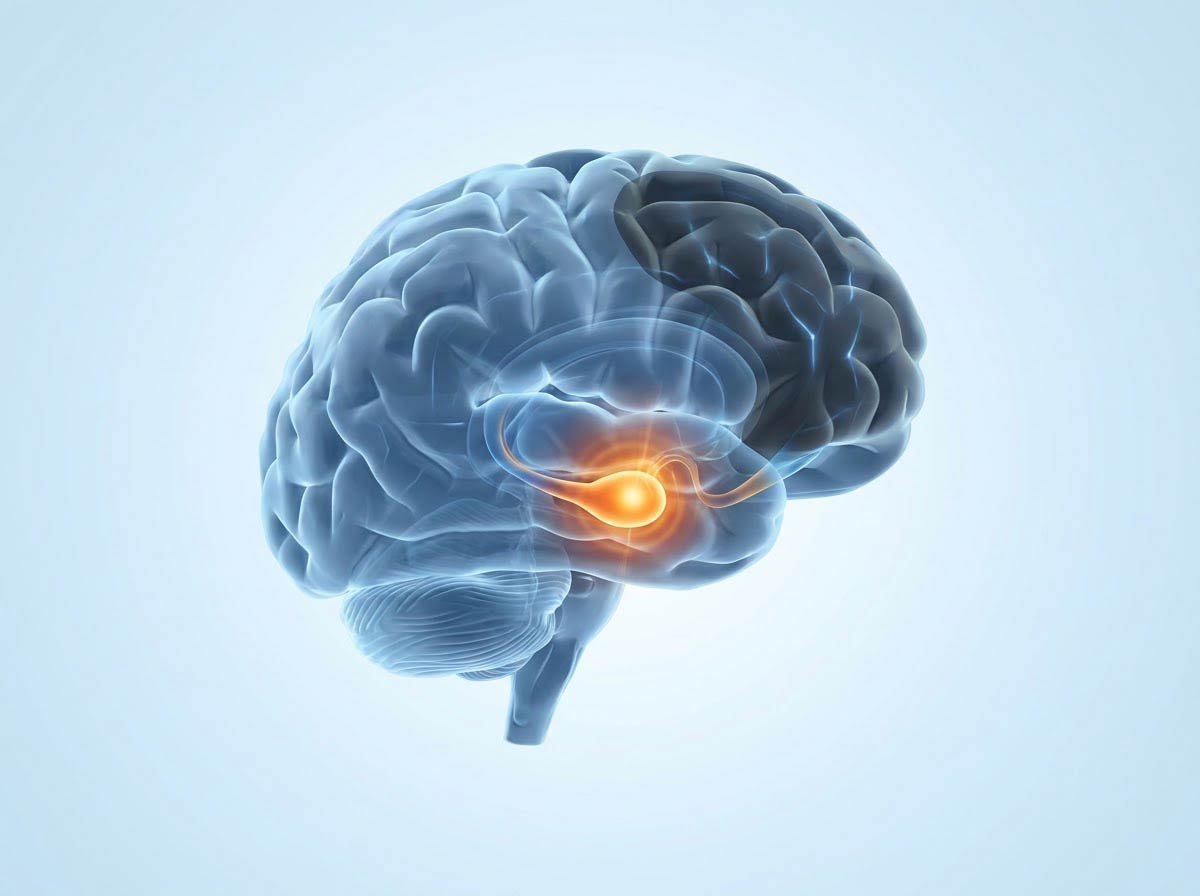
Anxiety is the body's alarm system doing its job at the wrong sensitivity: a smoke detector recalibrated to trigger on toast. In anxiety disorders, the threat circuitry — amygdala, stress hormones, sympathetic nervous system — runs hot, anticipatory, and out of proportion to actual danger, producing the racing heart, the tension, the sleepless anticipation of problems that haven't arrived. It affects roughly 300 million people worldwide — the world's most common mental health condition, twice as many women as men — and its disorders are as treatable as any in medicine, with therapy (CBT) and medication both carrying decades of evidence. The distinction this page anchors: anxiety is not the absence of courage — it is a miscalibrated alarm, and alarms can be recalibrated.
How Anxiety Connects
Understanding the Recalibrated Alarm
The threat system is beautifully built for the world that built it: danger appears, the amygdala fires in milliseconds — before conscious thought — adrenaline releases, heart and lungs accelerate, blood shifts to muscles, and the body is moving while the slower prefrontal cortex is still forming its first sentence. Anxiety disorders are this system with its threshold lowered and its volume raised: the amygdala triggering at social glances, bodily sensations, and unopened emails; the prefrontal brake — the context-evaluating, alarm-dampening layer — thinned exactly where it's needed; and the whole loop reinforced every time avoidance makes the alarm feel justified.
The disorders differ by what the alarm attaches to. Generalized anxiety disorder (GAD) — worry about everything, restlessness, muscle tension, sleep disruption, for six months or more. Panic disorder — sudden adrenaline surges (Chapter 3 covers the physiology in full) and the fear of the fear itself. Social anxiety — the alarm calibrated to evaluation. Health anxiety — the alarm pointed inward at every sensation. And the overlap with depression — the two share circuitry and half their diagnoses; our depression page teaches its half of the partnership. Each disorder has its evidence-based therapy; each responds; none requires enduring.
One model unifies the treatment: extinction learning. The alarm was calibrated by experience — pairings of cue and danger — and it recalibrates by experience too: safely approaching the cue, staying through the alarm, letting it crest and fall, and letting the nervous system register the survival. That's the mechanism inside exposure therapy, inside mindfulness's 'observe the sensation,' and inside every anxiety treatment that works — the alarm doesn't need deleting; it needs re-education.
- Generalized anxiety disorder: persistent, hard-to-control worry across domains, with restlessness, tension, fatigue, irritability, and poor sleep — six months or more.
- Panic disorder: recurrent, unexpected surges of intense fear peaking within minutes, with the anticipatory fear of the next one.
- Social anxiety disorder: intense fear of scrutiny and negative evaluation — performance and interaction situations avoided or endured with distress.
- Health anxiety: the alarm pointed at bodily sensations — the symptom-checking loop that the internet has industrialized.
- The depression overlap: shared circuitry, shared diagnoses in half of cases — two pages in this library, one network.
Pavlov's Colleague: The Dogs Who Never Unlearned
The founding lesson of extinction came from Pavlov's laboratory: dogs conditioned to salivate at a bell stopped — gradually, through repeated bell-without-food trials. But the experiments' detail matters more than the headline: the dogs hadn't unlearned the association; they'd learned a competing one — bell now also predicts no-food — and the original reflex sat underneath, ready to return after rest (spontaneous recovery) or a single reminder.
That's the neuroscience anxiety therapy is built on. Extinction learning doesn't erase the old alarm; it lays a new calibration over it — which is why exposure therapy works gradually, why practice is repeated, and why the old alarm can twitch again under stress without meaning treatment failed. The alarm is overwritten, not deleted; the rewrite holds with practice.
The GAD-7 — seven questions, two minutes — is the screening tool clinics use to quantify anxiety and track treatment response; a score of 10 or more is the appointment to make. Two facts that improve outcomes: medication for anxiety takes 4–6 weeks and can feel worse before better (SSRIs often cause an initial activation bump — prescribers manage it with dosing; quitting in week one measures the bump, not the treatment), and benzodiazepines are short-term tools — effective for acute use, but tolerance and dependence develop, which is why guidelines pair them with, rather than substitute them for, the treatments that rebuild the alarm. And if the anxiety arrived with weight loss, heat intolerance, or palpitations at rest — a TSH check belongs first (our thyroid page teaches the mimic).
A panic attack peaks in about 10 minutes — the adrenaline that launched it is cleared that fast. The terror is a chemistry with a half-life, which is why 'ride the wave' is physiology, not a slogan: nothing in the attack can outlast its own fuel.
- Anxiety is the world's most common mental health condition — roughly 300 million people.
- Anxiety and depression share circuitry: about half of people with one meet criteria for the other at some point.
- SSRI treatment for anxiety takes 4–6 weeks — and the early activation bump is expected, not a failure.
- The prefrontal brake matures until roughly age 25 — part of why anxiety disorders typically begin young.