Inside the threat-response system.
Where does anxiety actually happen in the body?
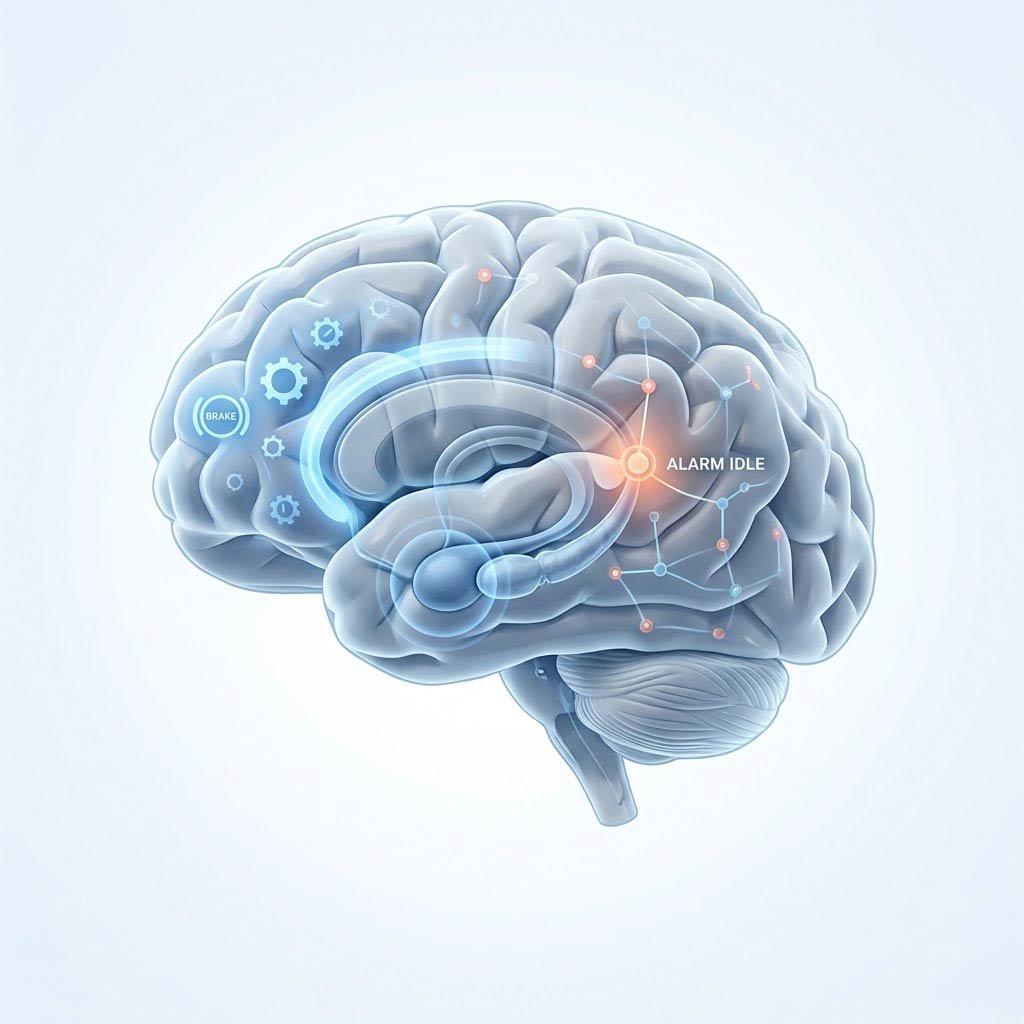
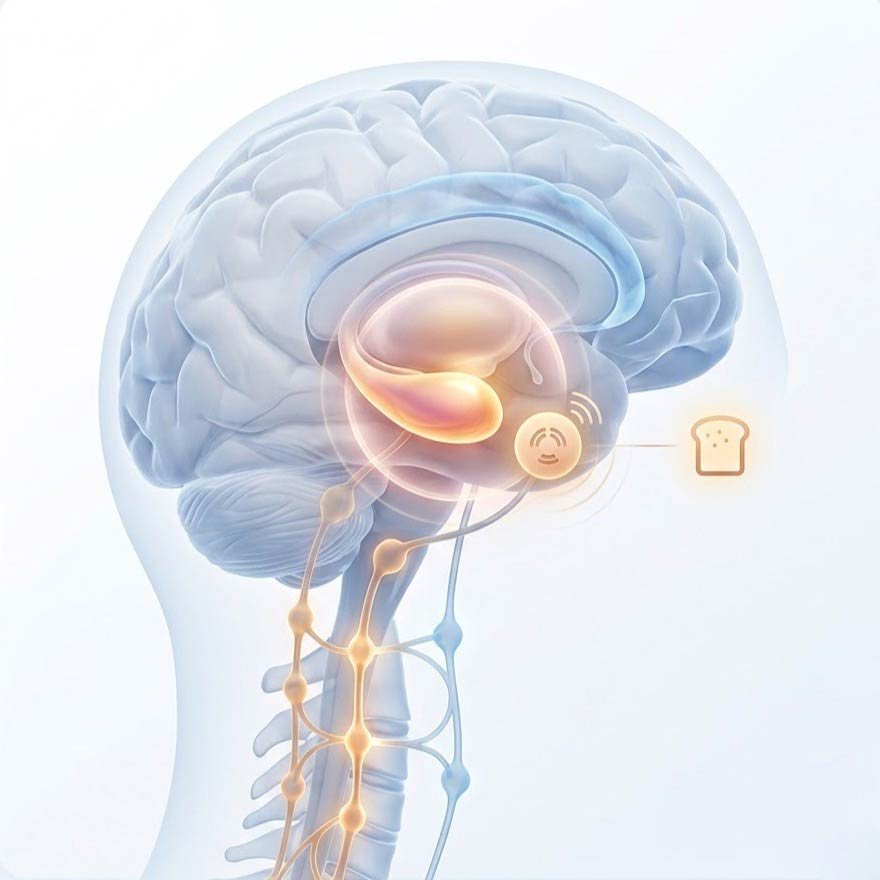
Anxiety happens across a full-body alarm network: the amygdala (the millisecond detector), the prefrontal cortex (the context brake), the HPA axis (the cortisol system running brain to adrenals), the sympathetic chain (the wired panic line down the spine), and the vagus nerve (the body's brake pedal). Every physical symptom of anxiety — racing heart, air hunger, trembling gut, cold hands — is one of these components doing its job at the wrong sensitivity. Understanding the wiring converts terrifying sensations into legible physiology.
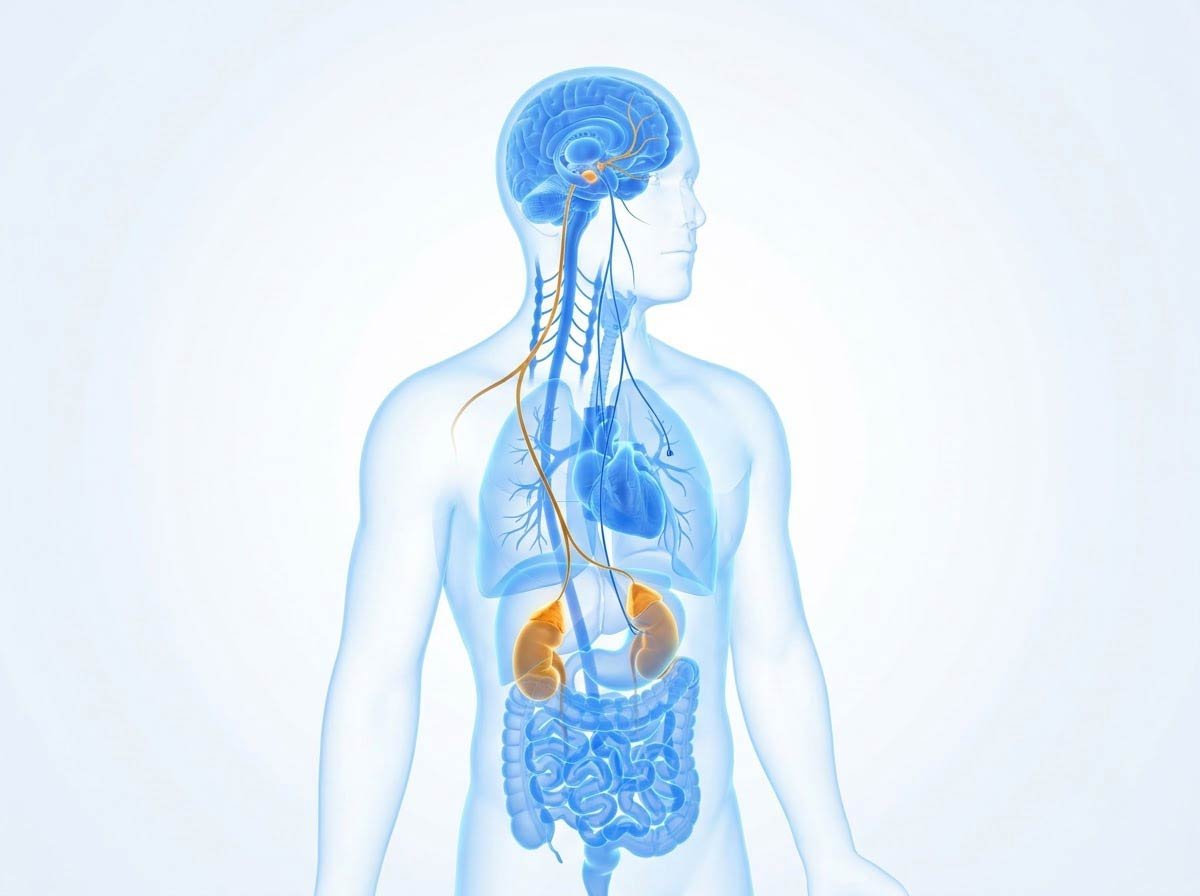
A dual-speed system: the fast amygdala pathway (milliseconds — moving before thought) and the slow prefrontal pathway (context, evaluation, inhibition), with the HPA axis supplying hormonal back-up and the vagus nerve as the body's counterweight brake. Anxiety is the fast lane over-firing and the slow lane under-braking.
The Anatomy of the Alarm
The system's two speeds explain anxiety's signature: the amygdala fires first — before you've consciously registered the trigger — launching adrenaline through the sympathetic chain: heart rate up, airways wide, blood shunted from gut and skin to muscle (the cold hands, the hollow stomach), glucose released. Only afterward does the prefrontal cortex arrive to evaluate: is this actually a threat? In anxiety, that evaluation is both slow and thin — the alarm has already done its work, and the body's honest physiology (a racing heart IS a racing heart) becomes evidence the alarmed mind misreads.
The HPA axis supplies the slower hormonal layer — cortisol, sustaining vigilance and priming the system over hours and days. And against all of it stands the vagus nerve — the parasympathetic brake, the longest cranial nerve, reaching heart, lungs, and gut. This is the anatomy behind every calming technique that works: slow exhalation-biased breathing engages the vagal brake directly (you cannot breathe at six breaths per minute and stay in full alarm — the hardware won't allow it), and every therapy that succeeds does so partly by strengthening the prefrontal brake the anxiety thinned.
Amygdala
The millisecond detector — over-firing in anxiety
Prefrontal Cortex
The context brake — thinned exactly where needed
HPA Axis
The cortisol engine — sustaining the vigilance
Vagus Nerve
The body's brake pedal — exhalation engages it
From Wiring to Symptoms: The Sensation Decoder
Every anxiety sensation maps to a component doing its job at the wrong time — the decoder that demystifies:
- Racing heart, chest tightness: adrenaline's cardiac stimulation — real cardiac work, benign origin (Chapter 3 covers the rule that separates it from the emergency).
- Air hunger, tingling, dizziness: hyperventilation chemistry — fast breathing dumps CO2, blood vessels constrict, nerves tingle. The sensation is suffocation-adjacent; the physiology is over-oxygenation.
- Churning gut, nausea: sympathetic blood shunting away from digestion — the gut idles mid-alarm (the vagal relationship our IBS page teaches from the other end).
- Trembling, jitteriness: adrenaline's muscle priming — the vibration of a system at full rev with nowhere to drive.
- Insomnia, mind-racing at 2am: cortisol's timing disruption and the alarm refusing to stand down — the loop our sleep page teaches as its own subject.
Your alarm system is not broken — it is over-trained. The amygdala that fires at a crowded room learned its sensitivity somewhere real; the prefrontal brake that fails to arrive can be rebuilt. Anxiety is a calibration problem, and calibration responds to practice.