Inside your blood system.
Where does anemia actually happen in the body?
Anemia lives in the blood itself — but the story begins in the bone marrow, the factory that builds red cells around the clock, and ends in every tissue that depends on the oxygen those cells deliver. Understanding the factory, its raw materials, and its recycling system explains both how anemia develops and why different deficiencies produce differently-shaped cells.
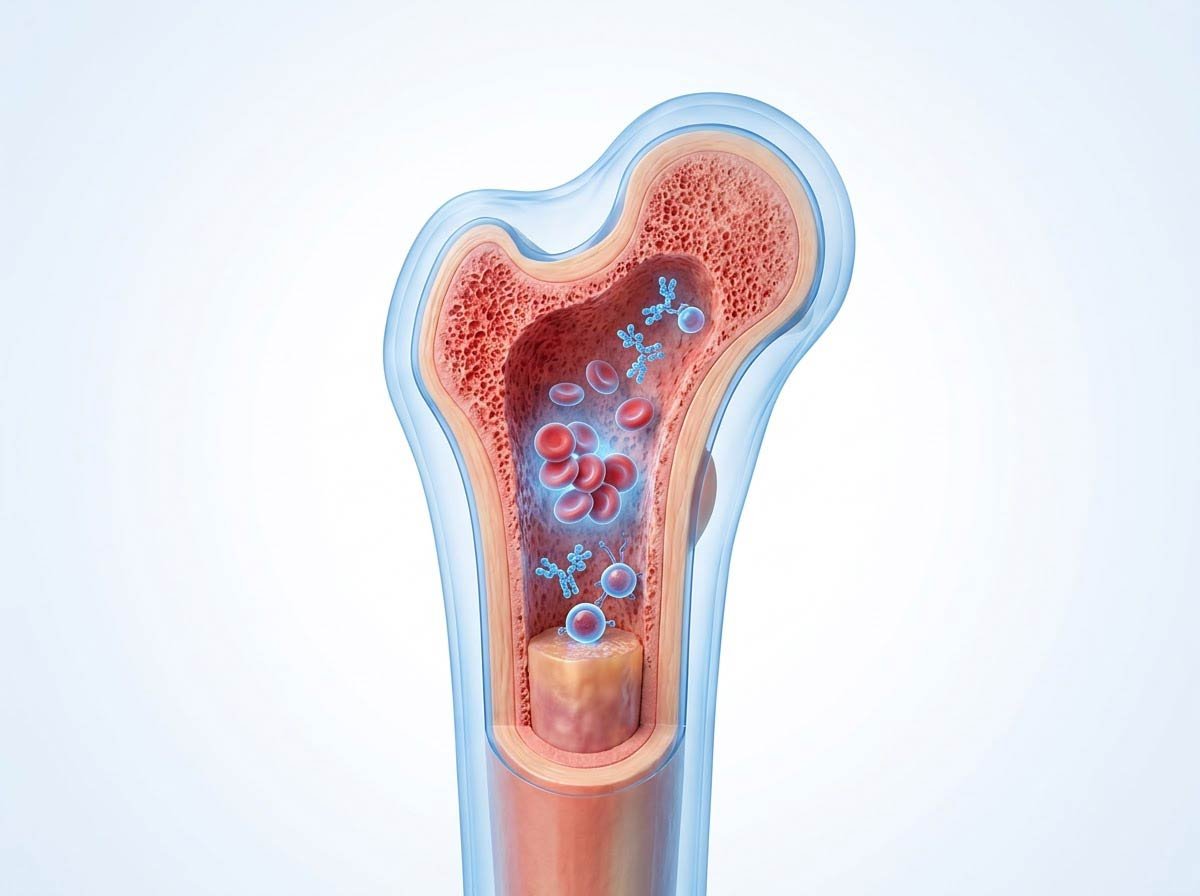
Deep inside your bones, the marrow produces roughly 2 million red blood cells every second. Each new cell is built around hemoglobin — and each hemoglobin molecule is built around a core of iron, with B12 and folate essential to the DNA instructions that let the factory's cells divide correctly.
The Anatomy of Oxygen Transport
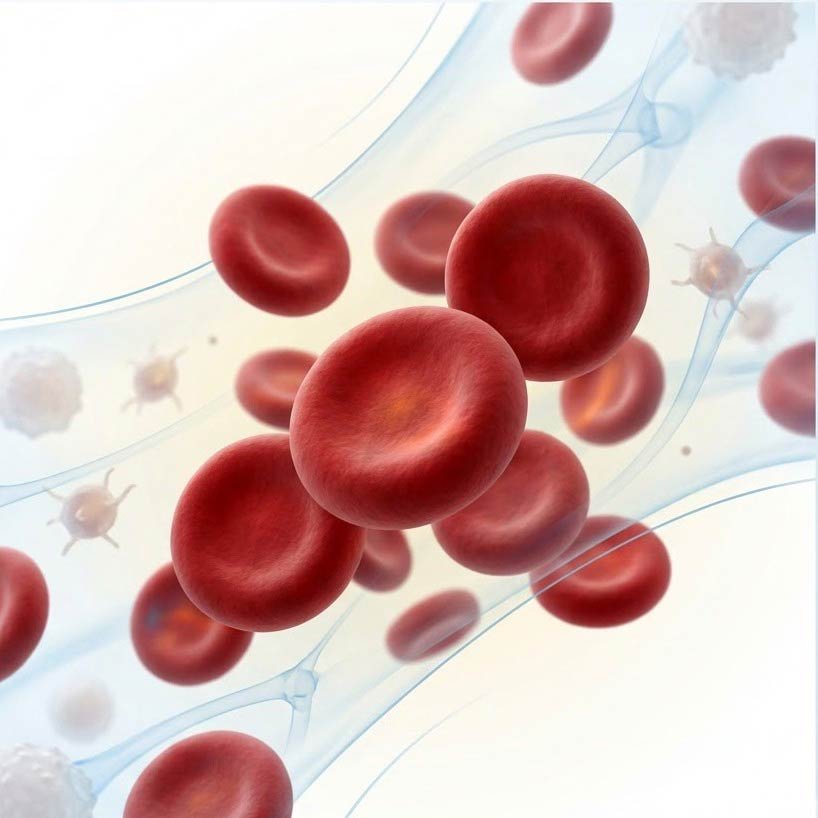
Red blood cells are essentially hemoglobin delivery vehicles: each cell packs roughly 270 million hemoglobin molecules, and each molecule can carry four oxygen molecules. The cells are made in the bone marrow under the direction of erythropoietin, a hormone released by the kidneys when oxygen levels run low.
After about 120 days of circulation, aged red cells are broken down by the spleen — and here lies the elegance of the system: the iron liberated from old hemoglobin is bound to transferrin and shipped straight back to the marrow for reuse. Around 90% of your iron is recycled this way. Only a small daily trickle — 1–2 mg — must come from food, which is why the system is efficient but unforgiving of steady losses.
Bone Marrow
The factory building red cells every second
Hemoglobin
The oxygen-binding molecule at the center of it all
Spleen
Retires old RBCs and recycles their iron
Kidneys (EPO)
Signal the factory to produce more when oxygen runs low
Why Different Deficiencies Make Different Cells
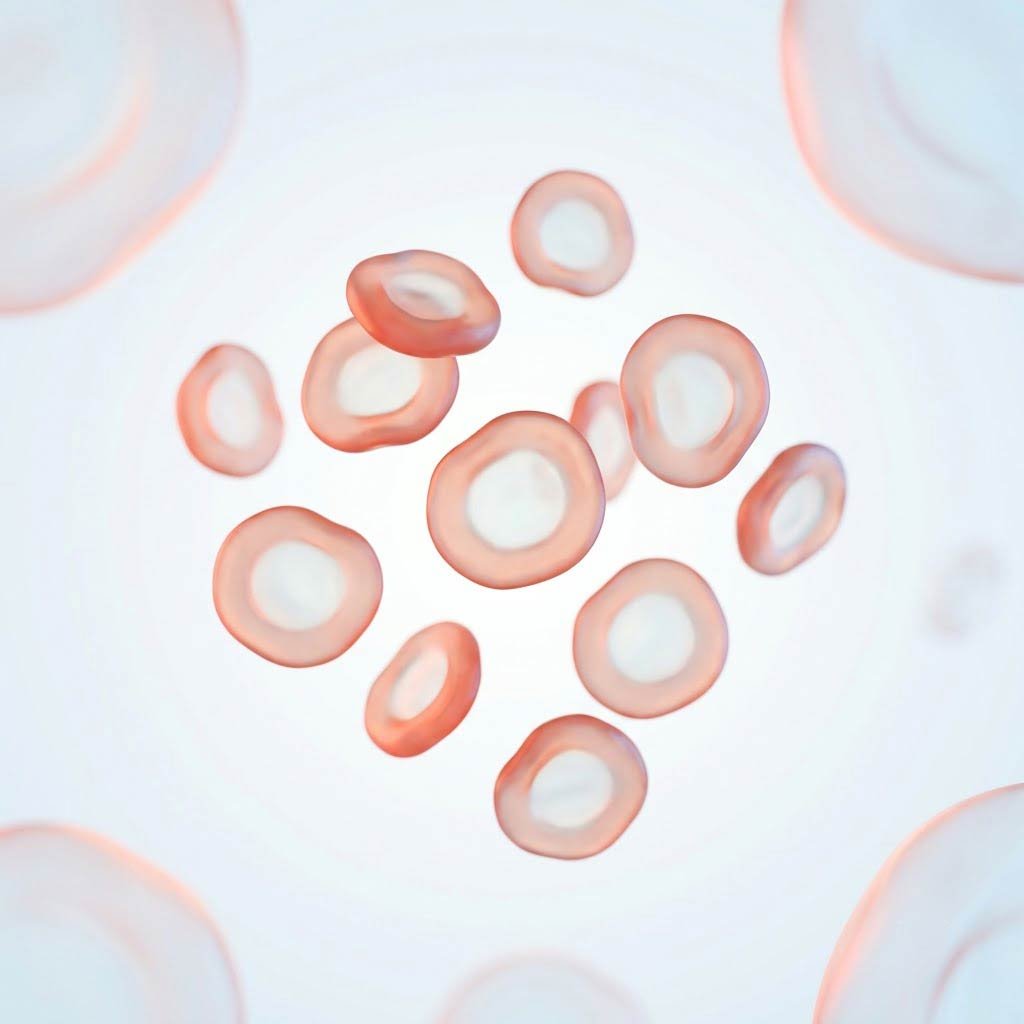
The shape of the anemia tells the story of the missing raw material:
- Without iron: the factory can't build enough hemoglobin, so cells come off the line small and pale — microcytic, hypochromic anemia.
- Without B12 or folate: the DNA instructions for cell division falter, so cells grow large but fail to mature — macrocytic, megaloblastic anemia.
- Without erythropoietin (kidney disease): production simply slows — normocytic anemia with normal-looking cells in short supply.
- With destruction (hemolysis): the factory works, but cells are broken early — the marrow races to compensate, releasing young cells early.
Your bone marrow produces about 2 million red blood cells every second — and every one of them needs iron, B12, and folate to carry oxygen. The factory never stops; the raw materials must not either.