Overtraining & Under-Recovery
The syndrome has a paradox at its center: the symptoms of under-recovery look exactly like the cure for them — fatigue that seems to demand harder training, flatness that seems to demand more intensity, restlessness that ruins the sleep that would fix it. Sport science named the spectrum from deliberate overload to true overtraining syndrome, and the honest epidemiology: most athletes who feel 'overtrained' are under-recovered — sleep, stress, and food eaten the recovery budget. This page covers the spectrum, the signals that tell them apart, and the reset.
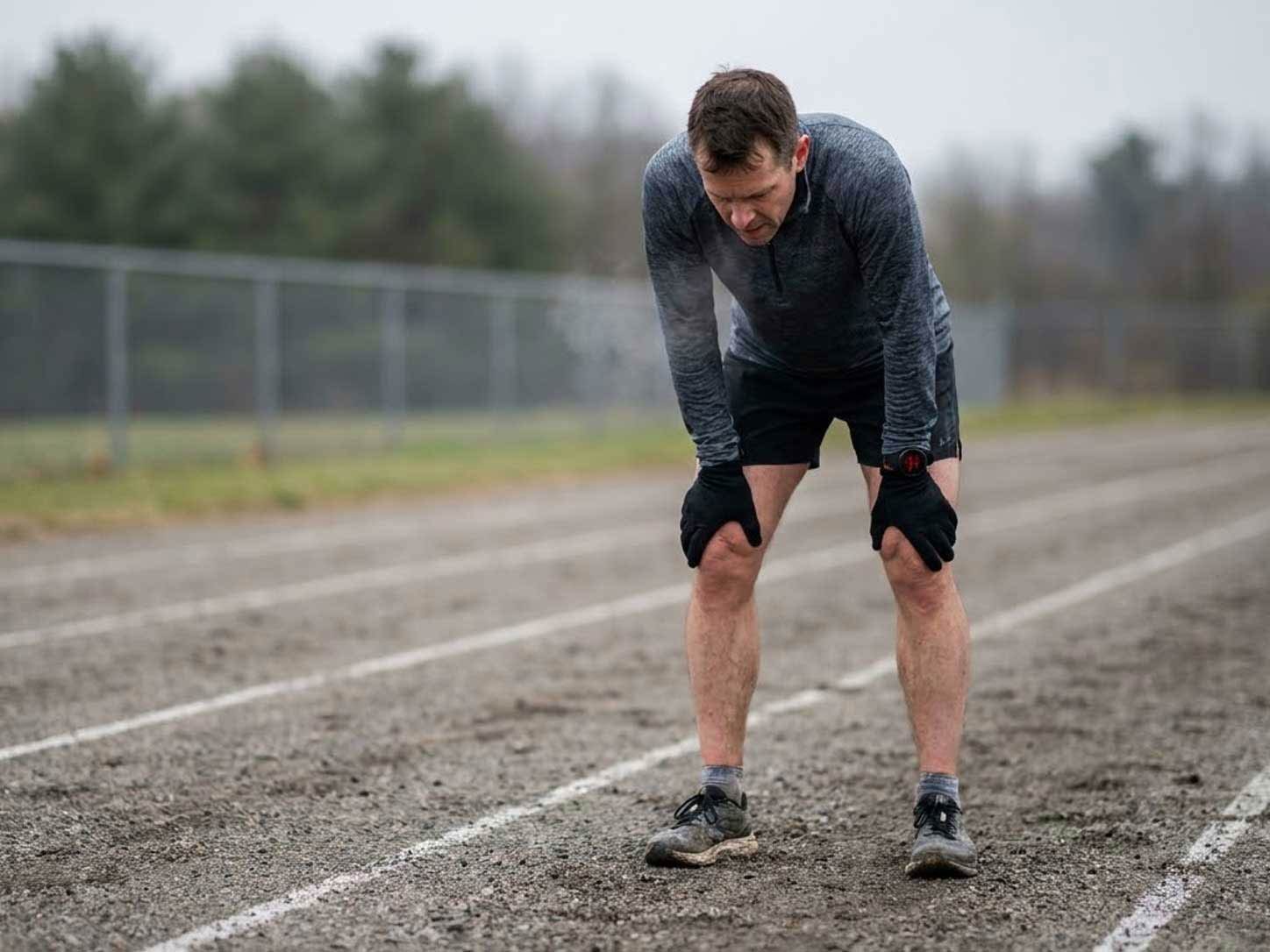
The spectrum, the signals, the reset
The spectrum: functional overreaching — deliberate short-term overload that recovers in days and supercompensates into gains (the intended tool of training blocks); non-functional overreaching — performance plateauing for weeks, fatigue accumulating; overtraining syndrome — the genuine article: months of decline, disturbed sleep, altered appetite and mood, sometimes ending seasons and careers. The engine underneath is the fitness-fatigue model: performance = fitness − fatigue — and when fatigue compounds, training harder digs the hole deeper. The skill is knowing which zone you're in.
The signals, in order of arrival: mood first — the classic research finding: irritability, flatness, and lost enthusiasm appear before performance drops (the 'iceberg profile' on mood questionnaires — your feelings are a legitimate early-warning system). Performance second — the objective ledger: logged numbers trending down for two-plus weeks. Physiology third — morning resting heart rate trending upward over weeks (a free, classic flag); sleep quality paradoxically worsening despite deep fatigue; appetite fading. The honest monitoring stack: a training journal with morning entries (mood, sleep, RHR, performance), wearable HRV trends if you have one — trends, never single readings — and labs only with a clinician (the endocrine signatures are real but not consumer-grade).
The honest epidemiology — the de-escalation: true OTS is rare; under-recovery is epidemic. The usual thieves: sleep debt (the anabolic shift the Muscle & Recovery page describes, never fully funded), life stress billing the same account (the recovery budget doesn't distinguish deadlines from deadlifts — a genuinely hard week at work is training load), under-eaten protein and calories, and the athlete-specific iron story — foot-strike hemolysis and menstrual losses make endurance women the classic anemia-fog population (the Iron chapter's at-risk list, telling you why the ferritin test comes first). Persistent tendon pain deserves its own distinction: tendons recover on collagen's slower clock — a tendon that hurts for weeks is not DOMS and does not get trained through (the Joint page's territory).
The reset: the deload week — planned recovery, volume cut 40–60% with intensity maintained, programmed before the flatness arrives (every serious training system builds them in). The sleep-first recovery block — two weeks of guarded sleep as the primary training goal. The graded return — easy volume first, intensity last. And the boundary: fatigue persisting for months, performance declining despite genuine rest, sleep and appetite disturbed, mood dark — that is a clinical evaluation (diagnosis of exclusion, often with endocrine workup), not another deload.
- Functional overreaching is a tool; the true syndrome is a diagnosis — different beasts.
- Mood drops first: irritability and flatness arrive before performance does.
- Morning RHR trending up over weeks is the classic free flag.
- HRV: trends, never single readings; labs belong to clinicians.
- Life stress is training load — the recovery budget doesn't itemize.
- Endurance women + fatigue: ferritin first, foot-strike hemolysis is real.
- Tendon pain persisting for weeks is not DOMS — don't train through it.
“Overtraining is rarely too much training. It's usually too little recovery — with the same signature.”
— The under-recovery principleThe factor families
The performance ledger
Logged numbers trending for two weeks — the objective trend that feelings merely foreshadow.
The mood iceberg
Mood disturbance arriving first — the earliest, cheapest, most ignored early-warning system.
The recovery week
Volume cut 40–60%, intensity held — the deload programmed before the flatness, not after.
The clinical flags
Morning RHR trends, athlete iron status, and the boundary where fatigue becomes a workup.
Explore Iron →The story, frame by frame



The syndrome's neighbors — and the routes
Every card links to a full BodyFinds journey. The under-recovery story routes to the repair mechanics, the sleep shift, the stress load, and the material.
The repair mechanics — the build-repair cycle this syndrome is the failure of.
research-topicThe anabolic shift — the pillar the under-recovered budget cuts first.
research-topicThe shared load — life stress and training stress billing one recovery account.
research-topicThe material — thresholds and totals the under-fueled budget starves.
supplementThe athlete's mimic — foot-strike hemolysis and menstrual losses wearing fatigue's costume.
supplementHow does the rebuild actually work?
The Muscle & Recovery page — the build-repair cycle, the pillars, the recovery tools graded honestly.
Where this information comes from
- PubMed — Overtraining Syndrome Consensus (Meeusen et al.) Database
- MedlinePlus — Fatigue Government
- NIA — Exercise and Physical Activity Government
- NIH ODS — Iron Government
- NHLBI — Sleep Science and Sleep Disorders Government