Sleep Habits & Wind-Down
The sleep page covers what the night is — the architecture, the repair shift, the clock. This page covers what you do: the behavioral half of a good night. The pillars are boring, learnable, and genuinely effective — the wind-down signal, the engineered environment, the caffeine curfew, the anchor of a consistent wake time. And at the end sits the honest escalation: when habits aren't enough, medicine has a structured answer (CBT-I) that outperforms every bottle on the shelf. The foundation first; the escalation named.

The pillars, honestly ranked
The anchor — the consistent wake time: if this page could recommend only one habit, it would be this: wake at the same time every day, weekends included. The wake time anchors the entire circadian system more powerfully than any bedtime effort — it sets when the clock begins its descent toward sleepiness that evening, and it holds the rhythm steady against the weekend drift that produces social jetlag. Bedtime, by contrast, is better left loose: the body will deliver sleep to an anchored system on something close to a schedule, and chasing bedtime on a night it isn't ready produces the frustration that makes sleep worse. Fix the morning; the evening follows.
The light discipline: the wind-down begins with light. Evening light delays the clock — screens, bright overheads, the bathroom's full glare before bed all push sleepiness later — while morning light anchors it earlier. The practical recipe: dim the house in the last hour (lamps, not overheads), put screens away or at least dimmed, and get outdoor light within the first hour of waking — even on gray days, outdoor light is 10–100× brighter than screens and most indoor spaces. The pair — dim evenings, bright mornings — is the most underused lever in sleep science, and it costs nothing.
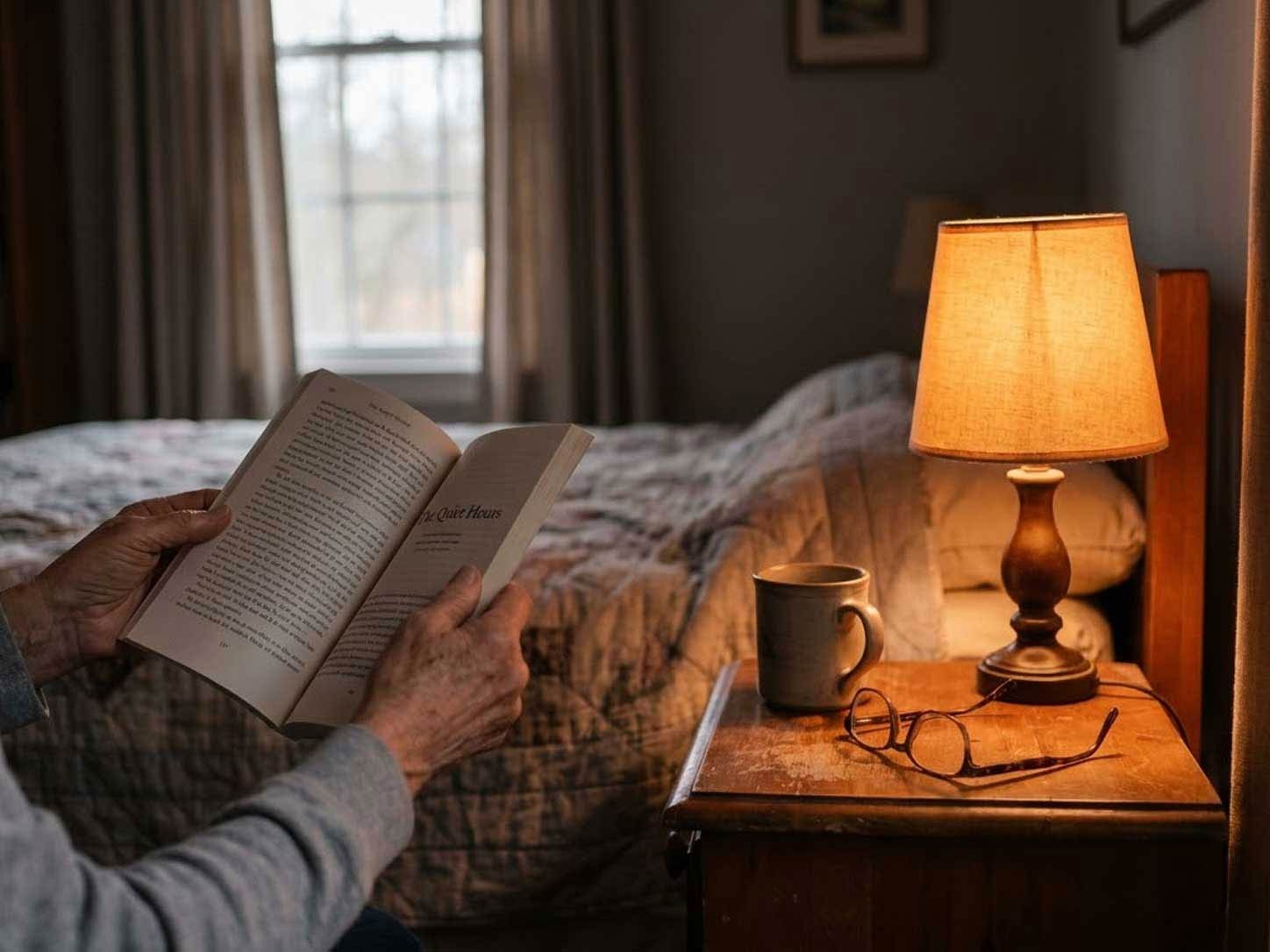
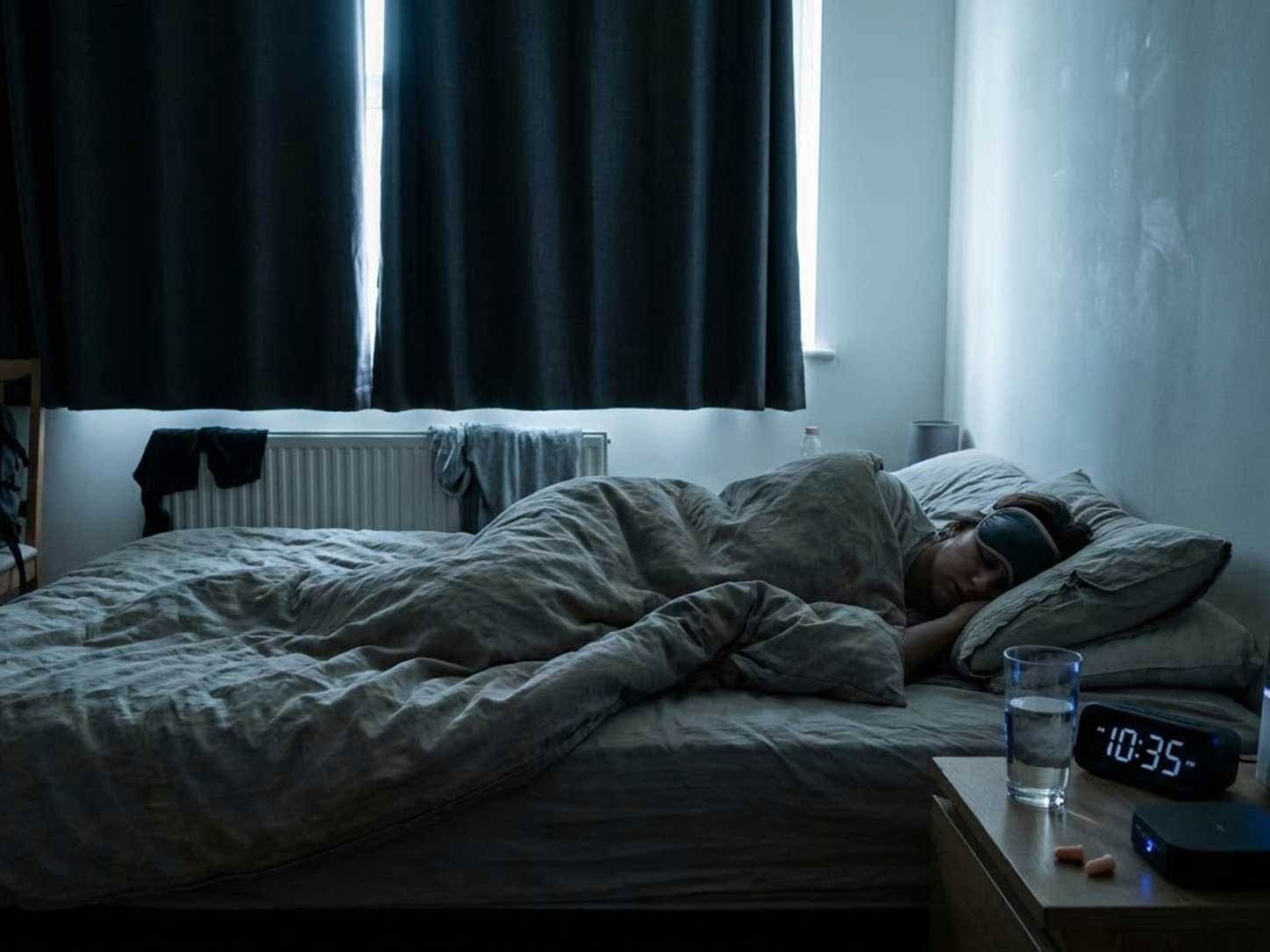
The environment — cool, dark, quiet: the body needs to drop its core temperature to initiate and maintain sleep, which is why a warm bedroom is a quiet saboteur. The evidence-based zone runs around 65°F / 18°C — cool enough that a blanket feels good, not so cold that the body fights it. Darkness matters nearly as much: even modest light exposure during sleep fragments the architecture below awareness, so blackout curtains or a sleep mask earn their keep. And the wind-down hour itself: a consistent sequence — reading, stretching, a bath (the warm-then-cool transition actually helps the core temperature drop) — builds the conditional signal that tells the brain sleep is coming. The routine's content matters less than its consistency.
The chemistry and the clock-adjacent: caffeine's curfew — the 5–6 hour half-life means an afternoon cup is a midnight tax; for sensitive sleepers, noon is the safer cutoff. Alcohol — the counterfeiter, sedating the front half of the night and shredding the back; it helps you fall asleep and costs you the sleep that repairs. The 20-minute rule — if sleep hasn't arrived in roughly twenty minutes, get up, go to another dim room, do something quiet, and return when sleepy; lying in bed frustrated teaches the brain that bed is where frustration lives (the CBT-I principle of stimulus control, available as a self-help version). And the honest closing: when the habits are in place and insomnia persists for months, the answer is not a better habit — it's CBT-I, cognitive behavioral therapy for insomnia: structured, evidence-based, delivered by trained providers or validated digital programs, and outperforming sleep medications in long-term trials. The foundation gets you most of the way; the escalation is medicine's best-kept sleep secret, and it works.
- Wake at the same time daily, weekends included — the single highest-leverage habit.
- Dim evenings, bright mornings: the light pair that anchors the clock, free.
- Cool (~65°F/18°C), dark, quiet — the three-dial environment.
- Caffeine curfew 8+ hours before bed; the half-life runs 5–6 hours.
- Alcohol sedates then shreds — it trades the second half of the night for the first.
- The 20-minute rule: out of bed when frustrated, back when sleepy.
- Insomnia persisting months: CBT-I is first-line — more effective long-term than pills.
“Fix the morning and the evening follows. The boring pillars, consistently, beat every bottle on the shelf.”
— The habits principleThe factor families
The clock
Light and timing discipline — the circadian system the habits hang on.
Explore Circadian Rhythm →The architecture
What the habits protect — deep sleep, REM, and the overnight repair shift.
Explore Sleep →The 3AM mind
Stress wiring is the most common habit-saboteur — and the reason the wind-down includes the mind, not just the lights.
Explore Stress & Mental Wellbeing →The modest shelf
Magnesium carries modest sleep-quality evidence — a supporting player behind every pillar on this page.
Explore Magnesium →The story, frame by frame
The habits' neighbors — and the routes
Every card links to a full BodyFinds journey. The habits story connects to the clock, the architecture, the mind, and the honest shelf.
The architecture being protected — deep sleep, REM, the repair shift.
research-topicThe clock the habits anchor — light discipline and timing.
research-topicThe wind-down's mind half — the 3AM wiring the routine calms.
research-topicWhat the habits fund — the overnight immune recalibration.
research-topicThe modest mineral — studied for sleep quality; supporting role, honestly sized.
supplementWhy can't I fall asleep?
The complete BodyFinds sleep-onset journey — wind-down habits, light and timing, the 3AM stress wiring, and the nutritional factors.
Where this information comes from
- CDC — About Sleep Government
- NHLBI — Sleep Science and Sleep Disorders Government
- NINDS — Brain Basics: Understanding Sleep Government
- American Academy of Sleep Medicine — Insomnia Institution
- NCCIH — Melatonin Government