Inside the metabolic command gland.
Where do thyroid disorders actually happen in the body?
The thyroid works at the intersection of anatomy and chemistry: a butterfly of follicles at the base of the neck, stockpiling months of hormone in a protein warehouse, wired into a feedback loop with the brain. But its true workspace is the whole body — because the hormone it ships out is finished elsewhere, by selenium-dependent enzymes in the liver, muscle, and brain, before it reaches the nucleus of every cell and sets its metabolic speed.
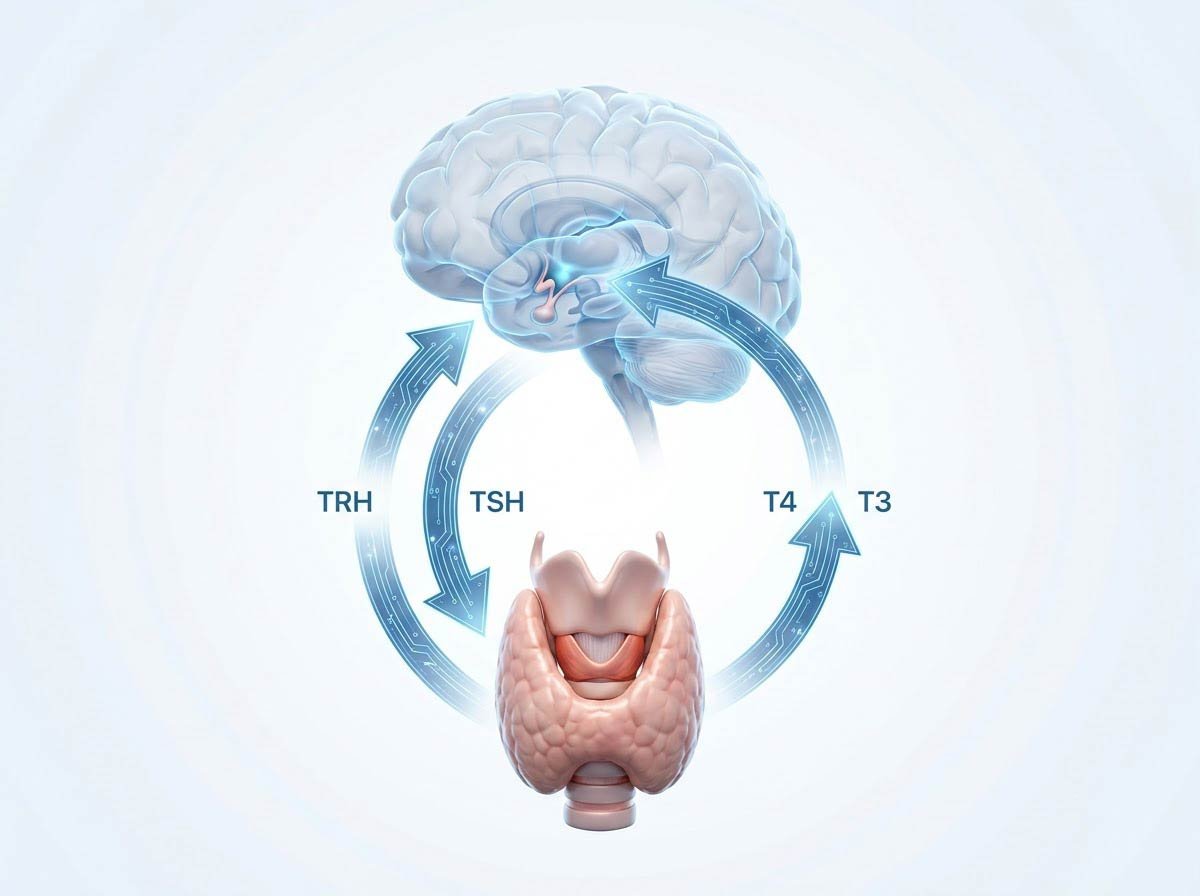
A 25-gram gland of microscopic follicles, each a ring of hormone-producing cells around a core of stored colloid. It concentrates iodine from the blood, welds it onto a protein scaffold, and ships T4 into circulation — under standing orders from the pituitary's TSH signal.
The Anatomy of Hormone Production
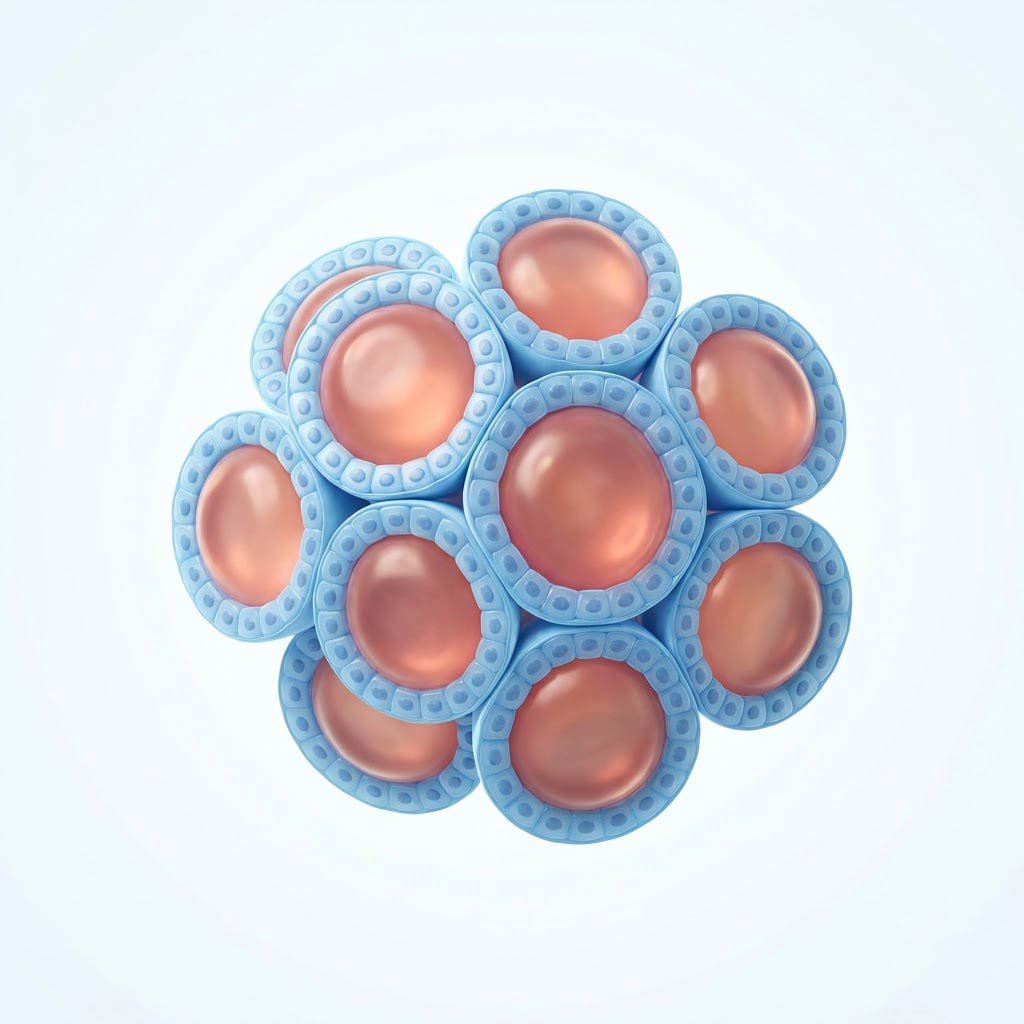
Each thyroid follicle is a tiny factory-and-warehouse: follicular cells pump iodine from the blood — the only cells in the body that do — and stitch it onto thyroglobulin, a protein scaffold stored in the follicle's colloid core. The gland keeps months of finished hormone in this warehouse, which is why thyroid disease is usually gradual: the shelves drain slowly, and symptoms creep. On TSH's orders, the cells slice finished T4 from the scaffold and release it into the richest blood flow, gram for gram, of any organ in the body.
The story then moves organs. Circulating T4 arrives at the liver, muscles, and brain, where deiodinase enzymes — each built around an atom of selenium — strip one iodine to create T3, the form that enters cell nuclei and turns metabolic genes up or down. This peripheral conversion is why selenium is this page's most-studied nutrient, why severe illness slows the conversion, and why 'thyroid health' is a whole-body collaboration rather than a single gland's solo.
Follicular Cells
The only cells that capture iodine — factory floor
Colloid Stores
Months of hormone warehoused — why disease is gradual
Deiodinases
Selenium-built converters in liver and muscle — the editors
Pituitary
The thermostat — TSH reads the whole system
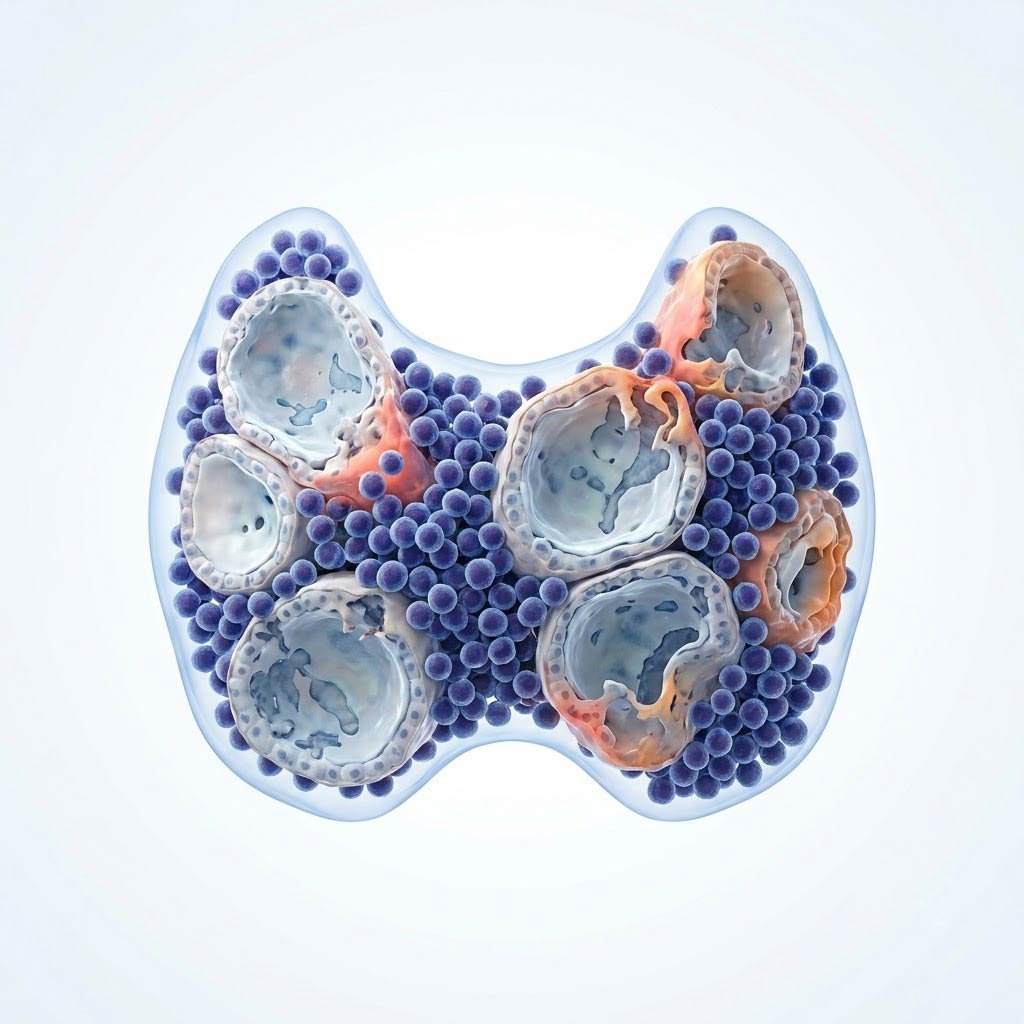
From Orderly Factory to Failed Gland
Each thyroid disease is a distinct failure mode of the same architecture:
- Hashimoto's: the immune system marks thyroid proteins (TPO, thyroglobulin) as enemy — lymphocytes infiltrate, antibodies rise, follicles slowly burn out. The thermostat compensates with rising TSH for years before hormone levels fall.
- Graves': antibodies lock the TSH receptor in the ON position — the gland produces hormone with no feedback brake, racing until medication, radioactive iodine, or surgery intervenes.
- Iodine dysfunction: too little iodine starves production (deficiency goiter); too much floods and jams it (iodine-induced hyper- or hypothyroidism). The same mineral, both failure directions.
- Drug effects: lithium and amiodarone carry well-documented thyroid effects; interferon and immune-checkpoint therapies can trigger thyroiditis. A new thyroid diagnosis always includes a medication review.
- Over-replacement: iatrogenic hyperthyroidism — too much levothyroxine produces the racing engine, bone loss, and atrial fibrillation risk. The dose is a prescription decision, tuned by TSH.
A 25-gram butterfly sets the metabolic speed of every cell you own — and answers to a thermostat in your brain that measures its output every second of your life. When the dial drifts, nothing in the body stays untouched.