Inside the upper airway.
Where does sleep apnea actually happen in the body?
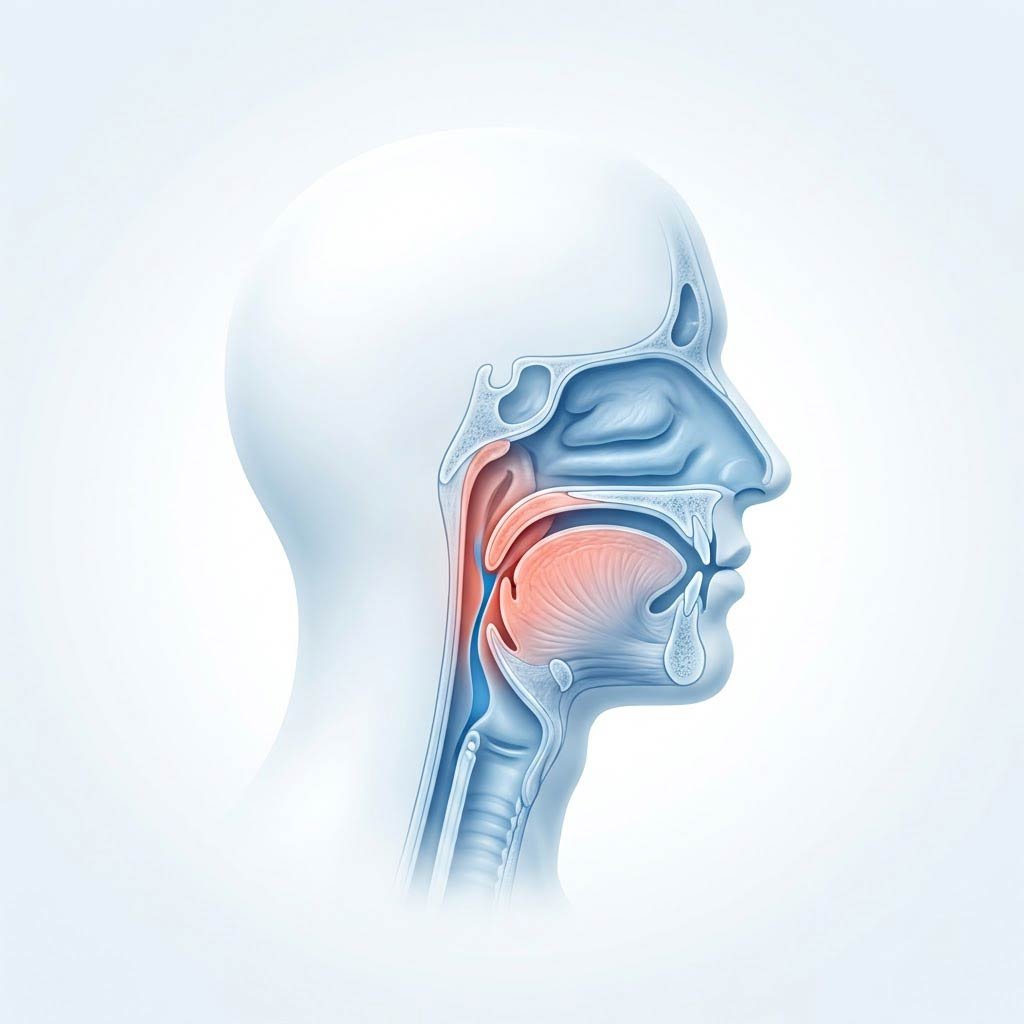
The obstruction in Obstructive Sleep Apnea happens in the upper airway—the space behind the nose and tongue. This space is a complex intersection of breathing and swallowing. When the muscles holding it open relax too much during sleep, the soft palate, uvula, and tongue base collapse inward, creating a mechanical plug.
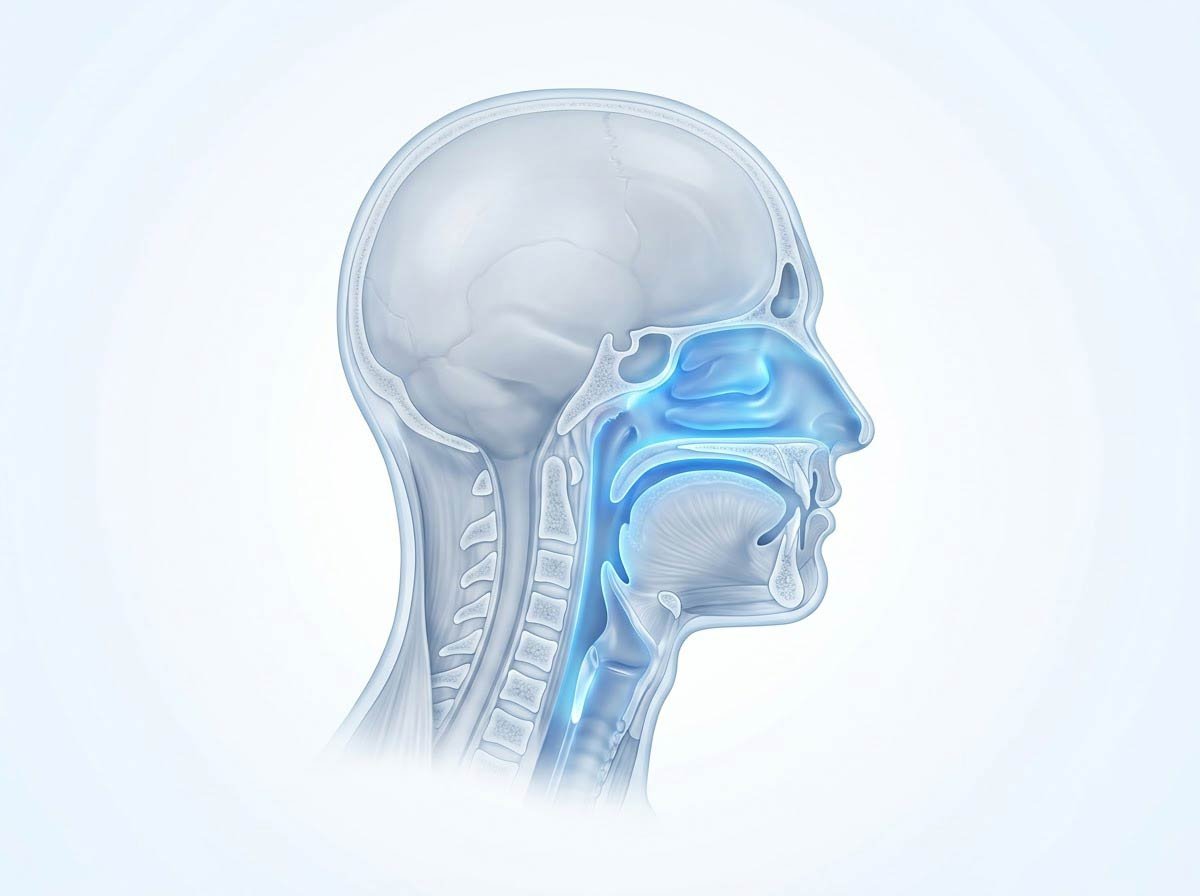
The pharynx serves a dual purpose: breathing and passing food. It lacks rigid bony support, relying entirely on muscle tone to stay open. During sleep, this muscle tone drops, making it susceptible to collapse.
The Anatomy of an Obstruction
Unlike the trachea, which is held open by rigid cartilage rings, the pharyngeal airway is a flexible muscular tube. When you fall asleep, motor neuron activity decreases, causing the muscles of the tongue (genioglossus) and soft palate to relax.
In individuals with anatomically narrow airways—due to a large neck, recessed jaw (retrognathia), or excess tissue—this relaxation closes the gap. Air can no longer flow to the lungs, despite the chest and diaphragm continuing to heave in an attempt to breathe.
Tongue Base
Falls backward to block airway
Soft Palate/Uvula
Vibrates (snoring) or seals shut
Tonsils/Adenoids
Enlarged tissue narrows space
Nasal Cavity
Deviated septum increases resistance
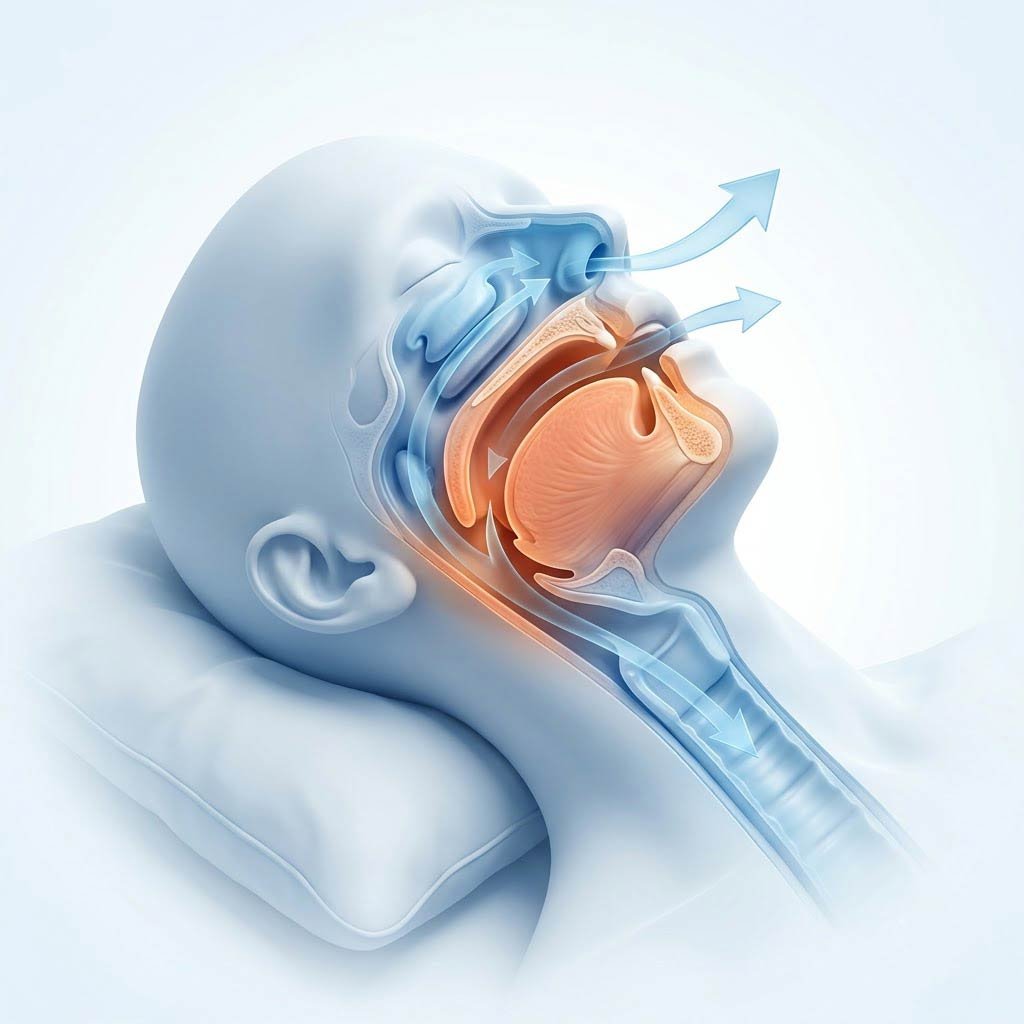
What Happens During an Apnea Event
During an apnea event, the obstruction causes a cascade of physiological emergencies:
- Airflow Cessation: No oxygen enters the lungs (apnea).
- Desaturation: Blood oxygen levels (SpO2) drop, sometimes below 80%.
- Hypercapnia: Carbon dioxide builds up in the bloodstream.
- Arousal: The brain partially wakes up to restore muscle tone and breathing, preventing death but destroying sleep.
Your upper airway has no rigid cartilage to keep it open. It relies entirely on muscle tone. When muscle tone drops during REM sleep, the airway collapses—unless mechanically splinted by CPAP.