Inside the cholesterol highway.
Where does high cholesterol actually do its damage?
Cholesterol's story runs from the liver — the factory that makes most of it and packages it into transport particles — to the artery wall, where the trouble begins. LDL particles are delivery vans: cholesterol is the cargo, ApoB the address label, and LDL receptors on liver cells the recycling dock that pulls vans out of circulation. High LDL means more vans circulating than docks can clear — and the overflow parks somewhere it was never meant to: inside artery walls.
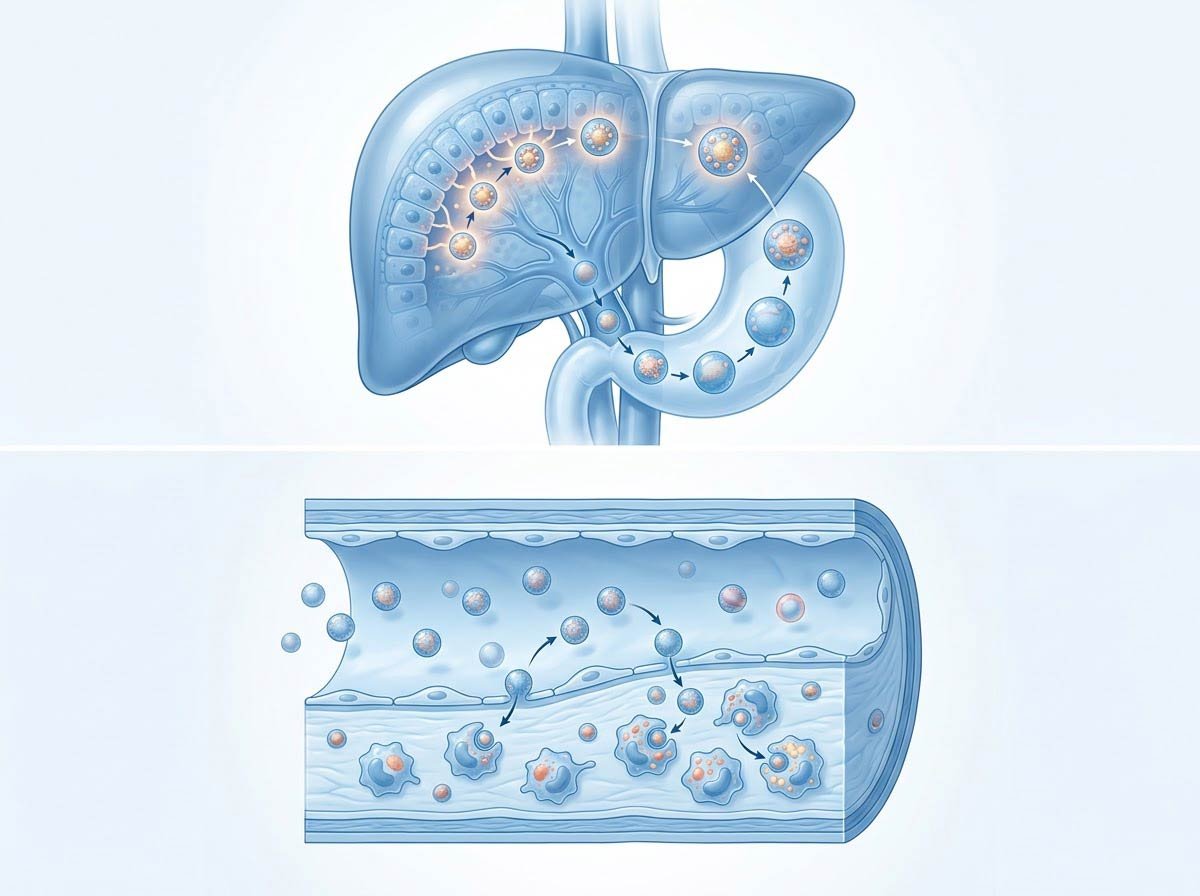
The liver synthesizes roughly a gram of cholesterol daily, releases it in VLDL particles, and reclaims it through LDL receptors — a recycling loop discovered by Brown and Goldstein (Nobel Prize, 1985). Atherosclerosis is what happens when circulating LDL exceeds what the receptors can retrieve.
The Anatomy of Lipid Transport
The liver packages fat and cholesterol into VLDL particles, which shed triglycerides on their journey and shrink into LDL — the cholesterol-rich delivery vans. Cells throughout the body display LDL receptors that dock these particles and pull them in; the liver's receptors do the bulk of the recycling. Statins work by making the liver build more docks: they block an enzyme in cholesterol synthesis, the liver senses the shortfall, and receptor numbers rise, pulling LDL from the blood.
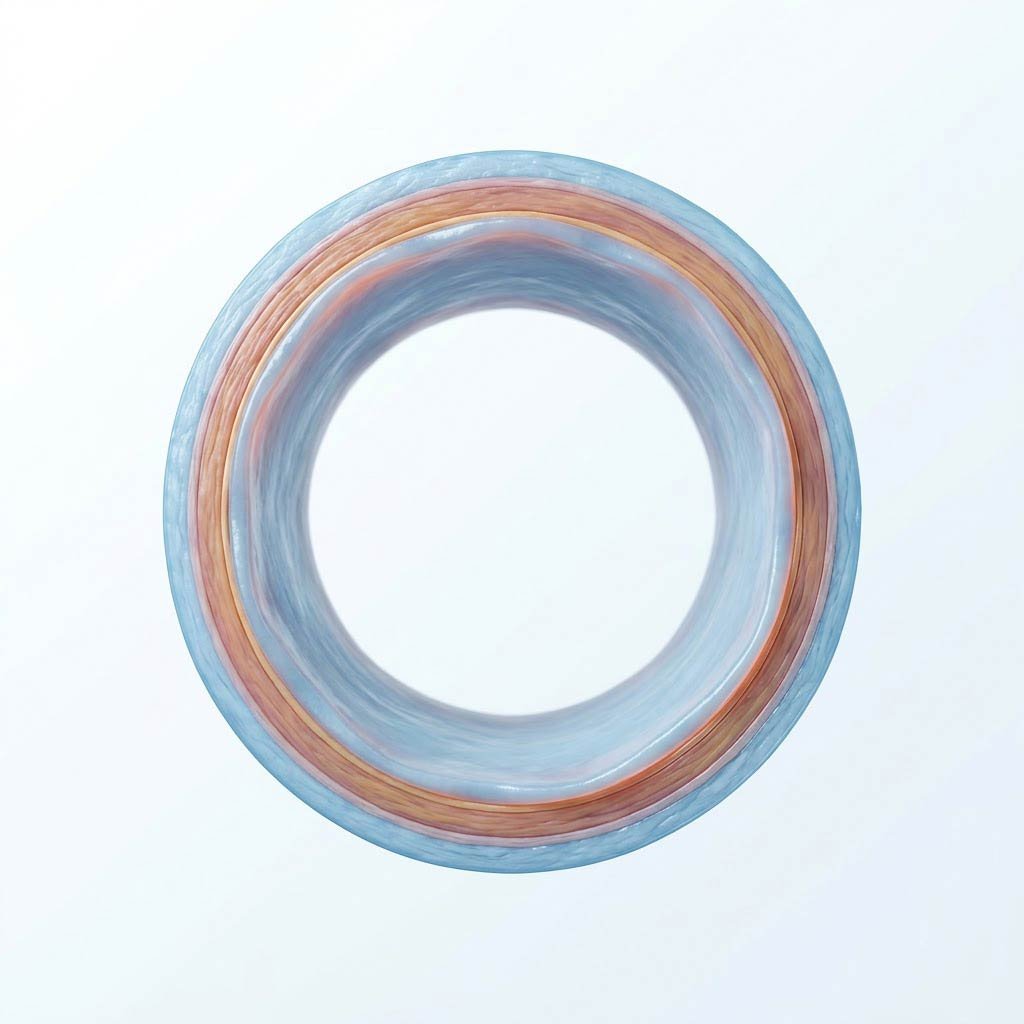
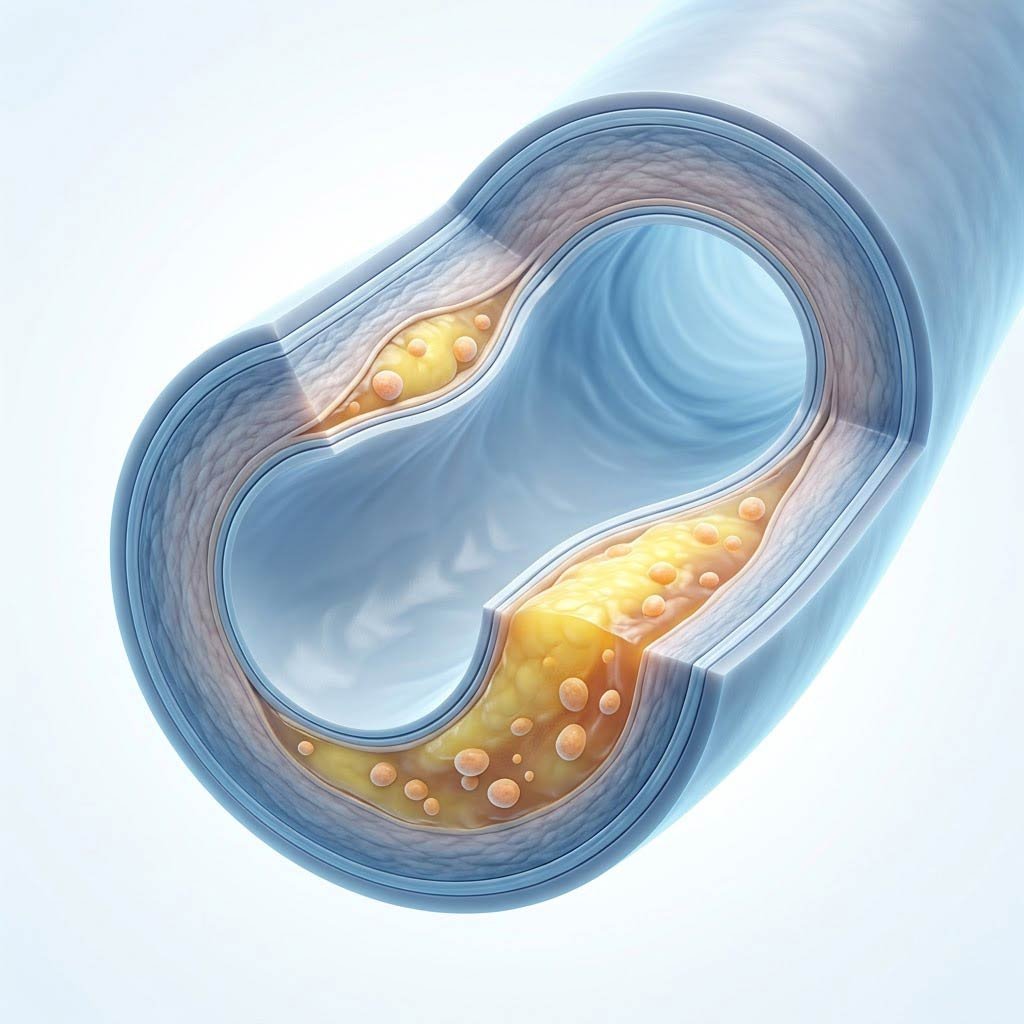
In the artery wall, the story turns. LDL particles that slip between endothelial cells become trapped in the intima, where they're chemically modified — oxidized — and no longer recognized as self. Macrophages arrive, engulf the damaged particles, and become foam cells: the first bricks of plaque. This is why the condition is silent — the plaque grows outward at first, with the artery remodeling to keep the channel open (Glagov remodeling). Blood flow is preserved until late. Nothing announces itself.
Liver
Makes ~80% of your cholesterol; runs the recycling docks
LDL Particles
The delivery vans — cargo: cholesterol, label: ApoB
LDL Receptors
The docks that pull vans from circulation — statins build more
Artery Wall
Where stranded vans become foam cells and plaque
From Foam Cell to Heart Attack
The progression from stranded particle to medical emergency is the most important sequence on this page:
- Retention: LDL particles lodge in the artery wall's matrix — the initiating event of atherosclerosis.
- Oxidation: trapped particles become chemically modified; the immune system stops recognizing them as self.
- Foam cells: macrophages engulf oxidized LDL and become fat-laden — the earliest visible plaque.
- Fibrous cap: smooth muscle cells wall off the growing lipid core — stable while the cap stays thick.
- Rupture: a thin, inflamed cap breaks; a clot forms on the exposed core within seconds. If it occludes a coronary artery, that's a heart attack. A brain artery, a stroke. This — not gradual narrowing — is how most events happen.
Your liver makes roughly one gram of cholesterol a day — five times what a typical diet delivers. The question was never just what you eat. It's how fast your body clears what it makes.