What is Gout?
A crystal-deposition arthritis where uric acid turns into needles inside your joints.
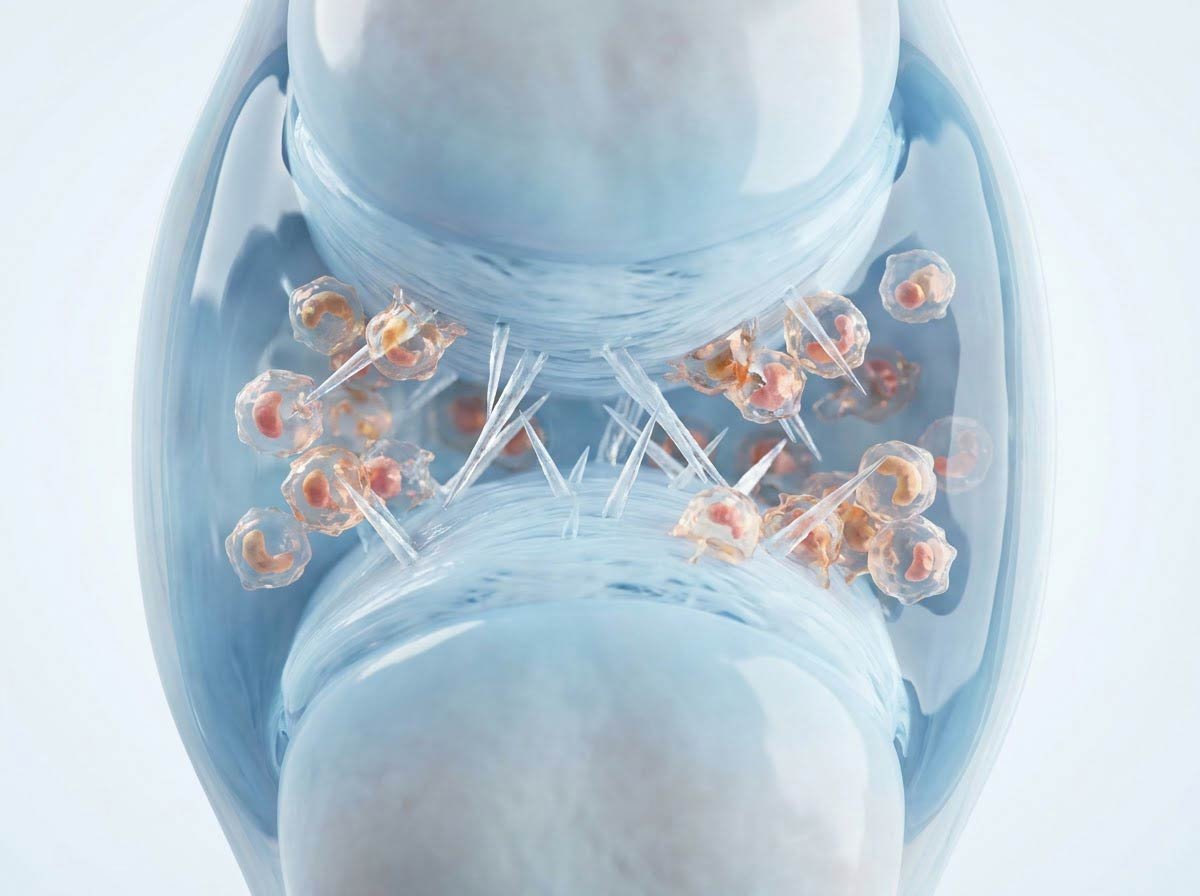
Gout is the most common inflammatory arthritis in adults — a disease where uric acid, a normal waste product of metabolism, accumulates in the blood until it crystallizes inside joints as needle-sharp monosodium urate. When those crystals shed into a joint, the immune system reacts as if to an invader: hot, red, swollen, and agonizing — classically the big toe, classically at 3 a.m. It affects nearly 4% of American adults, three to four times more men than women before menopause, and it travels tightly with metabolic syndrome. The modern message of this page: gout is one of the most treatable chronic diseases in medicine — with prescription urate-lowering therapy — and among the most mismanaged.
How Gout Connects
Understanding the Gout Spectrum
The chemistry is simple; the disease built on it is not. Uric acid is the end product of purine breakdown — purines come from food and from the body's own cell turnover. Above a saturation point of roughly 6.8 mg/dL in blood, urate leaves solution and forms crystals, depositing silently in joint cartilage for years. In about 1 in 4 people with hyperuricemia, something eventually sheds crystals into the joint space — and the innate immune system attacks them, releasing IL-1β and summoning neutrophils. That attack is the flare.
Two facts reframe the disease for most patients. First, 90% of gout is a kidney problem — underexcretion of urate, not overproduction from diet. Second, between flares the crystals keep growing quietly; 'it went away' is an illusion. Modern treatment aims below the saturation point with prescription urate-lowering therapy (ULT), which slowly dissolves the crystal pool — and guidelines now treat gout as a chronic disease managed to a target, not a series of unrelated attacks.
- Asymptomatic hyperuricemia: urate above 6.8 mg/dL, no symptoms — fewer than 1 in 4 progress to gout.
- Intermittent flares: attacks of exquisite joint inflammation, resolving fully — while deposition continues between them.
- Intercritical gout: the silent interval between flares — not 'cured', just quiet.
- Tophaceous gout: years of untreated deposition form visible crystal lumps (tophi) — ears, elbows, fingers — and erode joints.
- Kidney involvement: uric acid stones and chronic crystal load on the kidneys travel with advanced disease.
From the Disease of Kings to the Disease of Everyone
Hippocrates called it podagra — the 'foot trap' — and for two millennia gout was the disease of kings: meat, wine, and leisure were aristocratic privileges, and the disease followed them. Benjamin Franklin, a lifelong sufferer, even published a satirical dialogue with his gout in 1780 — losing the argument, every time, to a condition he blamed on his own dinners.
The modern epidemiology killed the crown. Meat, sugar, and alcohol are no longer luxuries, and gout is no longer rare — it is the most common inflammatory arthritis in adults, clustered tightly with obesity, hypertension, type 2 diabetes, and kidney disease. The 'rich man's disease' framing survives mostly in marketing copy.
Gout management runs on serum urate: target below 6 mg/dL for most, below 5 mg/dL when tophi are present. Two rules patients must know: a urate level drawn during a flare can read falsely normal (recheck 2+ weeks after the attack resolves), and flares are treated with anti-inflammatory medication while urate is lowered between flares — never stop urate-lowering therapy during a flare. And if flares began after a new blood pressure medication, ask your doctor about the diuretic connection.
Your big toe is one of the coolest joints in your body — and urate crystallizes there for the same reason frost forms at window edges. Temperature, distance from the heart, and load make it the classic target.
- 90% of gout stems from the kidneys under-excreting uric acid — not from overeating purines.
- The 3 a.m. flare timing is real: overnight dehydration, lower cortisol, and cooler joints all conspire.
- Before menopause, estrogen helps excrete urate — female gout clusters after menopause.
- Untreated, flares multiply and intervals shrink; treated to target, the crystal pool slowly dissolves.