Iron & Nutrition
Iron nutrition isn't a milligram count — it's a meal chemistry. The same plate of lentils can yield three times more iron beside a bell pepper, and half as much beside a cup of tea. And the tired-blood story is bigger than iron alone: anemia has three nutritional authors — iron, B12, and folate — three deficiencies, three different diseases, one shared symptom. This page is the table level: the pairings, the brakes, the windows, and the strategy for eating iron-adequate without guesswork.
The chemistry, the trio, and the table
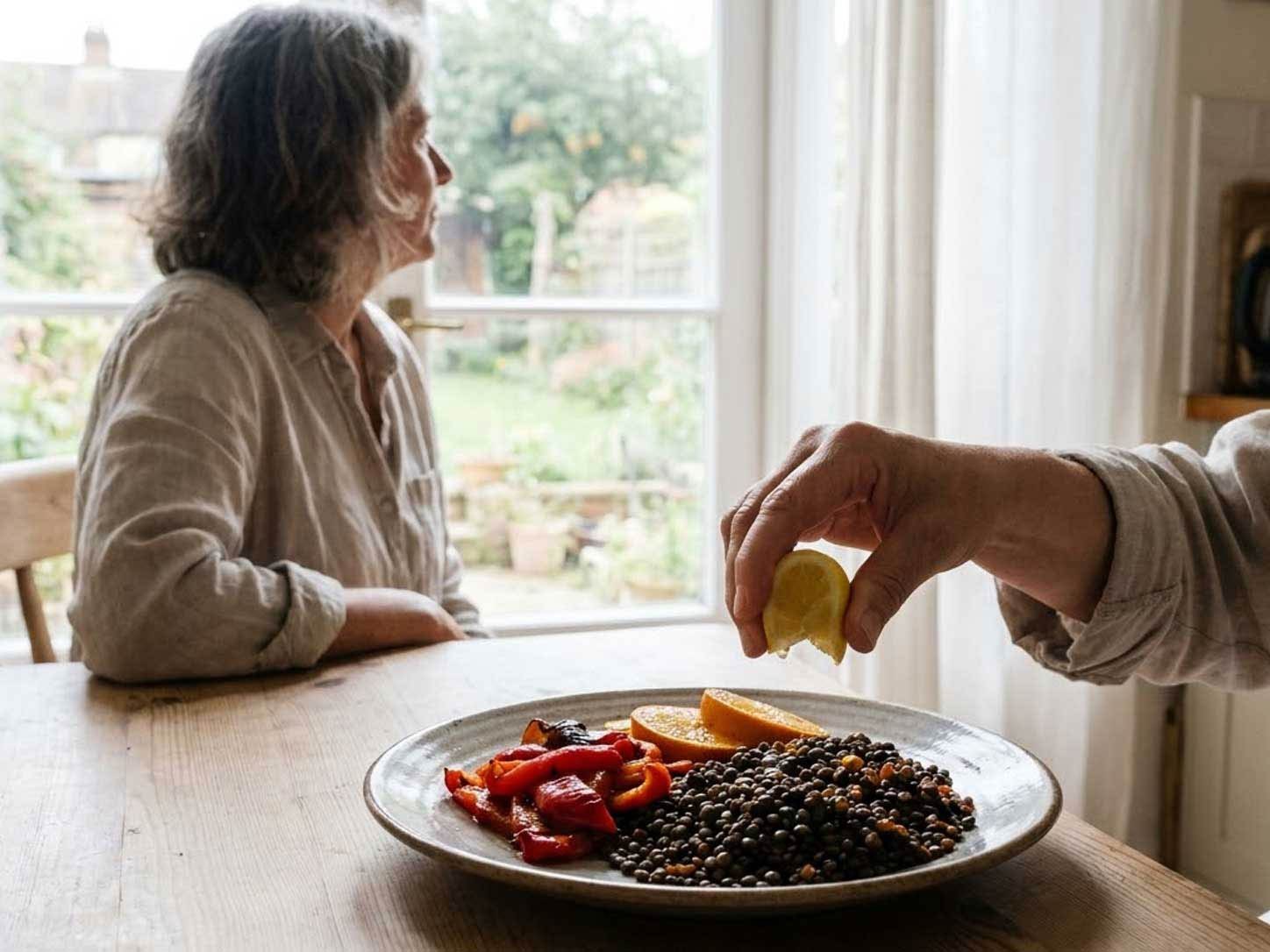
The chemistry: animal (heme) iron absorbs at 15–35% largely regardless of company; plant (non-heme) iron absorbs at 2–20% depending almost entirely on it. Vitamin C is the multiplier — it converts plant iron into the form the intestine actually takes up, which is why beans-with-peppers and oatmeal-with-strawberries are chemistry, not folklore. The brakes are equally real: tea and coffee within an hour of a meal measurably suppress absorption (their polyphenols bind iron), calcium competes at the same uptake channel, and phytates in unsoaked grains and legumes hold onto their own iron. Every one of these is a scheduling problem — not a food to fear.
The trio: the tired-blood story has three nutritional authors, and they produce three different anemias — iron deficiency makes cells small and pale; B12 and folate deficiency makes them large and immature. Same fatigue, different diseases, different treatments — and a lab panel that tells them apart while symptoms can't. One clinical trap deserves naming: high-dose folate can mask B12 anemia on blood work while nerve damage quietly progresses — another reason the panel beats the guess.
The table, by audience: omnivores have the easy game — meat carries heme iron plus a 'meat factor' that boosts the plant iron in the same meal. Plant-based eaters play the real version of the page: volume, pairing, and preparation — soaking, sprouting, and leavening disarm phytates; fortified cereals quietly carry full daily values; and the one nutrient structurally absent (B12) is the pairing partner to remember, not iron. One elegant efficiency: the plants richest in iron — pumpkin seeds, spinach, lentils, tofu — are largely the same plants richest in magnesium: one table, two minerals fixed.
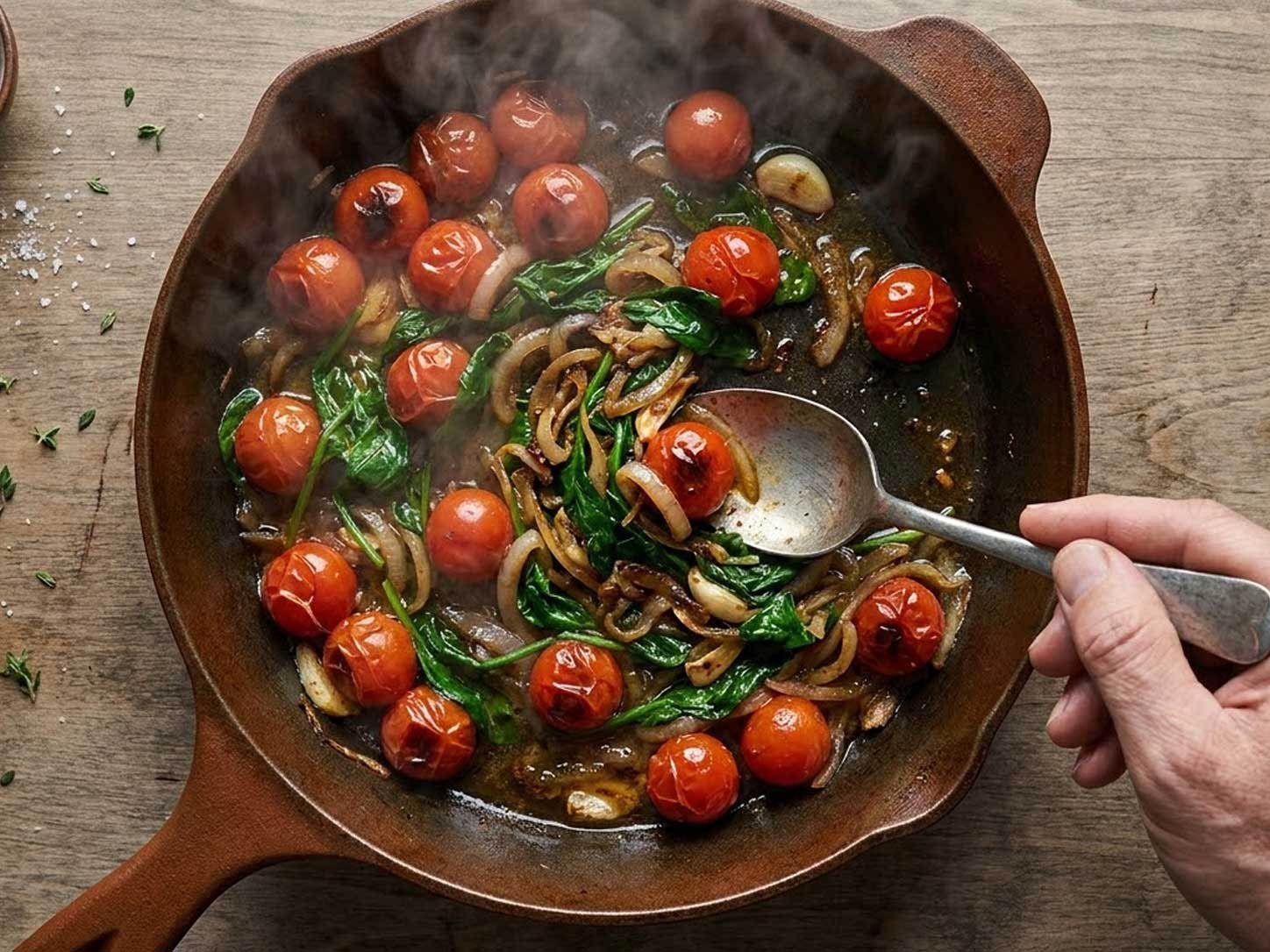
And the day plan that falls out of the chemistry: iron-rich meals at lunch, tea and coffee an hour clear, calcium-heavy meals at a different time, the skillet doing quiet work with tomatoes, and — before anything gets bought — the ferritin test that turns all of this from guesswork into strategy.
- Pair plant iron with vitamin C at the same meal — the 2–3× multiplier.
- Schedule the brakes: tea and coffee an hour away, calcium at a different meal.
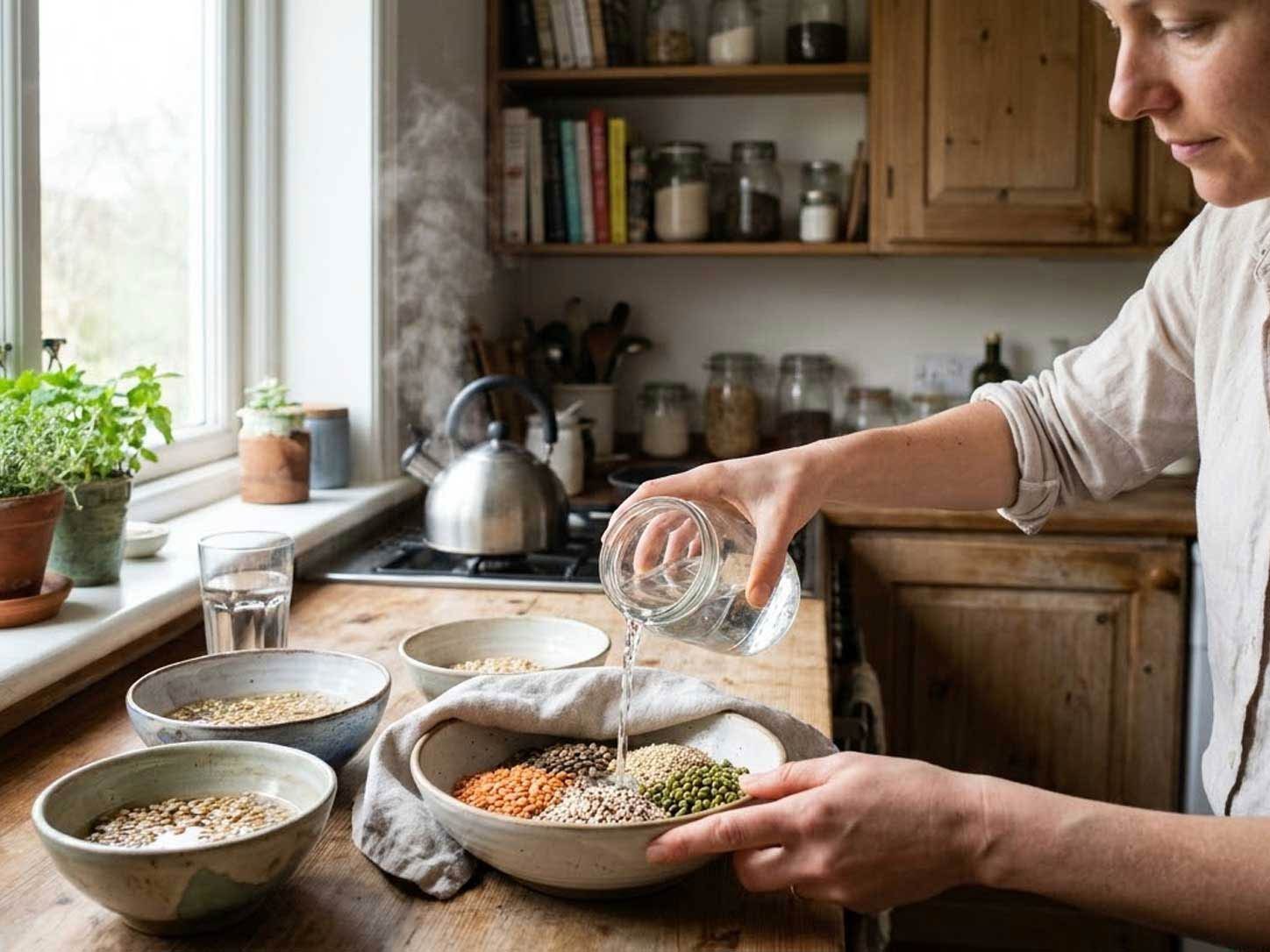
- Soak, sprout, and leaven — phytate disarmament before the plate.
- Anemia has three authors: iron, B12, folate — the panel tells them apart.
- Pumpkin seeds, spinach, lentils, tofu: the iron-and-magnesium double play.
- Cast iron + acidic food = measurable iron, delivered by the pan itself.
“Iron isn't just what you eat — it's what you eat it with.”
— The meal-chemistry principleThe factor families
The multiplier
Vitamin C converts plant iron into its absorbable form — the pairing that turns a slow drip into a stream.
The brakes
Tea, coffee, and calcium — each real, each a scheduling problem, none a food to fear.
The plant strategy
Soaking, sprouting, leavening, fortification — the plant-based game played at full chemistry.
The trio check
Iron, B12, folate — three deficiencies behind 'tired blood', distinguished by the panel, not the symptom.
Explore Iron →The story, frame by frame

The table's players — and the route into each
Every card links to a full BodyFinds chapter. The page is the table; the chapters are the science underneath.
The headline mineral — the full journey: foods, testing, dosing science, honest products.
supplementThe second author of anemia — the plant-food absence and the absorption fade with age.
supplementThe measurability ladder — the testable three and the honest untestables, in full.
research-topicThe symptom side — fatigue's many authors, iron among the measurable ones.
research-topicThe heme package — meat brings iron in its absorbable form with the pairing factor attached.
supplementThe table-mate — the same seeds, greens, and legumes carry both minerals at once.
supplementCould it be iron?
The full BodyFinds iron journey — the test-first mineral, the food grid, the dosing science, and the honest products.
Where this information comes from
- NIH ODS — Iron Government
- NIH ODS — Folate Government
- NIH ODS — Vitamin B12 Government
- WHO — Anaemia Government
- MedlinePlus — Anemia Government