Focus & Productivity
Focus is a biological state — built on sleep, timed by the circadian clock, fueled by stable energy, and trainable by behavior. The supplement industry sells the opposite story in 'focus formulas' and nootropics. This page maps the levers that measurably work, grades the pills exactly as their trials deserve, and names the one conversation too many people delay instead of having.

The attention ledger
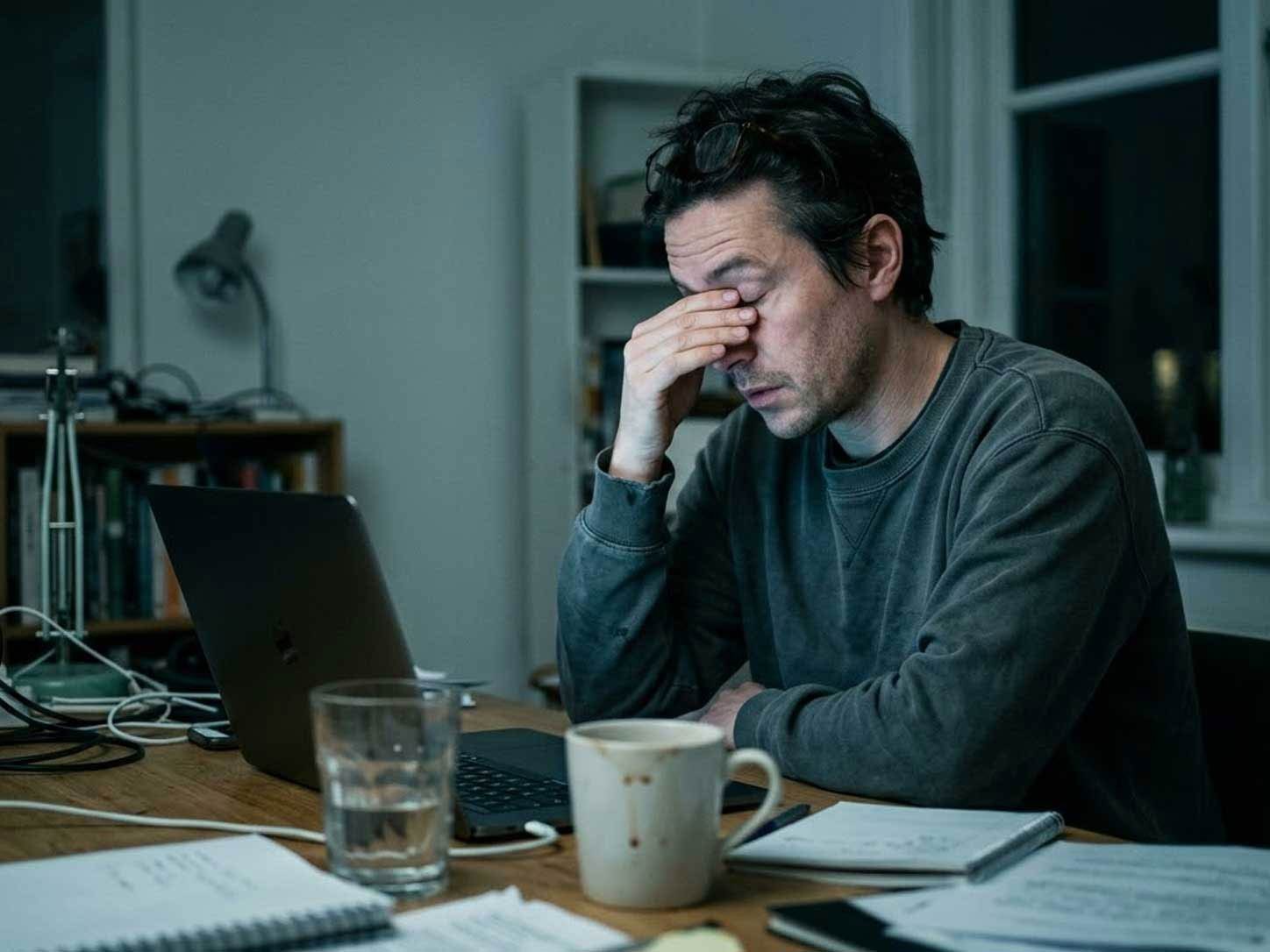
The most important focus research isn't about focus at all — it's about sleep debt. Stay awake roughly 17 hours and measured attention drops to the equivalent of legal alcohol impairment; vigilant attention is the first casualty of short sleep, and no pill restores it. If focus is the problem, sleep duration and consistency are the first line — not the last resort.
The second lever is timing: alertness rides the circadian curve, rising to a personal peak and sagging predictably in the afternoon. Working with your peak window — and protecting it from meetings and noise — beats fighting the curve with stimulants. The third is movement: brief activity measurably restores flagging attention, which is why the walk is the oldest productivity tool in existence. Caffeine sits honestly alongside them — real, modest, best used strategically, and carrying a 5–6 hour half-life that taxes the following night.
Then there is the uncomfortable paragraph. Persistent focus problems that impair daily function — in adults, not just children — are a recognized, frequently missed clinical picture. Adult ADHD is real, common, and underdiagnosed — and self-medicating it with caffeine and 'focus blends' delays the evaluation that actually helps.
- Vigilant attention falls first under sleep debt — the most measurable focus lever.
- Protect your circadian peak window; don't fight the afternoon sag with stimulants.
- Caffeine: best in the first half of the day — its half-life taxes the night's focus.
- Deficiencies (B12, iron) and sleep apnea quietly dull attention — testable, treatable.
“The sharpest focus aid ever tested is a full night of sleep. Everything on the shelf is a rounding error.”
— The focus evidence, in one sentenceThe factor families
Sleep debt
The first and largest lever — attention degrades measurably before you feel 'tired'.
Explore Sleep →Your peak window
Alertness rides the circadian curve — schedule deep work with your peak, not against it.
Explore Circadian Rhythm →Caffeine strategy
The one proven focus aid — dose early, use deliberately, respect the half-life and tolerance.
Clinical factors
Adult ADHD, deficiencies, and sleep apnea all present as 'focus problems' — evaluation beats self-medication.
The story, frame by frame


What the evidence says — factor by factor
Every card links to its full BodyFinds chapter, with an honest evidence grade. The pattern holds: the levers grade high, the bottles grade low.
The strongest focus lever known — attention degrades measurably before fatigue feels obvious.
research-topicAlertness follows the clock's daily curve — timing deep work with your peak is free performance.
research-topicDeficiency clouds thinking — correction clears it. No bonus when replete.
supplementLow iron quietly dulls attention — especially in menstruating women. Test, don't guess.
supplementDHA is brain-structural — but focus supplementation trials grade out thin.
supplementThe long game: what preserves aging cognition overlaps what sharpens today's focus.
research-topicWhy am I always tired?
Focus that fades with energy is one of the experiences the guided journey helps you narrow down — health information, not a diagnosis.
Where this information comes from
- NHLBI — Sleep Science and Sleep Disorders Government
- NCCIH — Caffeine Government
- NIMH — Attention-Deficit/Hyperactivity Disorder Government
- NIH ODS — Vitamin B12 Government
- NIH ODS — Iron Government