Bone Health
Bone isn't scaffold you're born with — it's scaffold you keep voting for. Two cell crews renovate it continuously: one demolishing, one rebuilding, with the balance tipped by hormones, materials, and — above all — load. Peak mass banks by roughly age 30; the drawdown after is silent for decades; and the first symptom is usually a fracture. This page covers the renovation, the windows, the four partners that defend the structure, and the supplement story the shelf oversells.
The renovation, the windows, the defense
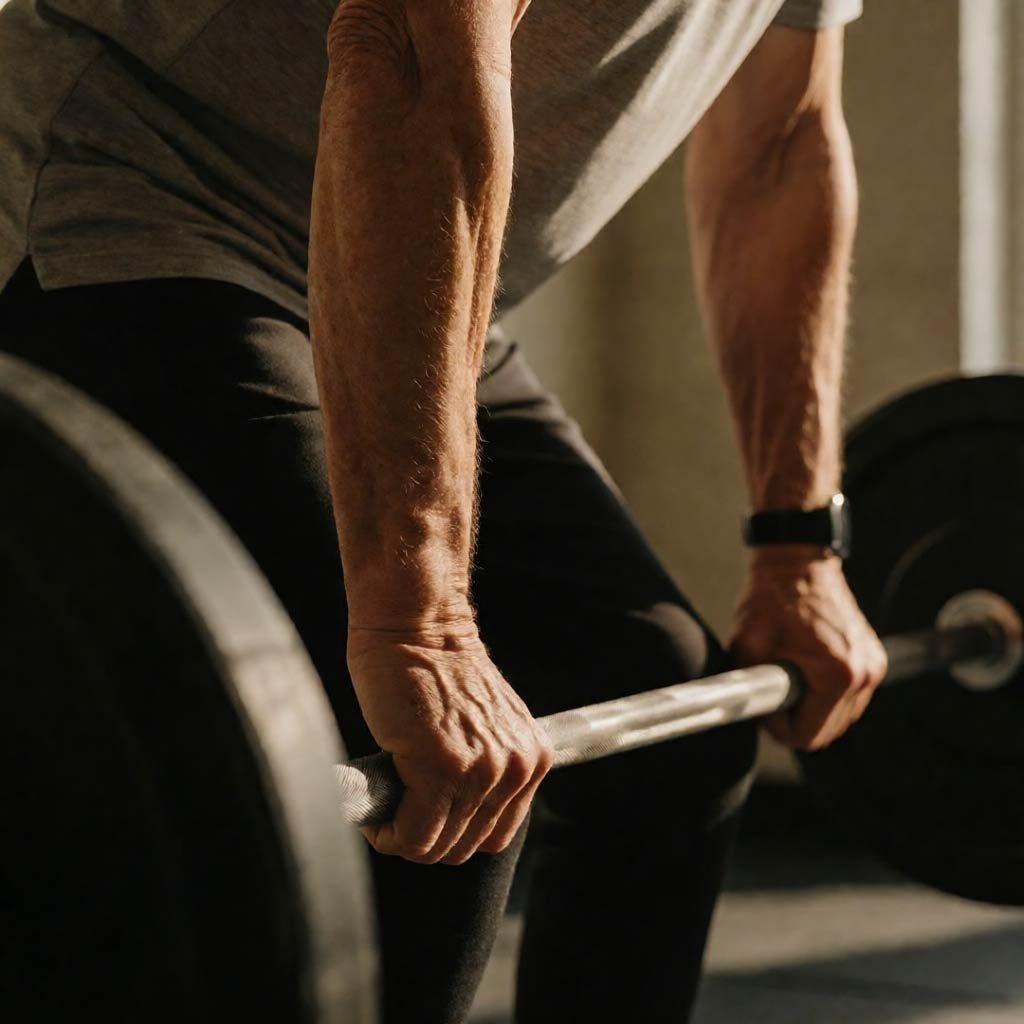
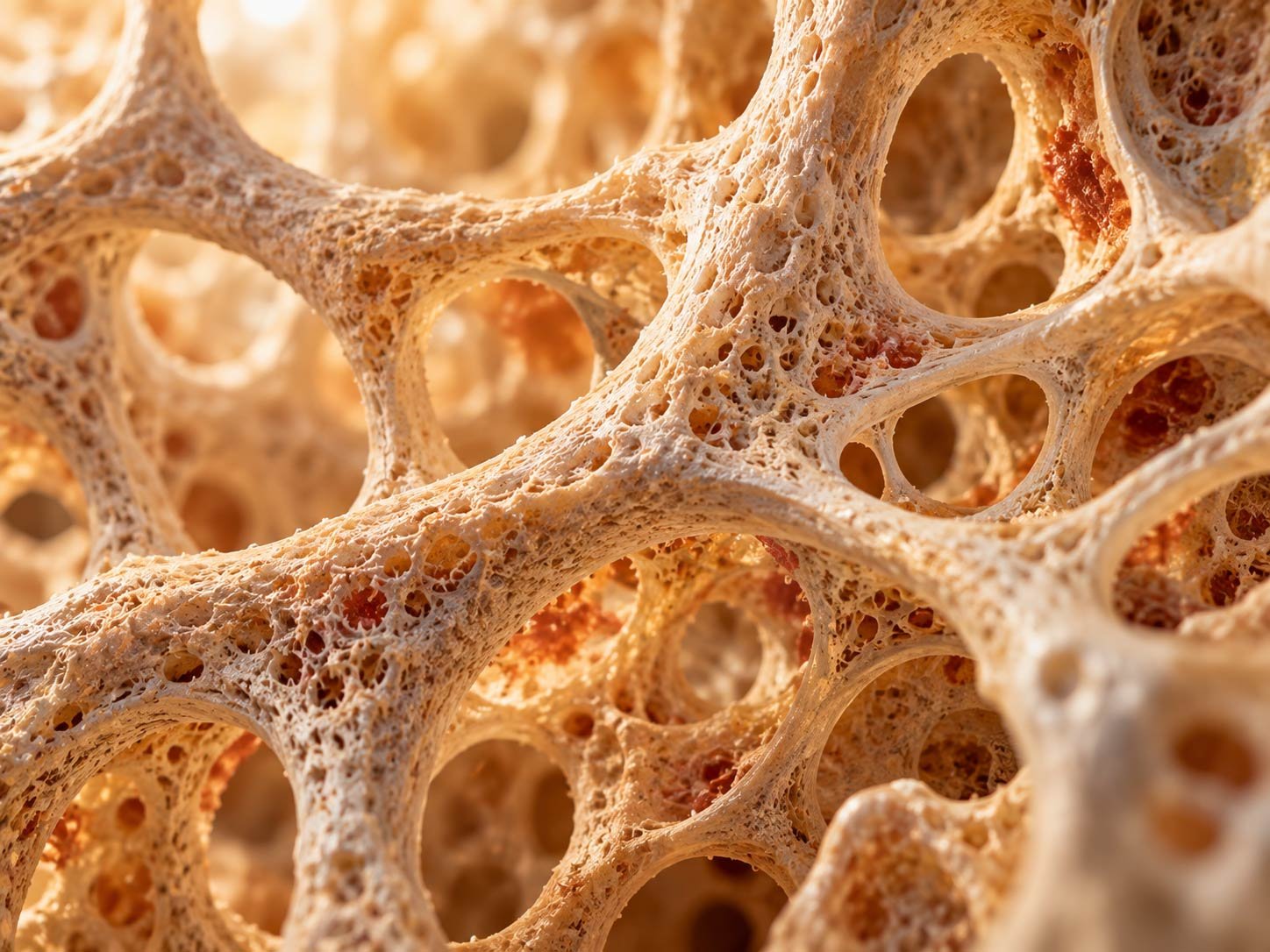
The living scaffold: bone remodels constantly — osteoclasts resorb old tissue while osteoblasts lay down new, replacing roughly a tenth of the skeleton each year in a coordinated renovation that runs from birth to death. Two facts follow. First: peak bone mass is banked by roughly age 30 — the young decades are the deposit window, and what's banked is what's drawn on later. Second: the tissue responds to load — Wolff's law, the principle that bone adapts to the demands placed on it, is why the mechanical half of bone health can't be swallowed. Rest lets bone drift; loading tells it to stay.
The windows: the loss runs on schedules. The menopause transition opens the fastest window in a woman's life — estrogen's protective exit unlocks roughly 1–2% yearly loss for five to ten years, which is why the 40s defense matters more than the 70s scramble. Age 70+ opens a slower window in both sexes. And the accelerators cut across every schedule: long-term corticosteroids are the classic pharmaceutical drain, smoking, low body weight, and the under-fueling spectrum all take from the same account. The cascade the windows lead to is the quiet emergency: one fracture predicts the next — a wrist fracture at 55 is a hip-fracture forecast, which is why it's a screening trigger, not just a healed injury.
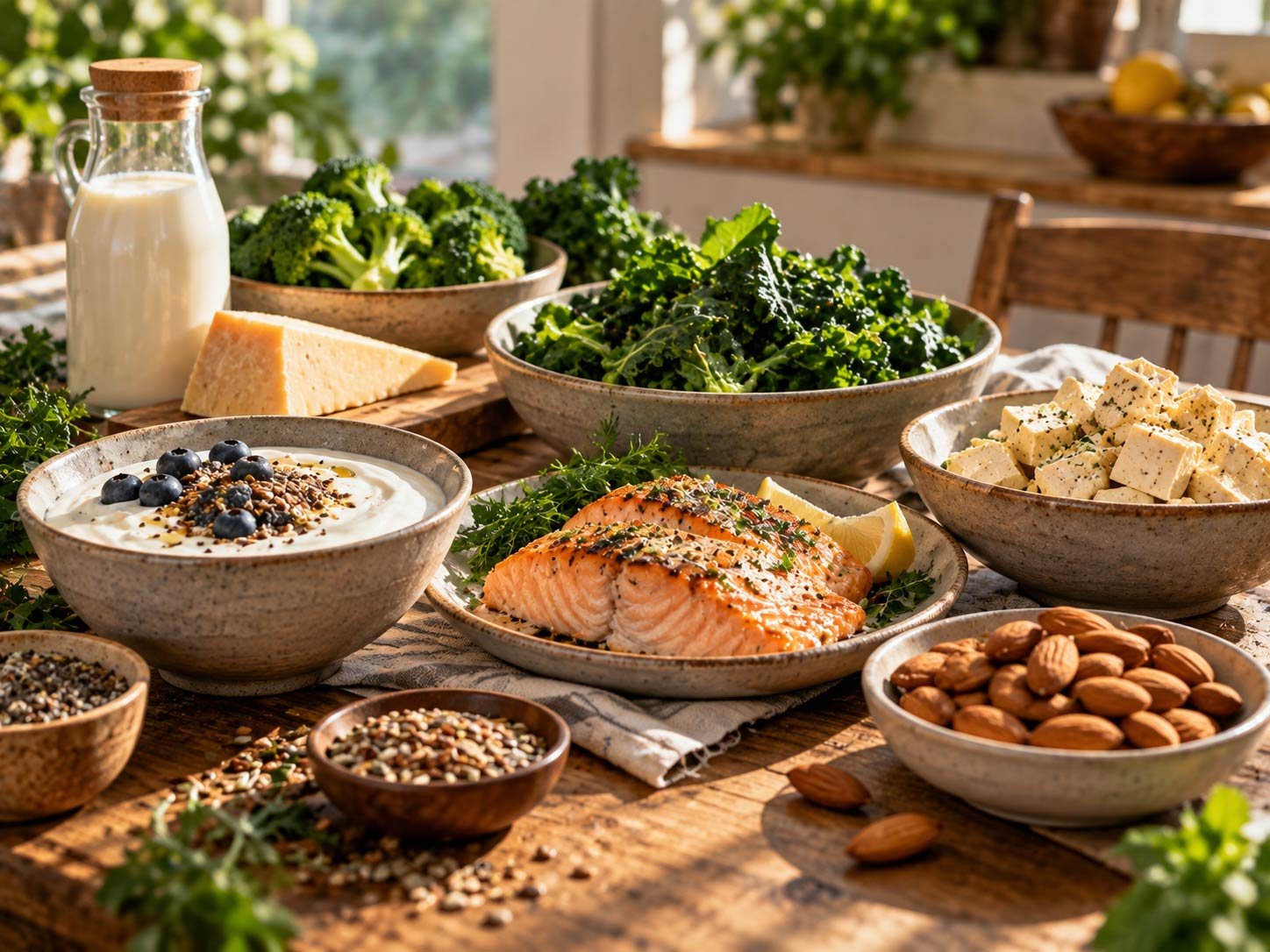
The four-partner defense: vitamin D opens the intestinal gate that lets calcium cross into the blood (no D, no crossing — its axis page covers the sun-and-testing story). Calcium is the material — and the honest version is food-first: dairy, canned fish with bones, fortified staples, and tofu carry it in the package the body expects, while the supplement trials' fracture-reduction record is weaker than the shelf implies — modest benefit mainly in older adults with low intake, with kidney-stone caution at high doses. Protein builds the collagen frame bone hangs on — and aging appetites shortchange it first. And loading is the signal that decides where everything lands: resistance training and impact tell bone to deposit; walking maintains; the barbell builds.
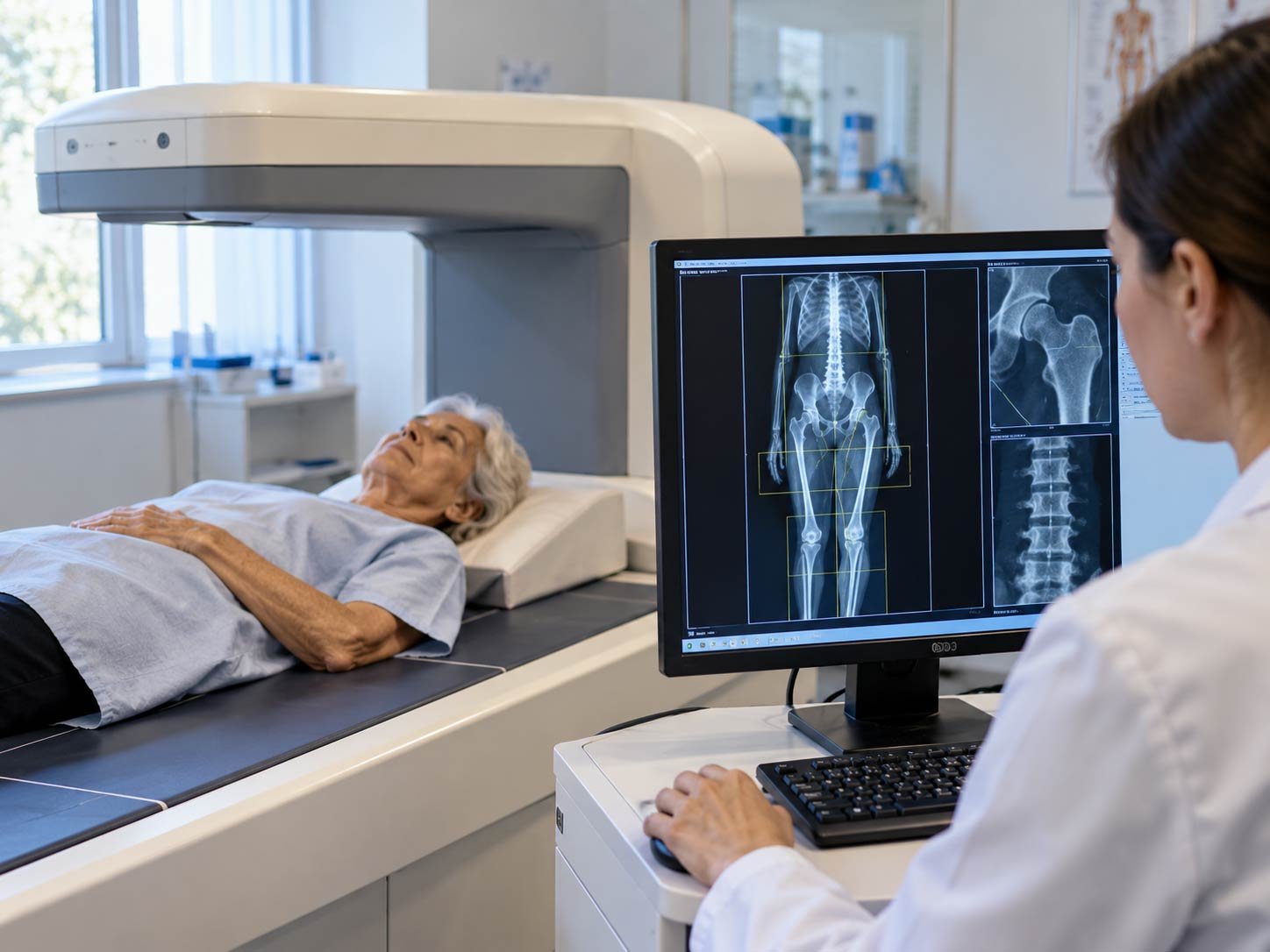
The honest clinical story: DEXA reads the account — a quick, low-radiation scan producing the T-score that grades density against young-adult peak. Routine screening starts at 65 for women (earlier with risk factors: family hip-fracture history, standing-height fractures, steroids, low weight, smoking — and men's screening is risk-based rather than routine). And the treatment half deserves its reframe: osteoporosis medication works — the bisphosphonate class and its successors meaningfully cut fracture risk, and fear of the drugs costs more bone than the drugs ever do. The drug holidays, the sequencing, the anabolic options: all prescriber territory — but 'treatment exists and works' is the sentence this page exists to say.
- Peak bone mass banks by ~30 — the young decades are the deposit window.
- Menopause opens the fastest loss: 1–2% yearly for five to ten years.
- One fragility fracture predicts the next — a wrist at 55 is a screening trigger.
- Calcium: food-first; the pills' fracture record is weaker than the shelf implies.
- Wolff's law is not optional: loading is the only signal that tells bone to stay.
- Osteoporosis treatment works — fear of the medication costs more bone than the medication.
“Bone isn't something you have — it's something you keep voting for, load by load, decade by decade.”
— The scaffold principleThe factor families
The signal
Loading decides where the calcium lands — resistance training and impact are the deposition half of the defense.
Explore Muscle & Recovery →The gate
Vitamin D opens the intestinal calcium gate — the axis page covers the sun calculus and the testing debate.
Explore Vitamin D3 →The material
Calcium and protein — the building stock, carried by food in the package the body expects.
Explore Protein →The scan
DEXA reads the account and the T-score grades it — the silent drawdown made visible, in a clinician's hands.
The story, frame by frame
The scaffold's players — and the routes
Every card links to a full BodyFinds journey. The bone story routes to the vitamin axis, the loading pair, and the windows.
The gatekeeper — the vitamin's five-chapter journey: mechanism, the evidence, honest products.
supplementThe menopause window — estrogen's exit, the fast-loss years, and the decade the defense matters most.
research-topicThe loading pair — muscle pulls, bone answers: the two tissues decline and defend together.
research-topicThe frame — collagen synthesis and the aging-appetite trap that starves it.
supplementThe moving pair — the joint the bone holds, and the muscle that shields them both.
research-topicThe estrogen story — the hormone that guards bone, and the transition that ends its watch.
research-topicWhy is bone health important?
The complete BodyFinds bone journey — the silent timeline, the loading rule, the shared nutrition, and the scan conversation.
Where this information comes from
- NIH ODS — Calcium Government
- NIH ODS — Vitamin D Government
- NIAMS — Osteoporosis Government
- Bone Health and Osteoporosis Foundation Institution
- MedlinePlus — Osteoporosis Government
- NIA — Exercise and Physical Activity Government