Inside the dual gland.
What does the pancreas do — and why does one organ hold two complete jobs?
The pancreas is two organs wearing one anatomy. 98% of it is an exocrine factory — acinar cells manufacturing over twenty digestive enzymes and pumping roughly 1.5 liters of enzyme-rich juice daily into the small intestine. Nestled inside that factory, ~1 million islets of Langerhans — just 2% of the organ's mass — form the body's metabolic control tower, releasing insulin and glucagon into the bloodstream on a minute-to-minute basis. It is the only organ that runs digestion and metabolism simultaneously, which is why its diseases range from malabsorption to diabetes to one of medicine's most feared cancers — and why it protects itself with the most elaborate safety system in the body.
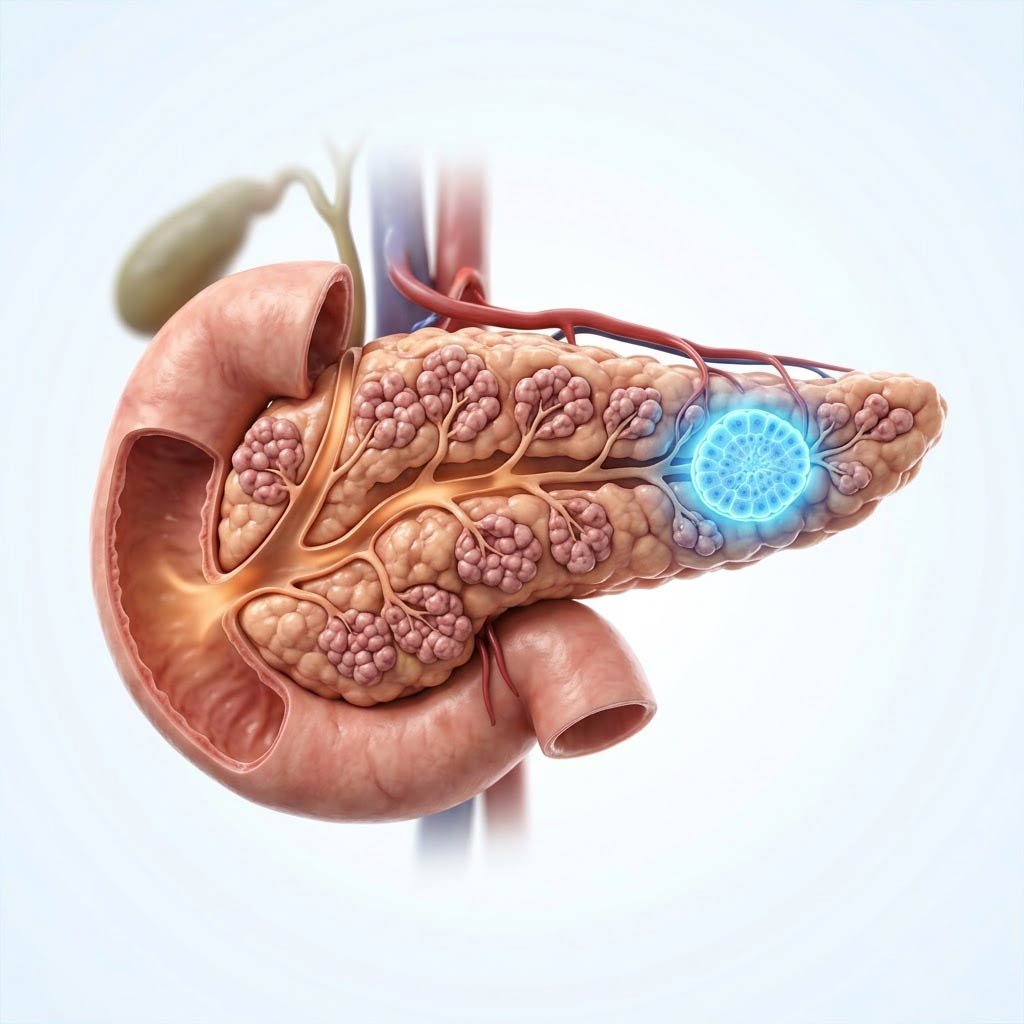
A 15-centimeter, 80-gram gland tucked behind the stomach: acinar cells (the enzyme factories) drain through a branching duct tree into the duodenum, while a million microscopic islets release insulin and glucagon directly into the bloodstream — the islets' venous blood flowing first to the liver, the anatomy of metabolic control.
The Anatomy of Two Jobs
The exocrine half is a delivery system of terrifying capability. Acinar cells package their enzymes — proteases that dissolve protein, lipase that dismantles fat, amylase that cleaves starch — into zymogens: inactive precursor forms that cannot attack the gland that made them. The enzymes travel through ducts lined by cells that secrete bicarbonate, an alkaline flood that neutralizes stomach acid before it reaches the intestine. Activation happens only at the final destination: enteropeptidase, an enzyme anchored in the duodenum's lining, unlocks trypsinogen into trypsin — the master switch that then activates the others. The weapons arm only after leaving the factory.
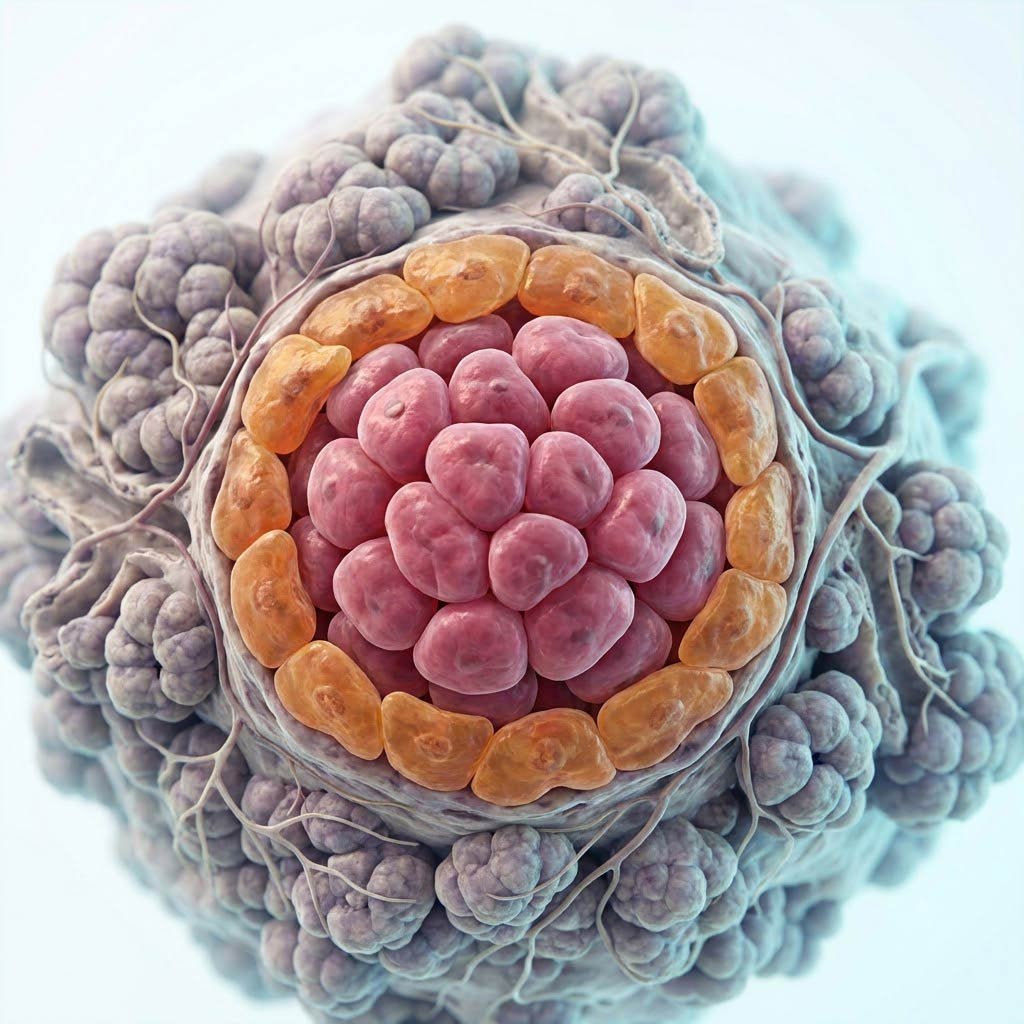
The endocrine half is architecture turned to strategy. The islets — beta cells (insulin, 60–80% of islet mass), alpha cells (glucagon), delta cells (somatostatin) — release their hormones into tiny veins that drain directly into the portal vein: the liver, the body's metabolic warehouse, sees insulin first and highest, before any other organ. Insulin and glucagon are the only two hormones that move blood glucose in opposite directions, and both come from this one 2% of the gland. When you eat, the same meal that triggers enzyme release triggers insulin — the dual gland running digestion and storage as one coordinated operation.
Acinar Cells
98% of the gland — the enzyme factories
Islets of Langerhans
~1 million — the 2% metabolic control tower
Duct Cells
The bicarbonate buffer system
Beta Cells
60–80% of islet mass — insulin production
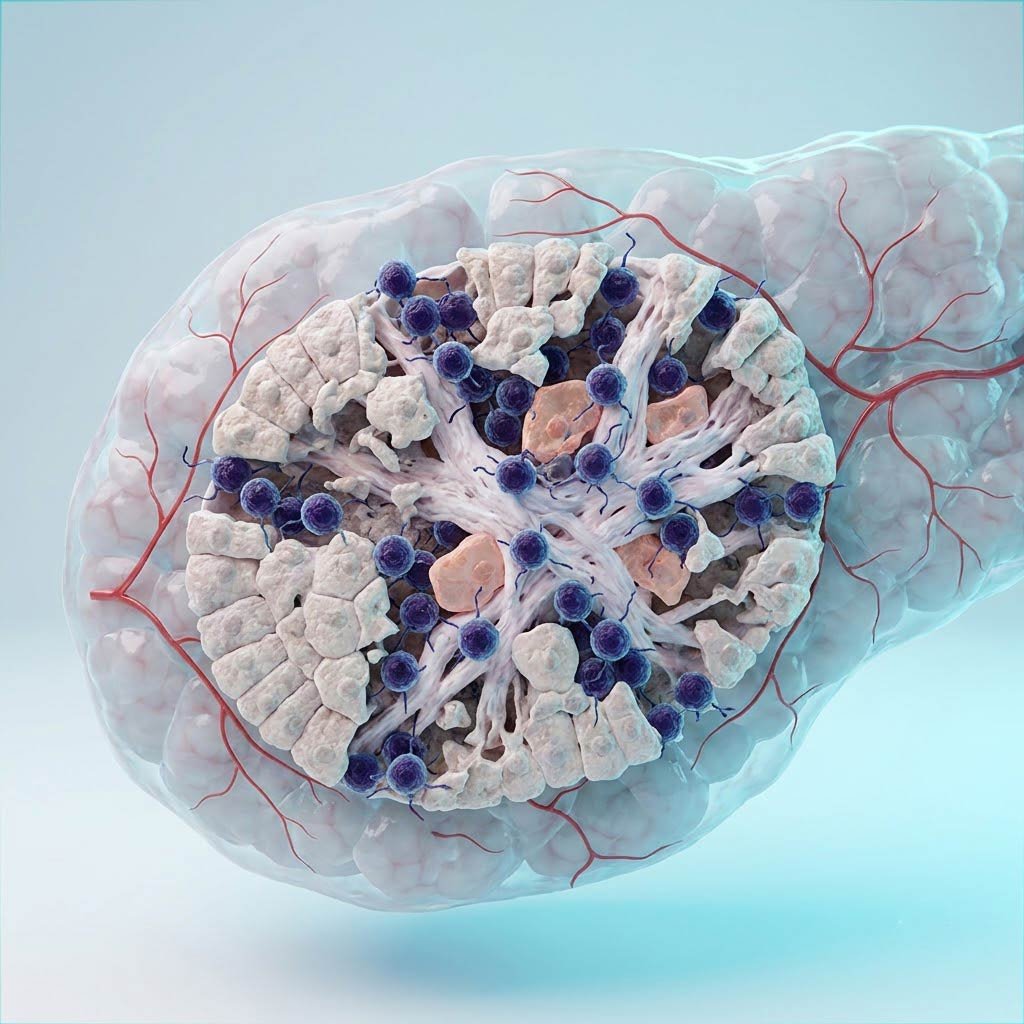
The Autodigestion Paradox — and How the Gland Survives It
The pancreas manufactures the most powerful digestive weapons in the body — enzymes that can dissolve the gland itself — and it survives by shipping them disarmed:
- Zymogen packaging: trypsinogen, chymotrypsinogen, and the other proteases are synthesized inactive — grenades with the pins in.
- The safety catch: pancreatic secretory trypsin inhibitor (SPINK1) rides along in the same secretions, ready to neutralize any trypsin that activates prematurely inside the gland.
- Location, location, location: the activation key (enteropeptidase) is physically anchored in the duodenum, thousands of duct-lengths away from the factory.
- When the system fails: gallstone blockage or alcohol injury can trigger premature activation inside the gland itself — the pancreas digesting itself. That is acute pancreatitis: the safety system overwhelmed, and one of the most severe pains in medicine.
- Chronic failure: repeated injury scars the gland — the enzyme factories and islets both destroyed — producing both malabsorption and diabetes in the same organ, years apart.
Your pancreas ships its most dangerous weapons disarmed — enzymes capable of digesting the gland itself, released only as inactive forms and armed a safe duct-journey later. Pancreatitis is what happens when the safety catches fail inside the factory.