Inside the liver.
What does the liver do, and why can it regrow when nothing else can?
The liver is a 1.5-kilogram chemical plant performing over 500 identified functions — filtering everything your intestines absorb, manufacturing proteins and clotting factors, storing and releasing glucose, making and clearing cholesterol, metabolizing hormones and medications, neutralizing toxins, and producing the bile that digests your fat. It receives 1.5 liters of blood every minute through a dual supply no other organ has, and it is the only human organ that can regenerate — you can remove 70% of a liver and it regrows. Understanding the factory explains both why liver disease stays silent for decades and why 'liver detox' products are selling you something your liver already does for free.
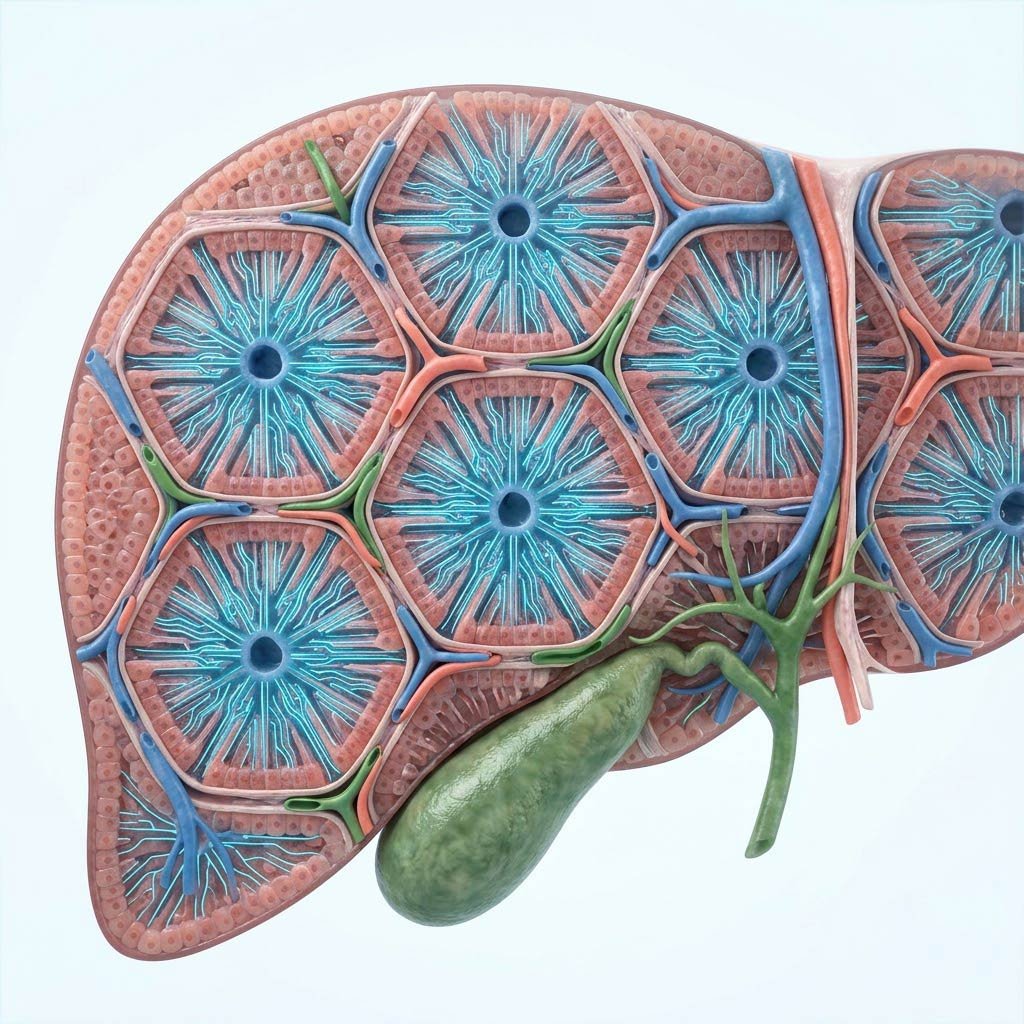
The liver is built from roughly a million hexagonal lobules — microscopic factories each with its own blood inflow (portal vein + hepatic artery), its own filtering sinusoids lined with Kupffer immune cells, and its own bile drainage. Everything absorbed by the gut arrives here first, through the portal vein, before it reaches any other organ.
The Anatomy of the First-Stop Factory
The liver's design begins with a fact most people never learn: it sits downstream of the gut. Blood leaving your intestines doesn't return to the heart first — it flows directly into the liver through the portal vein, carrying every nutrient, every absorbed chemical, every alcohol molecule and medication you swallowed, for processing before anything reaches the rest of the body. The liver is the body's customs inspection, detoxification plant, and warehouse in one — and its position is why the gut and the liver share disease risks (our gut-health pages teach the axis from the other end).
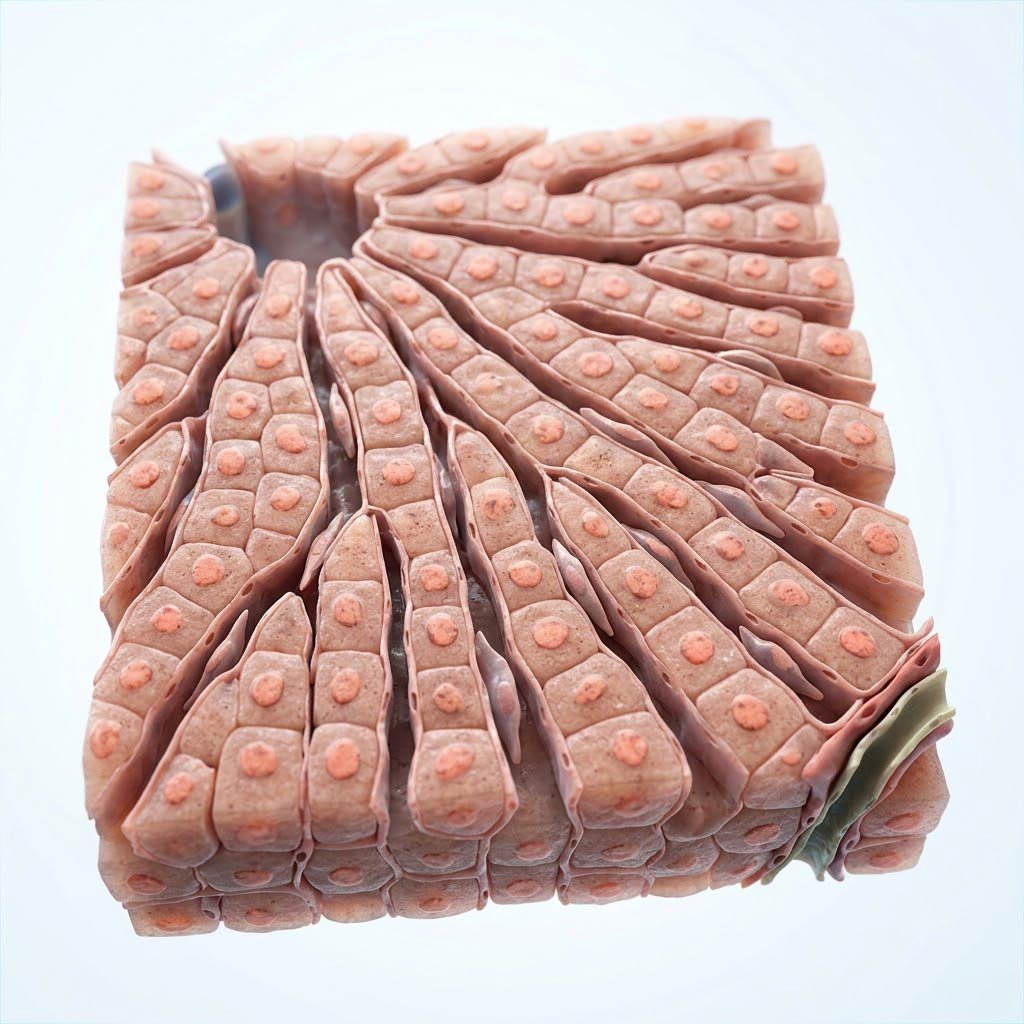
Inside, the work is done by hepatocytes — the factory's universal workers — arranged in plates along sinusoids, leaky capillaries that let blood bathe the working cells directly. Kupffer cells, the liver's resident macrophages, patrol the same channels, eating bacteria that escaped the gut. Bile flows the opposite direction — from hepatocytes into microscopic canaliculi, gathering into ducts that lead to the gallbladder — carrying the bilirubin the liver cleared from old red blood cells, the disposal route whose failure turns eyes yellow. And when hepatocytes die, their neighbors divide to replace them — the regeneration that no other organ manages, working perfectly until the architecture itself is destroyed.
Hepatocytes
The universal workers — 500+ functions between them
Portal Vein
The gut-to-liver superhighway — first-stop design
Kupffer Cells
Resident macrophages — gut-bacteria border patrol
Stellate Cells
The scar-makers — dormant until chronic injury activates them
Regeneration, Cirrhosis, and the Architecture Problem
The liver's superpower is regeneration — not scar-free healing like skin, but true regrowth: resection of up to ~70% is followed by restoration of the original mass within weeks. The hepatocyte is one of the body's few cell types that can re-enter the cell cycle on demand; the liver grows back because its workers can divide without limit. This is why living-donor liver transplants work — a donor gives 60% of a liver, and both halves regrow to functional size.
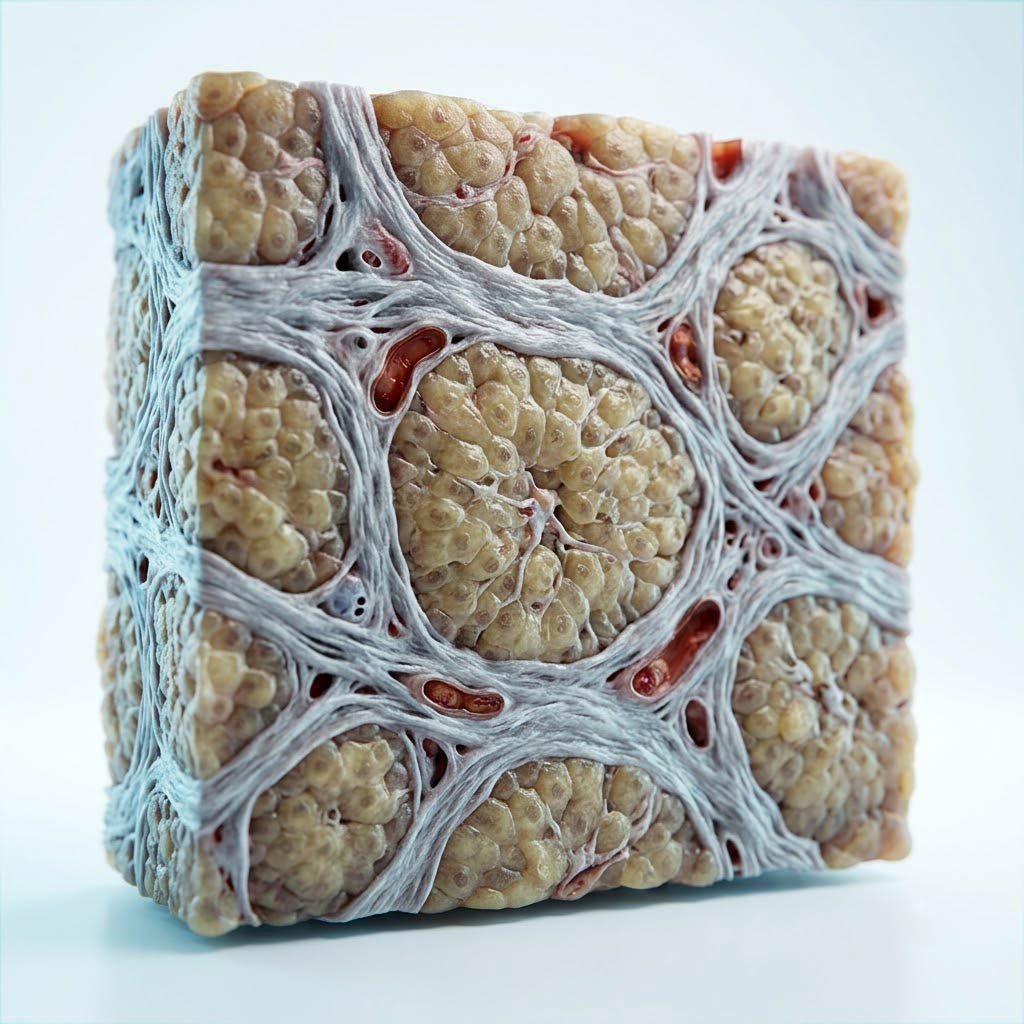
Cirrhosis is what happens when regeneration meets chronic injury. Years of damage (alcohol, viral hepatitis, fat, iron, immune attack) kill hepatocytes faster than orderly repair can replace them, and the dormant stellate cells activate — laying down collagen scar instead of functional tissue. The liver regenerates in nodules trapped inside the scar; the architecture — the orderly sinusoid-to-central-vein flow — is lost, and with it the factory's layout. Blood can't flow through; pressure backs up into the portal vein; toxins and hormones clear poorly. Cirrhosis is the point where regeneration's magic fails: the liver can regrow its cells, but not its floor plan.
You can remove 70 percent of a liver and it regrows — the only organ that can. But it regrows its cells, never its architecture: cirrhosis is what happens when the factory is rebuilt without its floor plan. Protect the layout, and the liver forgives almost anything.