Inside the 2% organ.
What does the brain do — and why does it cost a fifth of everything you eat?
The brain is 2% of body mass consuming 20% of the body's energy — a metabolic luxury item evolution paid for because it computes like nothing else: 86 billion neurons, roughly a quadrillion synapses, all running on about 20 watts — a dim lightbulb. It is the body's most protected organ (skull, meninges, blood-brain barrier) and its pickiest customer (an uninterrupted glucose supply, or consciousness fails within minutes). And it is, dry-weight, 60% fat — the reason DHA and B12 are brain-nutrient stories, and the reason this page pairs with our sleep page on the overnight wash that keeps it clean.
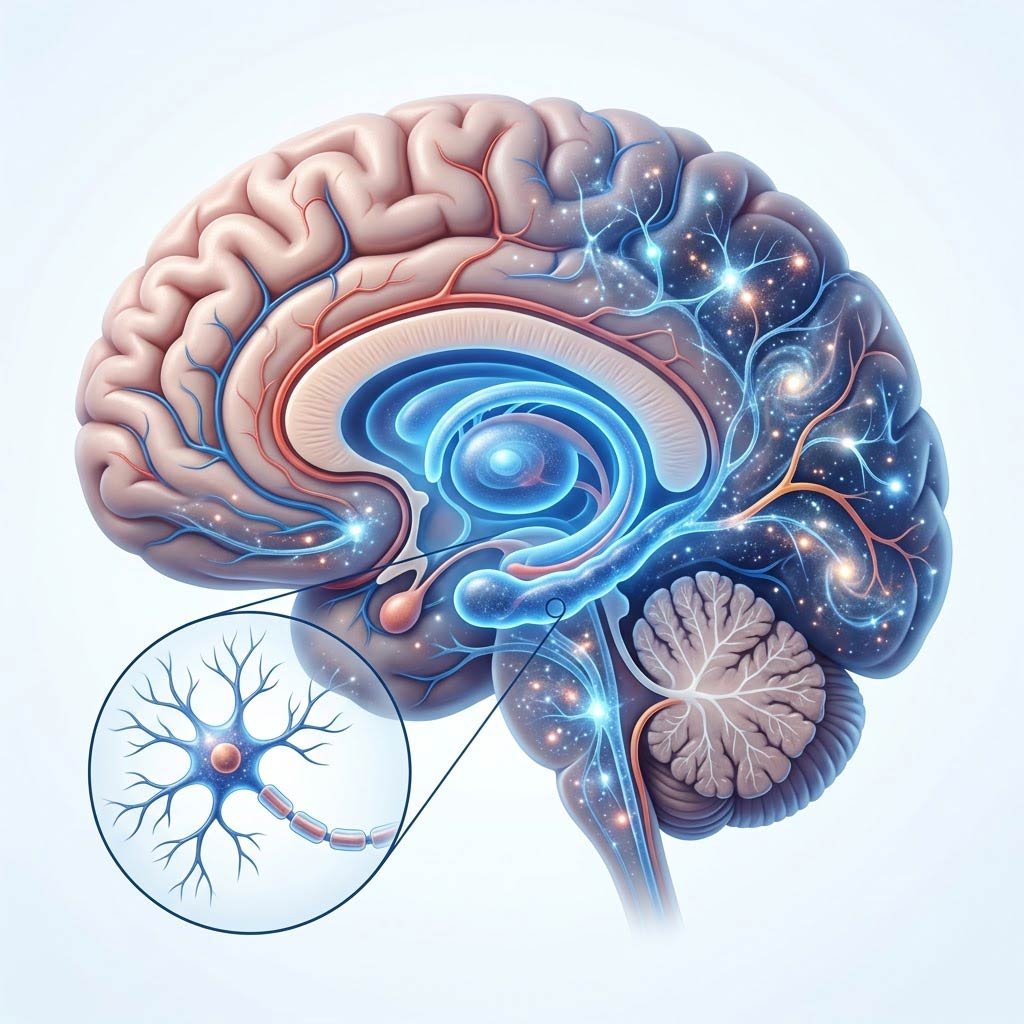
A ~1.4 kg organ of folded cortex (the thinking surface), deep structures (hippocampus for memory, amygdala for threat, basal ganglia for movement), and white matter — the insulated long-distance wiring that connects it all. Each neuron is a signal-processing cell; each of the ~150 trillion synapses is a computation. The whole network runs on 20 watts and rebuilds itself nightly.
The Anatomy of the Network
The brain's computational architecture has three tiers. The cortex — the folded outer sheet, four lobes each with specialties (frontal for executive function, temporal for memory and language, parietal for sensation and space, occipital for vision) — is where conscious computation lives. The deep structures run the subconscious: the hippocampus writes memory, the amygdala tags threat, the hypothalamus runs the body's thermostat-and-clock, the basal ganglia choreograph movement. And the white matter — half the brain's volume — is the cabling: myelinated axon tracts carrying signals between regions at up to 120 meters per second.
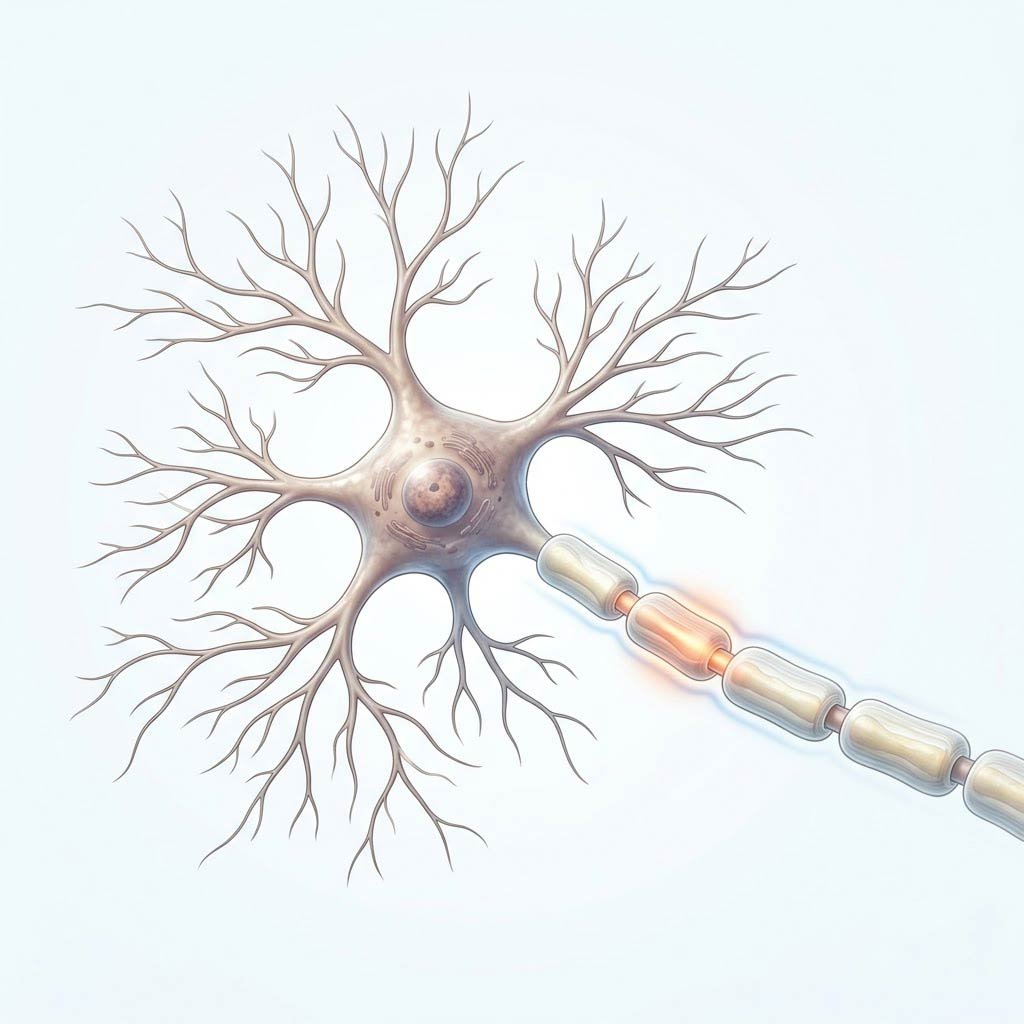
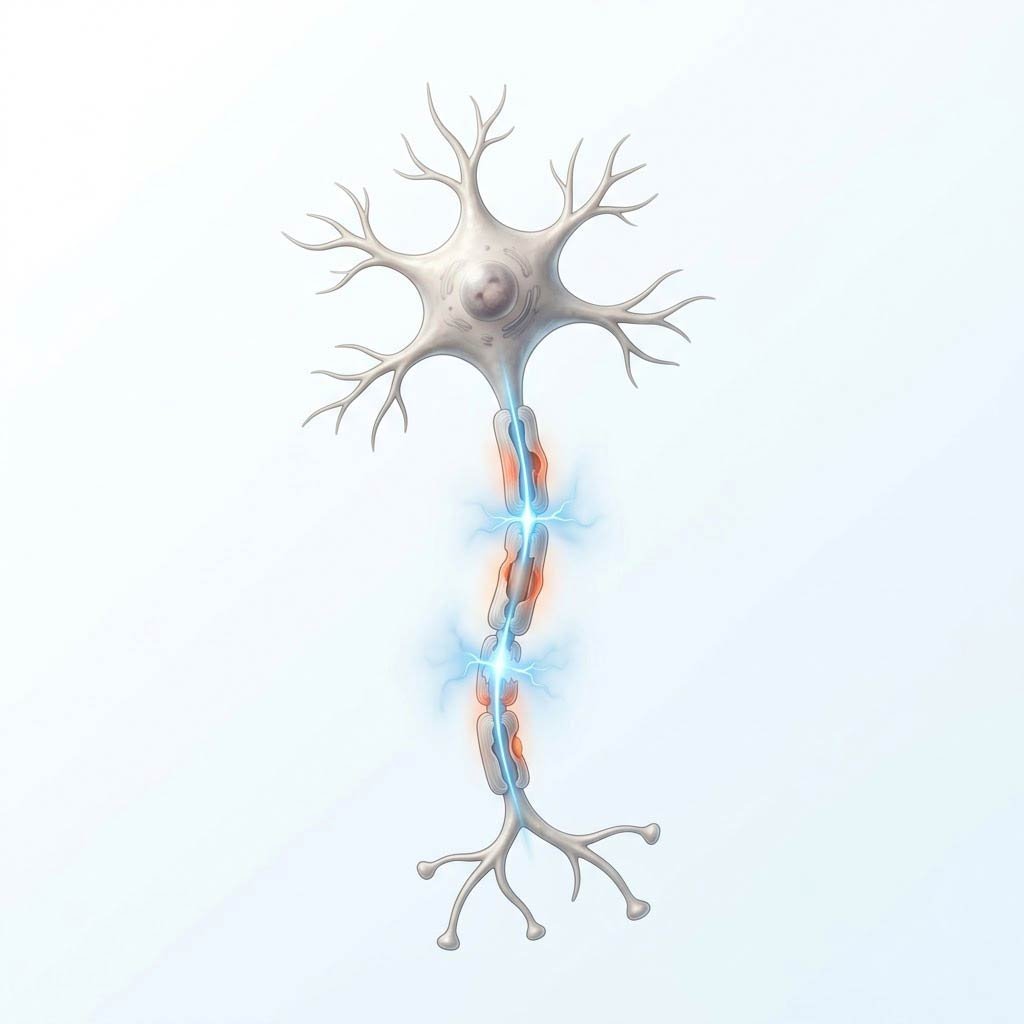
That myelin is where this page's nutrition story begins. Myelin is the fatty insulation wrapped around axons — the reason signals travel fast and clean — and it is built and maintained with vitamin B12 and other methyl-donor chemistry. B12 deficiency unmakes the insulation: the comparison images show it directly, and the fog, numbness, and unsteadiness of deficiency are the signal leaking through thinned insulation. The 60% fat story runs parallel: neuronal membranes are built from DHA (the omega-3 our omega-3 page delivers) — the synapses are literally made of the fat you eat, or don't.
Cortex
The folded thinking surface — where consciousness computes
Hippocampus
The memory writer — one of two neurogenic zones
Blood-Brain Barrier
The strictest customs inspection in biology
Myelin
The fat insulation — speed and clarity depend on it
The Blood-Brain Barrier — The Gate That Runs the Supplement Aisle
The brain's protection is also the brain's pickiness — the single most important fact for understanding brain supplements:
- The barrier is real: the blood-brain barrier (BBB) — tight junctions between the endothelial cells of brain capillaries, plus an astrocyte enforcement layer — excludes ~98% of small molecules and nearly all large ones. The brain chose its molecules carefully.
- What crosses: glucose and ketones (dedicated transporters), amino acids (regulated, competitive transport), oxygen and CO2 (lipid-soluble gases), DHA and alcohol (lipid-solubility), caffeine and some drugs (carried or shaped right).
- What doesn't: most of the supplement shelf. The barrier is why intravenous nutrients and brain effects don't map one-to-one — and why 'brain supplement' claims must clear a question most never mention: does it even get in?
- What the barrier admits, in excess: alcohol (which is why it's a brain drug), and — when the barrier breaks down with age, hypertension, or inflammation — molecules the brain never evolved to receive. BBB integrity is quietly part of brain health.
- The design trade: the barrier keeps out pathogens and toxins — and most therapies. The entire field of neurologic drug development fights this gate; the supplement aisle mostly doesn't know it exists.
Your brain runs on 20 watts — a dim lightbulb — while out-computing every machine humanity has built. It is 2% of your mass, takes 20% of your fuel, is built 60% of fat from what you eat, and is washed clean every night by the sleep you owe it.